

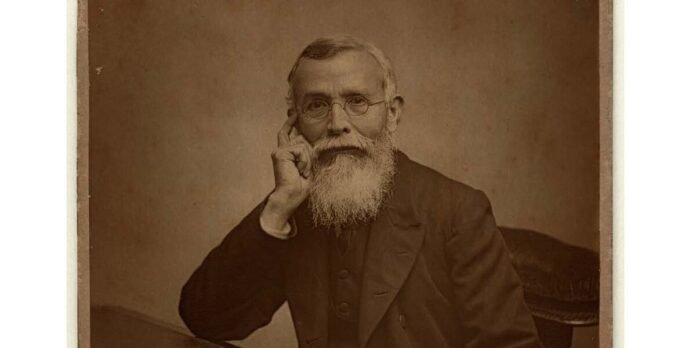
India marks the 109th death anniversary of Dadabhai Naoroji today, remembering one of the foremost architects of the Indian freedom movement whose ideas laid the intellectual foundation for India’s struggle against British colonial rule. A nationalist, economist, educator, and political leader, Naoroji passed away on June 30, 1917, leaving behind a legacy that continues to shape India’s democratic and economic thought.
Popularly known as the “Grand Old Man of India,” Dadabhai Naoroji was among the founding members of the Indian National Congress and served as its president on three occasions. He was also the first Indian—and among the first Asians—to be elected to the British House of Commons, representing the Liberal Party from the Finsbury Central constituency in 1892. His election marked a historic milestone, enabling him to raise India’s concerns directly within the British Parliament.
The Economist Who Challenged Colonial Rule
Naoroji is best remembered for his pioneering “Drain Theory,” which argued that British colonial rule systematically transferred India’s wealth to Britain, leaving the country impoverished. Through meticulous analysis of government records and financial data, he demonstrated how India’s economic resources were being exploited under colonial administration.
His landmark book, Poverty and Un-British Rule in India (1901), became one of the earliest and most influential critiques of British economic policy in India. His research transformed economic statistics into a powerful political tool and inspired generations of nationalist leaders to demand greater economic justice and self-governance.
Champion of Swaraj
While known for his moderate approach, Naoroji firmly believed that Indians deserved the right to govern themselves. During the 1906 session of the Indian National Congress, he gave one of the earliest and most significant calls for “Swaraj” (self-government), a demand that later became the cornerstone of India’s freedom movement under leaders such as Mahatma Gandhi and Bal Gangadhar Tilak.
A Legacy That Lives On
Born on September 4, 1825, in Bombay (now Mumbai), Dadabhai Naoroji began his career as a teacher before entering public life. Throughout his six decades of service, he worked tirelessly to bridge the gap between India and Britain, advocating constitutional reforms, education, social progress, and equal rights for Indians.
His influence extended far beyond politics. Often regarded as a mentor to several early nationalist leaders, Naoroji demonstrated that reason, research, and evidence could become powerful instruments in the fight against injustice.
Why He Still Matters Today
More than a century after his passing, Dadabhai Naoroji’s ideas remain relevant. His insistence on accountability in public finance, evidence-based policymaking, and economic transparency continues to resonate in contemporary discussions on governance and development.
As India remembers the Grand Old Man of India on his death anniversary, his life stands as a testament to the power of intellect, perseverance, and principled leadership. Long before political independence became a reality, Dadabhai Naoroji gave India the language to question colonial rule—and the confidence to envision a free nation.