

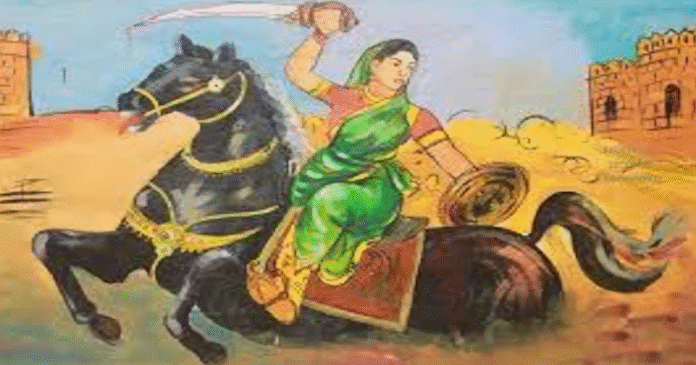
Rani Abbakka Chowta was the first Tuluva Queen of Ullal who valiantly fought against Portuguese colonial forces in the latter half of the 16th century. A follower of Jainism, she belonged to the Chowta dynasty, an indigenous Tuluva royal lineage that ruled parts of coastal Karnataka (Tulu Nadu), India. The dynasty’s capital was Puttige, while the port town of Ullal served as its strategic subsidiary capital.
The Portuguese, seeking to dominate the spice trade, made repeated attempts to capture Ullal due to its vital coastal position. However, Queen Abbakka repelled their attacks for over four decades, displaying unmatched courage and military acumen. Her indomitable spirit earned her the title “Abhaya Rani” (The Fearless Queen). She is regarded as one of the earliest Indian rulers to resist European colonialism and is often hailed as the first woman freedom fighter of India. In Karnataka, she is remembered alongside Rani Kittur Chennamma, Keladi Chennamma, Rani Chennabhairadevi, and Onake Obavva as one of the state’s foremost women warriors and patriots.
Early Life
Born into the Chowta royal family, Abbakka was trained in warfare, administration, and diplomacy from a young age. The Chowtas followed the Aliyasantana matrilineal system of inheritance, where royal succession passed through the female line — a custom that empowered women leaders like Abbakka to rule with authority.
Military Campaigns
Under her command, Ullal became a bastion of resistance. Some of her most notable victories include:
- 1555: Defeated Admiral Dom Álvaro da Silveira’s naval assault.
- 1557: Successfully defended Ullal from another Portuguese invasion.
- 1568: Crushed a combined Portuguese land and naval offensive.
Administration and Trade
Rani Abbakka’s rule strengthened Ullal’s position as a thriving trade hub, dealing in pepper, cardamom, and rice. She maintained diplomatic ties with Arab merchants and the Zamorin of Calicut, forming vital alliances. Her administration was characterized by:
- Strategic cooperation with Mogaveera maritime communities.
- Development of coastal trade routes and fortifications.
- Promotion of local industries and economic self-reliance.
Religious and Cultural Patronage
As a devout Jain, Abbakka renovated several Jain basadis (temples) and supported the translation of religious texts into local languages. Her reign witnessed a flourishing of art, architecture, and cultural exchange through trade networks.
Legacy
Rani Abbakka’s defiance against Portuguese domination remains a landmark in India’s early resistance to colonialism. Her leadership set precedents for:
- Indigenous naval defense systems.
- Women-led governance and warfare.
- The assertion of cultural and political sovereignty.
Modern Commemorations
Her legacy continues to inspire generations through:
- The annual Veera Rani Abbakka Utsava in Ullal.
- A commemorative stamp issued by India Post in 2023.
- The Rani Abbakka Tulu Study Centre at MGM College.
- Scholarships and awards established in her honor.
Rani Abbakka Chowta remains a symbol of courage, patriotism, and defiance — a queen who stood fearlessly against colonial might long before the dawn of India’s freedom movement.