

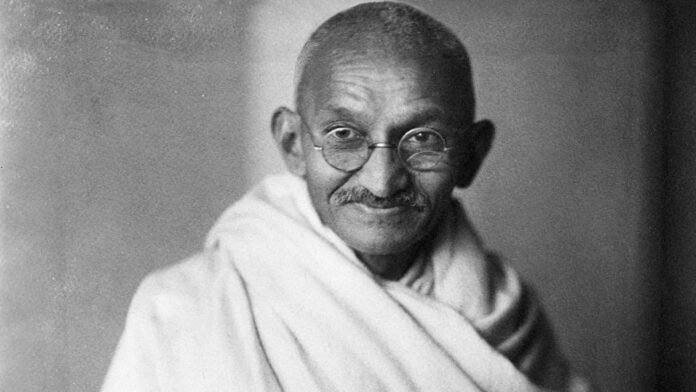
Every year on October 2, India observes Gandhi Jayanti to commemorate the birth anniversary of Mohandas Karamchand Gandhi, one of the most influential figures of India’s freedom movement. Born on October 2, 1869, in Porbandar, Gujarat, Gandhi became known as Mahatma Gandhi and played a central role in transforming India’s struggle for independence into a mass movement. His ideas of truth, non-violence, self-discipline and peaceful resistance continue to shape conversations about leadership, social change and public life.
From Porbandar to South Africa
Gandhi was born into a family associated with public service. His father, Karamchand Gandhi, served as a diwan in princely states, while his mother, Putlibai, was deeply religious and had a strong influence on his early life.
After completing his schooling in India, Gandhi travelled to London in 1888 to study law. He returned to India as a barrister but initially struggled to establish a successful legal practice.
A major turning point came in 1893 when he travelled to South Africa for legal work. There, he experienced racial discrimination and witnessed the difficulties faced by the Indian community. His experiences in South Africa profoundly changed his understanding of injustice and resistance.
It was there that Gandhi developed and practised the idea of Satyagraha, a form of resistance based on truth and non-violence. He spent more than two decades in South Africa, organising campaigns for the rights of Indians and refining the methods that he would later bring to India.
Gandhi and India’s freedom struggle
Gandhi returned to India in 1915. After travelling across the country and understanding the conditions of ordinary Indians, he became increasingly involved in the national movement.
His early major intervention in India came through the Champaran Satyagraha of 1917, when he supported farmers in Bihar who were facing oppressive conditions under the colonial indigo cultivation system. He later played important roles in the Kheda Satyagraha and the Ahmedabad Mill Strike.
Gandhi gradually became one of the central leaders of the Indian National Congress and encouraged people from different sections of society to participate in the freedom movement.
The Non-Cooperation Movement of 1920–22 called upon Indians to withdraw cooperation from British institutions and goods. In 1930, Gandhi led the historic Dandi March, walking from Sabarmati Ashram to the coastal village of Dandi to challenge the British salt laws. The Salt Satyagraha became an important symbol of civil disobedience.
In 1942, Gandhi gave the call for the Quit India Movement, demanding an end to British rule in India. The movement became one of the defining mass movements of the final phase of the freedom struggle.
More than a political leader
Gandhi’s work was not limited to political independence. He spoke about social equality, communal harmony, rural development, sanitation, women’s participation, education and self-reliance.
He promoted Swadeshi, encouraging Indians to use locally produced goods, particularly khadi. For Gandhi, the spinning wheel became more than a tool of production. It represented dignity of labour, self-reliance and resistance to economic dependence.
His approach to politics was closely connected with his personal life. He emphasised simple living, discipline and the importance of aligning one’s actions with one’s principles.
The philosophy of non-violence
Perhaps Gandhi’s most enduring contribution was his insistence that resistance did not necessarily have to depend on violence. His philosophy of Ahimsa, or non-violence, and Satyagraha influenced movements far beyond India.
His methods later inspired civil rights and political leaders around the world, including Martin Luther King Jr. and Nelson Mandela, although each applied these ideas within very different social and political circumstances.
Gandhi’s philosophy also remains the subject of debate and critical examination. His views and actions on caste, race, politics and social questions have been discussed and challenged by scholars and public figures over the years. Remembering Gandhi, therefore, also means engaging with the complexities of his life rather than viewing him only through a single image.
Why Gandhi Jayanti still matters
Gandhi was assassinated on January 30, 1948, months after India became independent. Yet his influence did not end with the freedom struggle.
October 2 is observed in India as Gandhi Jayanti and is also recognised internationally as the International Day of Non-Violence, established by the United Nations in honour of Gandhi’s contribution to the philosophy of non-violent action.
For India, Gandhi Jayanti is an occasion to remember a freedom fighter who helped bring ordinary people into the national movement and made truth, non-violence and civil resistance central to his political vocabulary.
More than seven decades after Independence, Gandhi’s life continues to raise an important question: how can social and political change be pursued without losing sight of human dignity? That question, perhaps, is one reason his legacy continues to remain relevant far beyond October 2.