

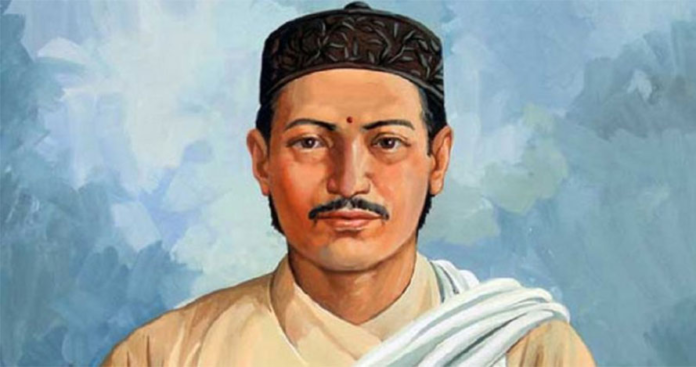
Bhanu Jayanti is a significant literary and cultural festival celebrated every year in Nepal and by Nepali communities around the world. Observed on Ashadha 29 of the Nepali calendar (usually 13 July), the day honors Adikavi Bhanubhakta Acharya, the first poet of the Nepali language and the visionary who translated the Ramayana from Sanskrit into Nepali.
His remarkable contribution made one of Hinduism’s greatest epics accessible to ordinary people and helped shape the foundation of modern Nepali literature.
Who Was Bhanubhakta Acharya?
Bhanubhakta Acharya (1814–1868) is revered as the Adikavi, meaning “the first poet,” of the Nepali language. Born in Chundi Ramgha, Tanahun District, Nepal, he came from a Brahmin family. His father, Dhananjaya Acharya, served as a government official, while his grandfather introduced him to Sanskrit education at home. He later continued his studies in Varanasi, where he gained deep knowledge of Sanskrit literature and Hindu scriptures.
Although well-versed in classical Sanskrit, Bhanubhakta realized that ordinary Nepali-speaking people could not understand the sacred texts because they were written in a language accessible mainly to scholars.
The Man Who Translated the Ramayana into Nepali
Bhanubhakta Acharya is best known for translating the Valmiki Ramayana from Sanskrit into Nepali. Before his translation, the Ramayana was available primarily in Sanskrit, making it difficult for common people to read and understand.
His translation, popularly known as the Bhanubhakta Ramayana, preserved the spiritual message and moral teachings of the original while presenting them in simple and elegant Nepali. This made the epic accessible to people from all walks of life.
Published in its complete form in 1887, after his death, the Bhanubhakta Ramayana is widely regarded as the first great epic in the Nepali language. It played a crucial role in promoting literacy, preserving Nepali culture, and strengthening the identity of the Nepali language.
The Story Behind His Literary Journey
One of the most inspiring stories associated with Bhanubhakta Acharya involves a humble grass cutter (Ghasi). During a walk, Bhanubhakta met a poor grass cutter who was building a public well so future generations would remember him.
This encounter deeply moved Bhanubhakta. He realized that wealth and status alone do not leave a lasting legacy—meaningful contributions to society do. Inspired by this lesson, he devoted himself to writing for the people rather than only for scholars.
The experience inspired him to compose his famous poem “Ghasi” (The Grass Cutter), which remains one of the most celebrated works in Nepali literature.
Why Is Bhanu Jayanti Celebrated?
Bhanu Jayanti commemorates the birth anniversary of Bhanubhakta Acharya and celebrates his immense contribution to Nepali language and literature.
On this day, schools, universities, literary organizations, and cultural institutions organize:
- Poetry recitations
- Literary seminars
- Cultural performances
- Ramayana readings
- Essay competitions
- Processions honoring Bhanubhakta Acharya
Nepali communities across India, Bhutan, and other countries also celebrate the occasion with great enthusiasm.
Legacy of Bhanubhakta Acharya
Bhanubhakta Acharya’s contribution extends far beyond translating the Ramayana. He helped establish Nepali as a respected literary language and inspired generations of writers and poets.
His works continue to be studied in schools and universities, and his poetry remains a source of inspiration for readers interested in Nepali literature and culture.
His legacy demonstrates the power of language in bringing knowledge, faith, and culture closer to ordinary people.
Interesting Facts About Bhanubhakta Acharya
- He is honored as the Adikavi (First Poet) of the Nepali language.
- He was born in 1814 and passed away in 1868.
- He translated the Valmiki Ramayana from Sanskrit into Nepali.
- His translation is known as the Bhanubhakta Ramayana.
- His famous poem Ghasi (The Grass Cutter) inspired many generations of Nepali readers.
- His complete Ramayana translation was published posthumously in 1887.
- Bhanu Jayanti is celebrated every year on Ashadha 29 (usually July 13).
Why Bhanubhakta Acharya Still Matters Today
More than two centuries after his birth, Bhanubhakta Acharya remains one of Nepal’s greatest literary icons. By translating the Ramayana into Nepali, he bridged the gap between classical knowledge and ordinary people, making religious literature understandable for millions.
His work not only enriched Nepali literature but also strengthened cultural unity and national identity. Bhanu Jayanti is therefore not just a celebration of a poet—it is a tribute to a visionary who transformed language into a bridge connecting knowledge, culture, and society.
Conclusion
Bhanu Jayanti reminds us of the enduring impact one individual can have on a nation’s language and culture. Through his timeless translation of the Ramayana and his inspiring literary works, Bhanubhakta Acharya made knowledge accessible to everyone and laid the foundation of modern Nepali literature.
As Nepal and Nepali communities worldwide celebrate Bhanu Jayanti each year, they honor a poet whose words continue to inspire generations and preserve the rich literary heritage of Nepal.