

PC(Instagram)
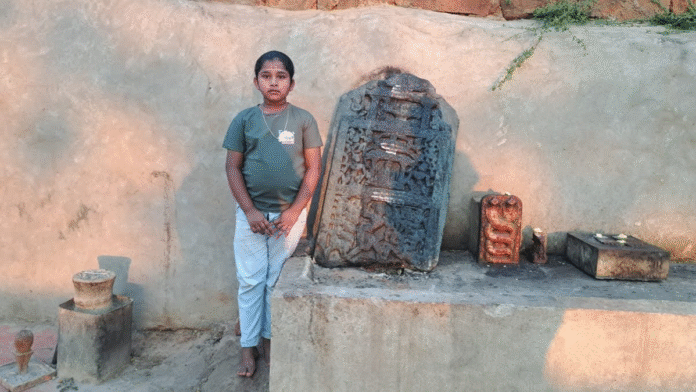
Worshipped as Shani Dev for Centuries in a heartwarming tale of curiosity and observation, an 11-year-old Class 5 student from a small village in Karnataka has stunned historians and locals alike. Lakshmi Prakash Humbi from Mallammana Belawadi (also referred to as Halalmanna Belawadi or Belwadi) village in Bailhongal taluk, Belagavi district, identified a centuries-old Veeragallu (hero stone) that the entire village had been worshipping as an idol of Shani Dev.
The ancient stone, lying outside the local Hanuman temple, had been revered for generations as a deity. But Lakshmi’s keen observation revealed its true historical identity a 12th or 13th-century memorial commemorating a brave warrior who died protecting cattle.
Lakshmi’s family was observing an 11-day vow suggested by a visiting devotee (Jogamma). Every day, she visited the Hanuman temple with her mother and brother. Before entering the temple, they would offer prayers to the stone placed outside, which the village priest Balamma Poojari and others believed was a Shani Dev idol. On the final day (March 3, 2026), accompanied by her father Prakash Humbi, Lakshmi boldly pointed out that the stone was not a deity but depicted a battle scene. She drew attention to the carvings of a warrior fighting to protect cows scenes that reminded her of the inspiring stories of the legendary Veera Rani. Belawadi Mallamma, a 17th-century warrior queen from the region known for bravely rescuing cattle from invaders.
Initially skeptical, her father and village elders cleaned the stone and examined it closely. They soon realized the young girl was right. Historians, including Dr. Balappa Eerappa Chinagudi (also referred to as Balappa Irappa Chinagudi) from Bengaluru University and other epigraphists from Dharwad, confirmed the find as a Turugol Veeragallu (a hero stone dedicated to someone who sacrificed their life while protecting cattle). Intricate Carvings on the Ancient Stone the hero stone features beautifully carved panels that narrate a heroic tale first p anel a brave warrior fighting enemies while protecting livestock (cows). Second Panel Apsaras (celestial nymphs) carrying the martyred hero to heaven.Third Panel: The hero depicted in the divine realm near a Shivling and Nandi bull.
Experts believe the stone may date back to the 12th or 13th century, possibly even predating the era of Rani Belawadi Mallamma. It stands as a powerful reminder of the courageous warriors who laid down their lives to safeguard villages and cattle from threats. Veeragallu (or hero stones) are traditional memorial stones erected in South India, particularly in Karnataka, to honor individuals who displayed extraordinary bravery. These stones typically commemorate: Warriors who died in battle. Heroes who sacrificed their lives protecting villages, temples, or cattle from thieves, invaders, or wild animals. Such memorials are rich in symbolic carvings depicting the hero’s valour, journey to heaven, and divine reception.
Lakshmi, daughter of Prakash Humbi, has a younger brother. Growing up in the village, she was deeply influenced by local folklore about Veera Rani Belawadi Mallamma, who fought fearlessly to rescue cattle. These stories sharpened her ability to recognize the carvings on the stone. After the discovery, Lakshmi expressed her wish that the hero stone be properly preserved and studied so that future generations can learn about their rich local history and the bravery of their ancestors.
A Proud Moment for the Village and Beyond This extraordinary discovery by a fifth-grader has not only corrected a long-standing misconception but also revived interest in the forgotten history of Mallammana Belawadi village. Historians have praised Lakshmi’s sharp observation skills, calling her an inspiration for students everywhere. In a world dominated by screens and gadgets, Lakshmi’s story reminds us of the power of curiosity, traditional storytelling, and paying attention to our surroundings.