

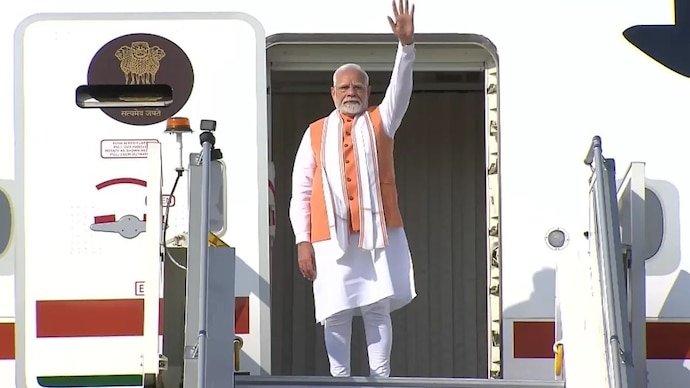
Prime Minister Narendra Modi’s six-day, five-nation diplomatic tour, which began on May 15 with a successful visit to the United Arab Emirates (UAE), is being viewed as one of India’s most significant strategic outreach missions in recent years. Covering the UAE, the Netherlands, Sweden, Norway and Italy, the visit aims to deepen India’s partnerships in energy, technology, trade, defence and green innovation while reinforcing India’s growing role in global geopolitics.
The UAE leg of the visit already delivered major outcomes for India. PM Modi held extensive talks with UAE President Sheikh Mohamed bin Zayed Al Nahyan, resulting in several key agreements, including a Strategic Defence Partnership framework, long-term LPG supply arrangements and cooperation on strategic petroleum reserves. The UAE also announced multi-billion-dollar investments in Indian infrastructure and financial sectors, underlining the rapidly strengthening India-UAE Comprehensive Strategic Partnership.
Following the UAE visit, PM Modi has now headed to Europe, where the focus shifts toward advanced technology, clean energy, semiconductors, maritime cooperation and economic partnerships.
Netherlands: Defence, Water Technology and Green Hydrogen
In the Netherlands, PM Modi is scheduled to meet King Willem-Alexander and Dutch Prime Minister Rob Jetten. Discussions are expected to centre around defence cooperation, semiconductor manufacturing, green hydrogen, sustainable agriculture and water management technologies — an area where the Netherlands is globally recognised.
India is likely to seek greater Dutch investments in high-tech manufacturing and logistics under the “Make in India” initiative. Cooperation in port development and maritime connectivity may also feature prominently, given the strategic importance of Rotterdam as one of Europe’s largest ports. Analysts believe new agreements on renewable energy and advanced chip technologies could significantly support India’s technological ambitions.
Sweden and Norway: Innovation and the India-Nordic Summit
The next phase of the tour will take PM Modi to Sweden and Norway, where innovation, digital transformation and sustainable development will dominate discussions. A major highlight will be the 3rd India-Nordic Summit in Norway on May 19, bringing together leaders from Denmark, Finland, Iceland, Norway and Sweden.
The Nordic countries are global leaders in clean energy, artificial intelligence, smart infrastructure and climate technologies. India is expected to push for deeper collaboration in green growth, electric mobility, Arctic research, fintech and digital governance. Several Memorandums of Understanding (MoUs) related to technology partnerships, startups, renewable energy and academic cooperation are likely to emerge from these meetings.
The summit also carries strategic importance because Nordic nations are increasingly viewing India as a reliable economic and geopolitical partner amid changing global supply chains and tensions in Europe and Asia.
Italy: Strengthening Strategic and Economic Cooperation
The final leg of the visit will take PM Modi to Italy, where he will hold talks with Italian Prime Minister Giorgia Meloni. The discussions are expected to build upon the India-Italy Joint Strategic Action Plan 2025–2029 signed earlier.
Defence manufacturing, aerospace cooperation, artificial intelligence, energy transition and industrial partnerships are expected to be key areas of discussion. Italy has shown growing interest in expanding investments in India’s manufacturing and infrastructure sectors, while India sees Italy as an important gateway to deeper European economic engagement.
A Strategic Tour for India’s Global Vision
Overall, the tour reflects India’s broader diplomatic strategy of balancing strong ties with both the Gulf and Europe while pursuing strategic autonomy. The visit comes at a time when global supply chains, energy security and technological partnerships are becoming increasingly critical.
Experts believe the agreements, investments and strategic understandings likely to emerge from this tour could significantly benefit India’s economic growth, energy security and technological advancement. The visit also aligns closely with the government’s long-term vision of “Viksit Bharat 2047,” positioning India as a leading global economic and strategic power in the decades ahead.