

PC(Eathnic Elements, Impart)
In the heart of Madhya Pradesh’s Dhar district lies Bagh, a small village where an ancient art form thrives, untouched by the rush of modern machinery. Bagh Print, a prestigious Geographical Indication (GI)-tagged handicraft since 2008, represents centuries of craftsmanship, migration, and a profound harmony with nature. This hand-block printing technique produces fabrics with deep, vibrant red and black motifs on a luminous white base-colors so enduring they seem woven into eternity.
A Journey Across Borders: The Migration of the Khatri Community
The story of Bagh Print begins far beyond Madhya Pradesh. Rooted in the Sindh region (now in Pakistan), the craft was carried by the Khatri community-specifically the Chhipa caste of traditional printers-over 400-500 years ago. Fleeing hardships like famine and seeking better prospects, they migrated eastward through Rajasthan (settling briefly in places like Pali), then to Gautampura and Manawar in Madhya Pradesh.
In the 1960s, they finally chose Bagh village in Dhar district. What drew them? The Baghini River. Its waters, rich in copper and iron, act as a natural mordant and catalyst, imparting unmatched depth, luminosity, and fade-resistance to the dyes-qualities impossible to replicate elsewhere. This “magic” river became the secret ingredient that transformed the craft into the distinctive Bagh Print we know today.
By the mid-20th century, the art faced near extinction as artisans shifted to cheaper synthetic fabrics. Enter Ismail Sulemanji Khatri (1937-2014), hailed as the “founding father” of modern Bagh Print. Settling in Bagh in 1962, he revitalized the tradition, innovating with teak-wood blocks inspired by the nearby 1,500-year-old Bagh Caves paintings. His groundbreaking works, including a bedspread using 1,200 unique blocks that earned a National Award in 1984, propelled the craft to global acclaim.
The Artisans and Their Sacred Process today, primarily the Khatri community-along with trained local tribal artisans preserves this heritage. Over 2,500 families in the region depend on it for livelihood. The process is labor-intensive, spanning 14-25 days for a single piece preparation: Fabric (cotton, silk, Tussar, or
Chanderi) is washed in the river, treated with oils, and soaked in Harada (myrobalan) powder for a yellowish base that aids dye absorption.
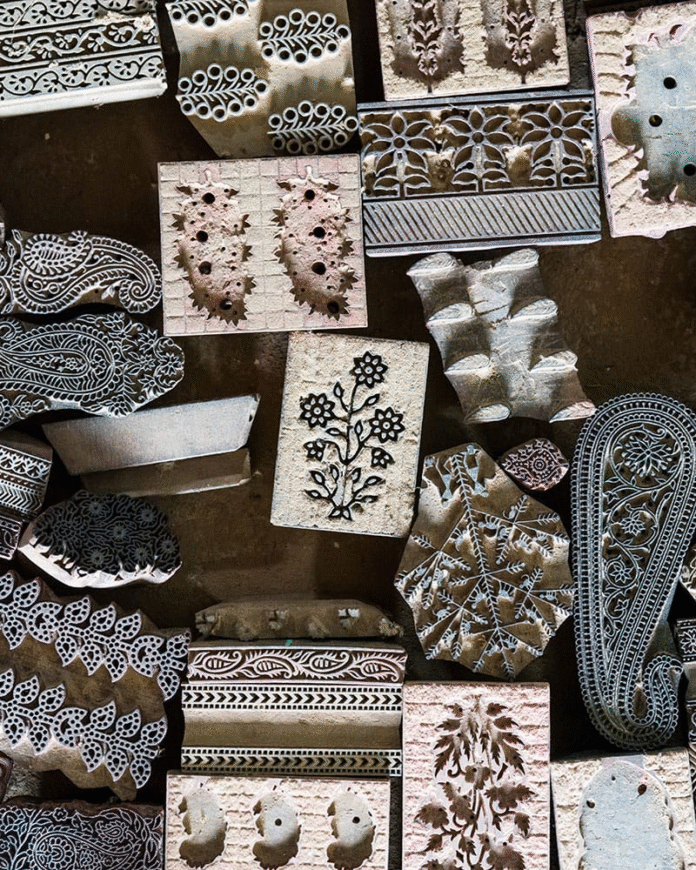
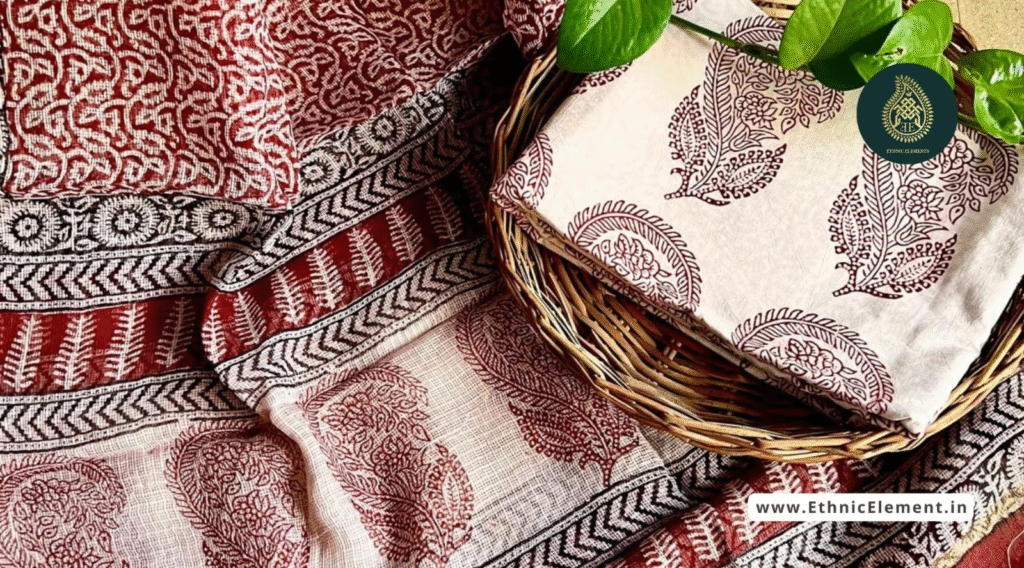
Creation black (Kala): Fermented iron filings (from rusted horseshoes), jaggery, and water. Red (Lal): Alum, tamarind seed powder, and alizarin from madder roots.Other shades: Indigo for blue, pomegranate rinds for mustard/khaki, and mixes for green. Printing: Intricate motifs-jasmine (chameli), lotus (kamal), geometric jaali patterns, and nature-inspired designs-are hand-stamped using carved teak blocks. Development: Printed fabric is boiled in vats with alizarin and dhavdi flowers (a natural bleaching agent), then washed in the Baghini River. This “alchemy” transforms dull greys into radiant, permanent hues.The river’s mineral content ensures colors remain vibrant for decades, embodying true eco-friendly and slow fashion principles-100% natural vegetable dyes, minimal waste, and no synthetics.
Designs, Uses, and Global Rise
Traditionally used for tribal attire like lugda (sarees) and angochha (towels), Bagh Print now graces high-fashion sarees, suits, stoles, kurtas, bedspreads, curtains, and fusion garments. Its earthy elegance appeals to sustainable luxury markets in Europe, the US, and cities like Milan and Delhi. Awards abound: Mohammed Yusuf Khatri (Shilp Guru), Mubarik Khatri (International Craft Award 2021), and others from the Khatri family continue innovating, even printing on bamboo mats and leather. The name “Bagh” means “tiger” in Hindi. Local lore ties it to tigers seeking refuge in ancient caves after Buddhism’s decline in the 10th century-echoing the craft’s fierce resilience. In an era of fast fashion, Bagh Print stands as a symbol of cultural identity, sustainability, and generational legacy. Protected by its Gl tag against imitations, this “nature’s alchemy” reminds us that true beauty is born from patience, tradition, and the quiet power of a river.