

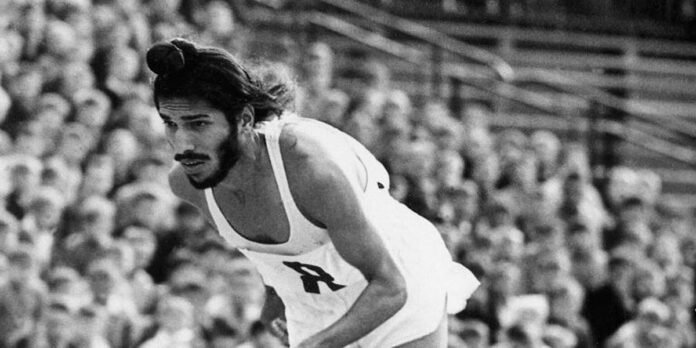
India remembers Milkha Singh, fondly known as the ‘Flying Sikh’, as one of the greatest athletes in the country’s sporting history. Born on November 20, 1929, Milkha Singh’s extraordinary journey from the hardships of Partition to becoming an internationally celebrated sprinter remains an inspiring story of courage, discipline and determination. His achievements on the track brought Indian athletics international recognition and established him as a sporting icon for generations.
A Childhood Marked by Struggle
Milkha Singh was born in Govindpura village, in the Muzaffargarh district of undivided Punjab, now in Pakistan. His early life was marked by poverty and hardship. The Partition of India in 1947 brought unimaginable tragedy to his family, as several of his family members, including his parents, were killed during the communal violence. He eventually escaped to India and reached Delhi as a refugee.
Having experienced displacement, loss and uncertainty at a young age, Singh struggled to rebuild his life. He eventually joined the Indian Army in 1951, where an opportunity would change his future. During a cross-country race organised among army personnel, his remarkable running ability caught the attention of his instructors. Recognising his potential, the Army selected him for special athletic training.
The Making of the Flying Sikh
Milkha Singh began training with extraordinary dedication. His routine involved hours of running, endurance exercises and intensive track practice. His determination gradually transformed him into one of India’s finest sprinters. After gaining recognition in national competitions, he represented India at the 1956 Melbourne Olympics, marking the beginning of his international sporting journey.
The turning point came in 1958 when Singh delivered remarkable performances at the Asian Games in Tokyo. He won gold medals in both the 200-metre and 400-metre events, establishing himself as one of Asia’s leading athletes. In the same year, he created history at the British Empire and Commonwealth Games in Cardiff by winning gold in the 440-yard race. He became the first Indian athlete to win an individual athletics gold medal at the Commonwealth Games.
His success continued at the 1962 Asian Games in Jakarta, where he won two more gold medals, one in the 400-metre race and another as part of India’s 4×400-metre relay team. With four Asian Games gold medals to his name, Singh established an extraordinary record in Indian athletics.
The title ‘Flying Sikh’ was bestowed upon him by Pakistan’s President General Ayub Khan following his victory over Pakistani sprinter Abdul Khaliq in a race in Lahore in 1960. The name became synonymous with his remarkable speed and sporting achievements.
The Unforgettable Rome Olympics
One of the most memorable moments of Milkha Singh’s career came at the 1960 Rome Olympics. Competing in the 400-metre final, he was among the leading contenders for a medal. In a closely contested race, he finished fourth with a time of 45.73 seconds, narrowly missing the bronze medal. Although he could not secure an Olympic podium finish, his performance created a national record that remained unbeaten for nearly four decades, until 1998.
He also represented India at the 1964 Tokyo Olympics, completing his participation in three consecutive Olympic Games, beginning with Melbourne in 1956.
Beyond the Track: Awards and Legacy
In recognition of his outstanding contribution to Indian sports, Milkha Singh was awarded the Padma Shri in 1959. After retiring from competitive athletics, he continued to contribute to sports development and served as Director of Sports in the Punjab government. He also established the Milkha Singh Charitable Trust in 2003 to support underprivileged sportspersons.
His autobiography, The Race of My Life, co-written with his daughter Sonia Sanwalka and published in 2013, offered an account of his struggles, training and achievements. His remarkable life later inspired the critically acclaimed Bollywood film Bhaag Milkha Bhaag (2013), starring Farhan Akhtar, which introduced his extraordinary journey to a new generation.
Milkha Singh passed away on June 18, 2021, in Chandigarh, following complications related to COVID-19. His wife, Nirmal Kaur, a former captain of the Indian women’s volleyball team, had passed away just five days earlier.
Milkha Singh’s journey remains much larger than the medals he won or the records he created. From surviving the tragedy of Partition to carrying India’s hopes on the international athletics stage, he demonstrated what determination and hard work can achieve. His legacy continues to inspire young athletes to dream beyond limitations and pursue excellence. The Flying Sikh may have left the track, but his spirit continues to run through the history of Indian sports.