

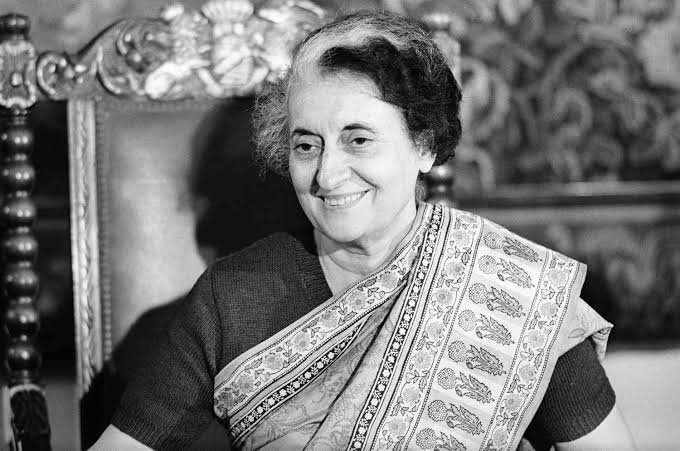
Indira Gandhi’s birth anniversary is observed every year on November 19 to remember one of the most influential and prominent political leaders in India’s history. Born on November 19, 1917, Indira Gandhi served as the country’s first and, so far, only woman Prime Minister. Known for her strong leadership and decisive political approach, she played a significant role in shaping India’s political, economic and international relations during some of the most important years after independence.
Indira Gandhi was born as Indira Priyadarshini Nehru in Allahabad, present-day Prayagraj, Uttar Pradesh. She was the daughter of Jawaharlal Nehru, India’s first Prime Minister, and Kamala Nehru. Growing up in a family deeply involved in the freedom movement, she was exposed to India’s struggle for independence from an early age. Her childhood was influenced by the political activities of her father and other national leaders. She also participated in the freedom movement through the Vanar Sena, a group of young volunteers who supported the national movement.
After completing her education in India and abroad, Indira Gandhi became actively involved in the Indian National Congress. She served as the party’s president in 1959 and later became a member of the Rajya Sabha. In 1964, following the death of Jawaharlal Nehru, she joined the Union Cabinet as Minister of Information and Broadcasting under Prime Minister Lal Bahadur Shastri.
Following Shastri’s sudden death in January 1966, Indira Gandhi was elected leader of the Congress Parliamentary Party and became India’s Prime Minister on January 24, 1966. Her appointment marked a historic moment in Indian politics, as she became the first woman to hold the country’s highest executive office. She served as Prime Minister from 1966 to 1977 and again from 1980 until her assassination in 1984.
During her tenure, Indira Gandhi introduced several important economic and political measures. One of her major decisions was the nationalisation of 14 major commercial banks in 1969, aimed at expanding banking services and directing financial resources towards development priorities. Her government also played an important role during the Green Revolution, which helped India increase agricultural production and move towards greater food security. The slogan ‘Garibi Hatao’, meaning ‘Remove Poverty’, became a central part of her political campaign in the 1971 general elections.
The year 1971 was particularly significant in her political career. Under her leadership, India supported the liberation struggle of East Pakistan, which eventually led to the creation of Bangladesh following the India-Pakistan War of 1971. Her leadership during the conflict strengthened India’s position internationally. In 1974, India conducted its first nuclear test, code-named Smiling Buddha, at Pokhran in Rajasthan, marking an important development in the country’s scientific and strategic journey.
However, her political career also witnessed significant controversy. In June 1975, following a court judgment that set aside her 1971 Lok Sabha election, Indira Gandhi declared a National Emergency under Article 352 of the Constitution, citing internal disturbance. The Emergency, which continued until March 1977, was marked by restrictions on civil liberties, press censorship, political arrests and other controversial measures. Her government faced widespread criticism, and the Congress party suffered a major defeat in the 1977 general elections. However, she returned to power in 1980.
One of the most difficult periods of her final years was Operation Blue Star in June 1984, when the Indian Army entered the Golden Temple complex in Amritsar to remove armed militants. The operation caused significant damage to the complex and resulted in casualties, creating deep tensions. On October 31, 1984, Indira Gandhi was assassinated by two of her bodyguards at her residence in New Delhi.
Indira Gandhi remains a significant and debated figure in India’s political history. Her leadership during the 1971 war, economic decisions, role in strengthening India’s international position and controversial imposition of the Emergency continue to be discussed and examined. On her birth anniversary, the nation remembers her political journey, achievements and the lasting impact of her decisions on modern India.