

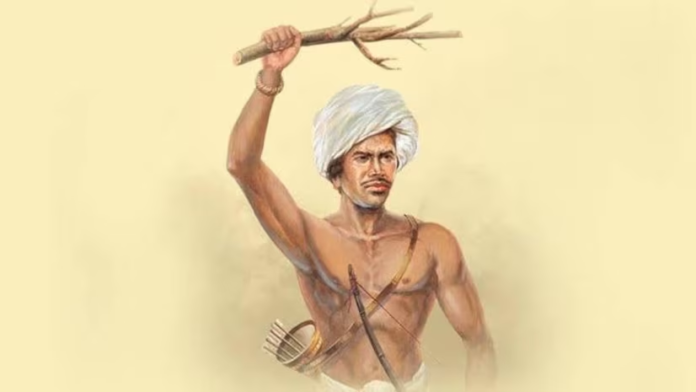
India’s freedom struggle is remembered through the courage and sacrifices of countless individuals who stood against colonial oppression and fought for the country’s independence. Among them was Bhagwan Birsa Munda, a remarkable tribal leader, social reformer and freedom fighter who challenged British rule and fought for the rights, land and identity of tribal communities. Remembered as ‘Dharti Aaba’, meaning ‘Father of the Earth’, Birsa Munda became a symbol of courage, unity and resistance. Although his life lasted only 25 years, his contribution to India’s history continues to inspire generations.
Early Life and Background
Birsa Munda was born on November 15, 1875, in Ulihatu village, in present-day Khunti district of Jharkhand. He belonged to the Munda tribal community. His father, Sugana Munda, and mother, Karmi Hatu, lived a modest life, moving between villages in search of better livelihood opportunities. Birsa spent much of his childhood in the villages and forests of the Chotanagpur region, where he witnessed the close relationship between tribal communities, their ancestral lands and forests.
During this period, British colonial policies, changing land arrangements and the growing influence of landlords, moneylenders and outsiders increasingly threatened traditional tribal rights. Many tribal families faced displacement, excessive rents, forced labour and exploitation. These circumstances deeply influenced Birsa’s understanding of the struggles faced by his community.
He received his early education at a local school and later attended a German Mission School at Chaibasa. His exposure to formal education and missionary activities introduced him to new ideas and encouraged him to think about the social and cultural challenges confronting tribal society. He eventually left the missionary school and began focusing on the concerns of his community.
A Social and Religious Reformer
Birsa Munda was not only a political revolutionary but also a social and religious reformer. He encouraged tribal people to preserve their cultural identity, traditions and values while moving away from practices he considered harmful. He spoke against superstition, social divisions and excessive consumption of alcohol. He also encouraged unity, self-respect and awareness of community rights.
He gradually emerged as a spiritual leader, and his followers began regarding him as a divine figure. His religious movement, known as Birsait, attracted followers from the Munda community and beyond. Through his teachings, he sought to strengthen tribal identity and inspire people to stand together against injustice and exploitation.
Ulgulan: The Great Tribal Rebellion
The growing exploitation of tribal communities in the Chotanagpur region became the foundation of Birsa Munda’s struggle. Traditional landholding arrangements, particularly the Khuntkatti system, under which Munda communities enjoyed customary rights over ancestral land, were increasingly weakened by colonial policies and the influence of outsiders. Tribal cultivators faced land alienation, forced labour and economic hardship.
Birsa recognised that these injustices were closely connected to British colonial rule. He began mobilising tribal communities and encouraging them to resist oppression. His movement developed into the historic Ulgulan, meaning the ‘Great Rebellion’, which gained momentum during 1899–1900.
The movement demanded the restoration of tribal land rights, freedom from exploitation and self-rule. His call, Abua Dishum, Abua Raj (our land, our rule), became a powerful expression of the aspirations of tribal communities. Thousands of people joined the movement, making it one of the most significant tribal uprisings against British authority.
In January 1900, British forces confronted Birsa’s followers at Dombari Buru in present-day Jharkhand. The colonial administration used armed force to suppress the rebellion, resulting in the deaths and arrests of several tribal people. Although the uprising was eventually suppressed, it exposed the exploitation faced by tribal communities and brought their demands for justice and land rights into focus.
Arrest, Death and Lasting Legacy
The British administration launched an extensive search for Birsa Munda and arrested him in February 1900 in the Jamkopai forest area. He was imprisoned in Ranchi Jail, where he died on June 9, 1900, at the age of just 25. His death was officially attributed to cholera.
Although Birsa Munda did not live to see India achieve independence, his struggle left a lasting impact. The movement contributed to growing awareness of tribal land rights and the need to protect traditional communities from exploitation. The Chotanagpur Tenancy Act of 1908 subsequently introduced important safeguards against the transfer of tribal land to non-tribal people.
His legacy continues to be honoured through memorials, museums and public celebrations. The Government of India declared November 15, his birth anniversary, as Janjatiya Gaurav Divas in 2021 to recognise the contributions of tribal freedom fighters and celebrate India’s tribal heritage.
Birsa Munda’s life remains a powerful story of courage, leadership and determination. He stood up for communities whose voices were often unheard and fought for their right to protect their land, culture and identity. His legacy reminds us that India’s freedom struggle was not shaped by a few prominent leaders alone, but also by countless individuals and communities who resisted injustice and sacrificed their lives for dignity and self-rule.