

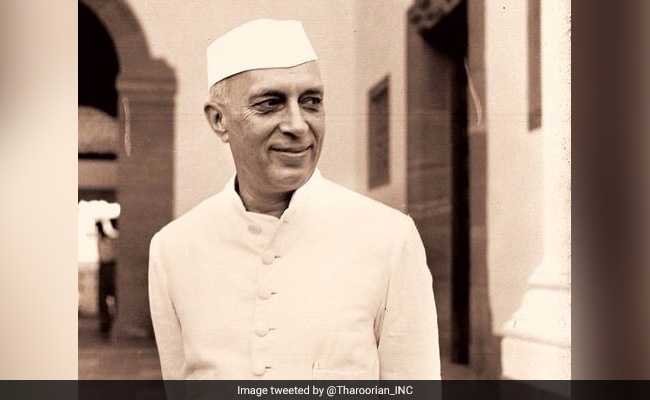
The birth anniversary of Pandit Jawaharlal Nehru, India’s first Prime Minister, is observed every year on November 14. Born on November 14, 1889, in Allahabad (now Prayagraj), Nehru remains one of the most prominent figures in India’s freedom struggle and the country’s early political history. Remembered for his leadership, modern outlook and contribution to nation-building, he played a significant role in shaping independent India during its formative years.
Jawaharlal Nehru was born into a prominent family to Motilal Nehru, a distinguished lawyer and freedom movement leader, and Swarup Rani Nehru. He received his early education at home before travelling to England for higher studies. He attended Harrow School and later studied at Trinity College, Cambridge, where he pursued natural sciences. He subsequently trained as a barrister at the Inner Temple in London and returned to India in 1912.
His involvement in India’s freedom movement grew under the influence of Mahatma Gandhi. Nehru became increasingly active in the Indian National Congress and emerged as an important voice in the struggle against British colonial rule. His commitment to independence brought him into close association with several national leaders, and he spent considerable time in British prisons for his participation in the freedom movement.
One of the defining moments of his political journey came in 1929, when he presided over the Lahore session of the Indian National Congress. Under his presidency, the Congress adopted the resolution of Purna Swaraj, declaring complete independence as its objective. January 26, 1930, was subsequently observed as Independence Day by nationalists across India. This declaration became an important milestone in the country’s freedom struggle.
After India gained independence on August 15, 1947, Nehru became the country’s first Prime Minister, a position he held until his death in 1964. His tenure was marked by the enormous responsibility of building a newly independent nation facing challenges of poverty, illiteracy, communal tensions and economic uncertainty. He believed that democracy, scientific development, education and industrial growth were essential for India’s progress.
Nehru played an important role in establishing institutions that contributed to India’s scientific, educational and industrial development. His government supported the growth of institutions such as the Indian Institutes of Technology, the All India Institute of Medical Sciences and the Atomic Energy Commission. He also encouraged scientific research, agricultural development, large-scale industries and infrastructure projects. His vision of modern India placed considerable importance on dams, power generation, research centres and public-sector enterprises.
In international affairs, Nehru advocated peaceful coexistence, diplomacy and independence from Cold War power blocs. He was one of the leading architects of the Non-Aligned Movement, which sought to provide newly independent countries with an alternative to aligning themselves with either the United States-led or Soviet-led blocs. His foreign policy emphasised anti-colonialism, international cooperation and peaceful resolution of disputes.
Beyond politics, Nehru was also a prolific writer and an admirer of literature, history and nature. His books, including The Discovery of India, Glimpses of World History and An Autobiography, offer insights into his understanding of India’s civilisation, world history and political experiences. Written during different phases of his life, these works continue to be read for their historical and intellectual perspectives.
Nehru shared a special affection for children and believed that their education and well-being were essential to the country’s future. Fondly known as ‘Chacha Nehru’, he considered children the foundation of a strong and progressive nation. His birth anniversary is therefore also celebrated as Children’s Day in India, with schools and educational institutions organising programmes and activities to honour childhood.
Jawaharlal Nehru passed away on May 27, 1964, in New Delhi. More than six decades after his death, his political legacy continues to be discussed and examined in the context of India’s history. His contributions to democratic institutions, scientific development, education and foreign policy remain important subjects of historical study.
His birth anniversary offers an opportunity to remember a leader who played a defining role in India’s freedom struggle and its early years as an independent republic. It is also a moment to reflect on the vision, achievements and challenges of the formative years of modern India.