

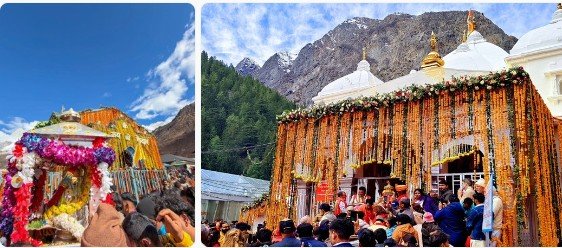
The sacred Himalayan shrines of Kedarnath and Yamunotri in Uttarakhand were ceremonially closed for the winter season on November 11, 2026, coinciding with the festival of Bhai Dooj. The closure marked the conclusion of the annual pilgrimage season at the two prominent Char Dham destinations, following months of religious activities and a significant influx of devotees from across India and abroad. Both temples witnessed traditional rituals, Vedic chanting and emotional farewell moments as devotees gathered for their final darshan before the winter break.
Located in the Rudraprayag district, Kedarnath Dham, one of the twelve Jyotirlingas of Lord Shiva, closed its portals at 8:30 AM in accordance with established religious traditions. The ceremony began in the early morning with special prayers and rituals, including the Mahabhishek of Lord Shiva. The shrine was decorated with flowers, while Vedic chants and the music of an Indian Army band created a devotional atmosphere. A large number of devotees gathered to seek the blessings of Baba Kedar and witness the closing ceremony.
This year’s pilgrimage recorded an impressive turnout, with more than 19.20 lakh devotees visiting Kedarnath Dham during the season, according to the Badarinath-Kedarnath Temple Committee. The shrine had opened on April 22, and the record footfall reflected the continued religious significance of the Himalayan pilgrimage.
Following the closure, the ceremonial palanquin, known as the Chal Vigraha Utsav Doli, carrying the symbolic movable form of Baba Kedar, began its journey towards the Omkareshwar Temple in Ukhimath. Situated in Uttarakhand’s Rudraprayag district, Ukhimath serves as the winter seat of Lord Kedarnath. As heavy snowfall and extreme weather make the high-altitude shrine inaccessible during winter, regular worship and religious ceremonies continue at the Omkareshwar Temple for the next six months. Devotees can visit the winter abode to seek the blessings of Lord Shiva during this period.
Yamunotri Dham, dedicated to Goddess Yamuna and situated in Uttarkashi district, also closed its portals on Bhai Dooj at 10:28 AM amid Vedic chants and traditional ceremonies. The occasion marked the end of this year’s pilgrimage season at the shrine, which received approximately 8.84 lakh devotees. After the closure, the ceremonial palanquin of Goddess Yamuna proceeded towards Kharsali village, her winter abode. For the winter months, worship and religious rituals will continue at the ancient Yamuna Temple in Kharsali, allowing devotees to offer prayers even when the main shrine remains inaccessible.
The closure of these two shrines follows the winter closure of Gangotri Dham on November 10, observed on the occasion of Annakoot. With these developments, three of the four prominent Char Dham shrines have concluded their annual pilgrimage activities for the season. Badrinath Dham is scheduled to close for winter on November 16. More than 64 lakh devotees have visited the Char Dham shrines collectively this year, marking a significant pilgrimage season for Uttarakhand.
The annual winter closure of the Himalayan temples is deeply rooted in the religious traditions and geographical conditions of the region. The high-altitude locations experience severe snowfall and extremely low temperatures during winter, making regular access difficult. The tradition of moving the deities to designated winter seats ensures that daily worship and religious practices continue throughout the season.
Although the portals of Kedarnath and Yamunotri remain closed during the winter months, the spiritual connection of devotees with these sacred destinations continues through their winter abodes. The ceremonial journeys to Ukhimath and Kharsali reflect the enduring traditions of Uttarakhand’s temple culture, ensuring that faith, worship and devotion remain an integral part of the region’s religious life throughout the year.