

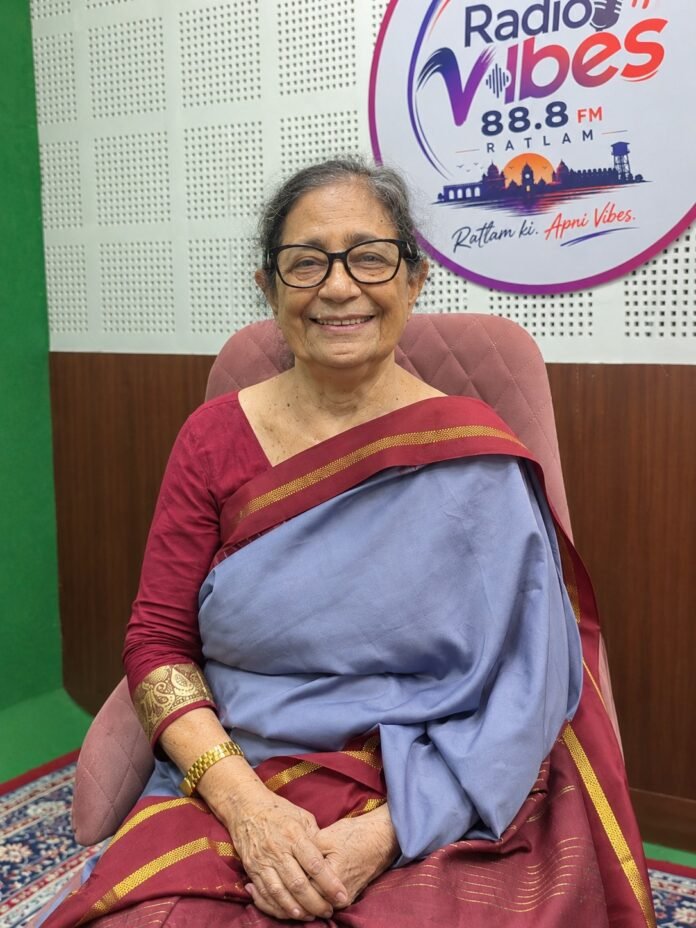
Popularly known as the “Mother Teresa of Malwa”, the Padma Shri awardee reflects on her journey in medicine, women’s healthcare, tribal welfare and the importance of compassion in healing.
For Dr Leela Joshi, medicine has always been more than a profession. It is a commitment to service and humanity. A Padma Shri awardee and a renowned gynaecologist, she has dedicated decades to improving healthcare access for tribal women and children, particularly in the remote areas of Ratlam, Madhya Pradesh.
After a distinguished career with the Indian Railways, where she served as Chief Medical Director, Dr Joshi continued her mission of serving underserved communities after retirement. Her work in addressing anaemia among tribal women and adolescent girls earned her widespread recognition and the affectionate title of the “Mother Teresa of Malwa”.
In an interaction with Radio Vibes 88.8 FM, she shares the inspiration behind her medical journey, the challenges surrounding women’s health, the changing role of technology in healthcare and the values that have guided her life.
Radio Vibes: What inspired you to become a doctor?
Dr Leela Joshi: My mother was my inspiration. After marriage, she witnessed young pregnant women dying in the village because medical facilities were unavailable. Although she could not become a doctor herself, she decided that her daughter would fulfil that dream. Coming from an ordinary middle-class family, I pursued medicine because of her determination.
Radio Vibes: What motivated you to dedicate your life to tribal healthcare in Ratlam?
Dr Joshi: Meeting Mother Teresa was a turning point in my life. She held my hand and asked me to do something for a group of tribal people. Her words stayed with me. Ratlam is my birthplace, and after retirement, I decided to return and serve its tribal communities.
Radio Vibes: What are the biggest challenges in women’s health today?
Dr Joshi: Women often neglect their own health while caring for their families. Lack of awareness, poor nutrition and gender inequality make the situation worse. During a tribal health camp, I encountered a pregnant woman whose haemoglobin level was around 4.5 grams per decilitre. We arranged medical care and follow-up. Experiences like these underline the importance of timely treatment, awareness and continued medical support.
Radio Vibes: How can families improve the health and well-being of adolescent girls?
Dr Joshi: Girls need proper nutrition, healthcare and emotional support. Parents must treat daughters and sons equally. Adolescent girls should receive age-appropriate guidance about personal safety and reproductive health. Mothers and daughters must be able to discuss health concerns openly, without fear or hesitation.
Radio Vibes: With rapid advancements in medical technology, can it replace the human touch in healthcare?
Dr Joshi: Technology has transformed diagnosis and treatment, but it cannot replace an experienced clinician. Doctors must listen to patients, understand their circumstances and use technology wisely. Counselling is equally important, particularly for people living with chronic illnesses, where mental and physical health are closely connected.
Radio Vibes: After years of medical service, what gives you the greatest satisfaction?
Dr Joshi: Patient satisfaction is my greatest reward. When someone arrives in pain and leaves feeling better, it gives me immense happiness. Awards are valuable, but making a difference in people’s lives is what matters most.
Radio Vibes: How would you like to be remembered?
Dr Joshi: My greatest identity is being a good human being.
Dr Leela Joshi’s journey is a reminder that professional success acquires deeper meaning when accompanied by compassion and service. Her life and work continue to inspire young professionals to look beyond personal achievements and use their knowledge and abilities to make a meaningful difference in society.