

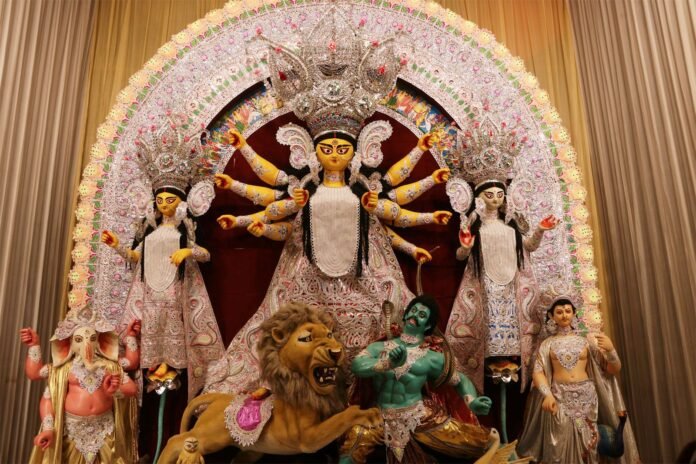
West Bengal is immersed in the festive spirit as Durga Puja 2026 brings together millions of devotees to celebrate one of India’s most significant religious and cultural festivals. The main festivities begin with Maha Shashthi on October 16 and conclude with Vijaya Dashami on October 21. Across Kolkata and other parts of Bengal, beautifully decorated pandals, artistic idols, traditional music and elaborate rituals transform streets and neighbourhoods into vibrant centres of celebration.
More than a religious festival, Durga Puja is an expression of Bengal’s cultural identity, artistic heritage and community spirit. It celebrates the victory of good over evil while bringing families, friends and communities together through shared traditions, devotion and festivities.
What Is Durga Puja?
Durga Puja is a Hindu festival dedicated to Goddess Durga, who symbolises Shakti, or divine feminine power. According to Hindu mythology, the goddess emerged through the combined energies of the gods to defeat Mahishasura, a powerful buffalo demon whose growing strength threatened the balance of the universe. After a fierce battle, Goddess Durga defeated the demon, symbolising the triumph of righteousness over evil and the restoration of peace.
In Bengal, the festival also carries the emotional significance of welcoming Goddess Durga to her maternal home. She is traditionally depicted alongside her children, Lakshmi, Saraswati, Kartikeya and Ganesha. This imagery gives the celebration a sense of homecoming and family reunion, making it deeply personal for many Bengali households.
Important Dates of Durga Puja 2026
The main celebrations in Bengal take place over five principal days. Maha Shashthi, observed on October 16, marks the ceremonial beginning of the festivities. Maha Saptami follows on October 17, with rituals associated with the worship of the goddess and nature. Maha Ashtami, on October 19, is one of the most auspicious days and features Pushpanjali and Sandhi Puja. Maha Navami falls on October 20, bringing special prayers and worship, while Vijaya Dashami on October 21 marks the conclusion of the festival with farewell rituals and idol immersion.
The festival season traditionally begins with Mahalaya, which falls on October 10 in 2026. The day is associated with invoking the goddess and is marked by devotional songs, prayers and the recitation of sacred verses.
Rituals and Traditions That Define the Festival
Durga Puja is celebrated through a series of rituals that reflect devotion, mythology and cultural heritage. On Maha Shashthi, Bodhon, Amantran and Adhivas rituals are performed to ceremonially invoke and welcome Goddess Durga. These observances mark the beginning of the principal worship ceremonies.
Maha Saptami is associated with Nabapatrika Puja, a ritual involving the worship of nine plants tied together and bathed before being placed for worship. The tradition reflects the close relationship between divinity, nature and fertility.
Maha Ashtami is among the most significant days of the festival. Devotees gather to offer flowers to the goddess during Pushpanjali, while Sandhi Puja is performed at the transition between Ashtami and Navami. The ritual commemorates the decisive moment in the goddess’s battle against demonic forces. Maha Navami is marked by special prayers and other religious ceremonies.
Music and dance are equally central to the celebrations. The powerful beats of the dhak, a traditional Bengali drum, fill the air around pandals, while Dhunuchi Naach, performed with incense burners, adds to the festive atmosphere. Bhog, the food offered to the goddess, is another important tradition. Preparations such as khichuri, vegetables and sweets are often shared among devotees, reflecting the spirit of community and togetherness.
The celebrations conclude on Vijaya Dashami with Sindoor Khela, a tradition in which married women apply vermilion to Goddess Durga and one another while offering prayers for happiness and well-being. The goddess is then taken in processions for Durga Visarjan, or idol immersion, accompanied by emotional farewells and wishes for her return the following year.
Pandals, Art and the Cultural Significance of Durga Puja
One of the most distinctive features of Durga Puja in Bengal is the creation of elaborate pandals. Artists and organisers spend months preparing these temporary structures, which range from traditional designs inspired by temples and heritage architecture to contemporary installations reflecting social issues, historical events and global themes.
The idols of Goddess Durga are central to this artistic tradition, with skilled artisans using clay and other materials to bring the goddess to life. The festival offers an important platform for local craftsmanship and creative expression, while also supporting livelihoods across art, decoration, hospitality, food and entertainment.
Recognising its cultural importance, UNESCO inscribed Durga Puja in Kolkata on its Representative List of the Intangible Cultural Heritage of Humanity in 2021. The recognition acknowledged the festival’s artistic traditions, community participation and ability to bring people together across social and cultural boundaries.
More Than a Religious Festival
For Bengalis, Durga Puja is often described as an emotion rather than simply a festival. Families reunite, friends gather, people dress in new clothes and neighbourhoods come alive with cultural performances, food stalls and pandal visits. The celebrations extend beyond places of worship into streets and public spaces, creating an atmosphere of shared joy and belonging.
At its heart, Durga Puja celebrates the strength of the feminine, the resilience of communities and the enduring belief that good can overcome evil. As Bengal welcomes Goddess Durga in 2026, the festival once again brings together faith, tradition and creativity, preserving a cultural legacy passed down through generations.
From the first invocation to the final farewell, Durga Puja remains a powerful reminder of the values of courage, righteousness, unity and hope. For Bengal, it is a celebration of homecoming and identity; for the wider world, it is a remarkable expression of India’s living cultural heritage.