

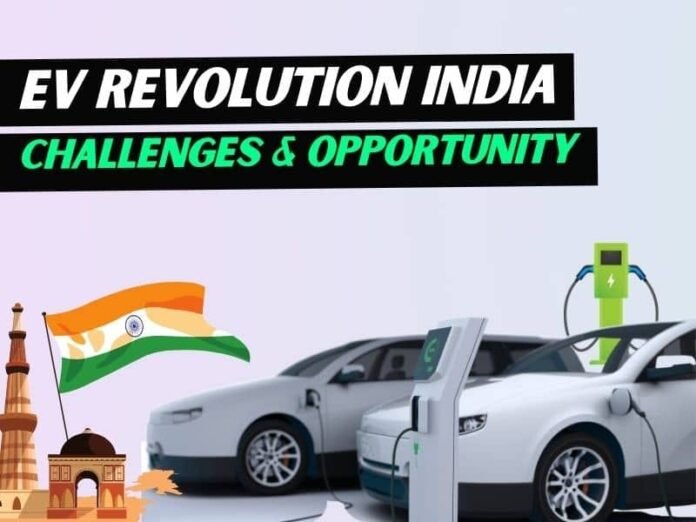
India’s electric mobility transition is no longer a distant ambition confined to policy documents and future projections. Electric vehicles are increasingly visible on Indian roads, in automobile showrooms and across the expanding network of charging stations. From electric scooters and three-wheelers to electric cars and buses, the shift is becoming part of everyday mobility. The real question now is not whether Indians will adopt electric vehicles, but whether India’s infrastructure, industries and supporting ecosystem can keep pace with the speed of that transition.
The numbers point to strong and growing momentum. India recorded around 3.3 lakh electric vehicle registrations in July 2026, marking more than 66 per cent growth compared with the same month a year earlier. Electric two-wheelers alone crossed the two-lakh mark in a single month. This growth reflects the changing economics of mobility, particularly for consumers who are sensitive to fuel and maintenance costs.
Two-wheelers and three-wheelers continue to be among the strongest drivers of India’s electrification story. For a large section of Indian commuters, delivery workers, small businesses and commercial operators, electric vehicles can offer significantly lower running costs compared with conventional petrol or diesel vehicles. The International Energy Agency estimates that nearly 10 per cent of India’s two- and three-wheeler sales were electric in 2024, highlighting the growing role of these segments in the country’s transition.
However, the success of electric mobility cannot be measured by vehicle sales alone. The availability of reliable charging infrastructure will ultimately determine how confidently consumers make the switch. As of December 2025, India had 39,485 electric vehicle chargers reported to the Ministry of Heavy Industries, including 8,414 fast chargers suitable for cars. The government has also allocated ₹2,000 crore under the PM E-DRIVE scheme for the development of public charging infrastructure, including charging and battery-swapping facilities.
This expansion is important, but the geographical distribution of infrastructure remains a crucial consideration. The experience of an EV owner in a major metropolitan city can be very different from that of someone living in a smaller town or rural area. Urban users may have access to home charging, workplace charging and multiple public charging stations. For a rural user, long-distance traveller or small-town buyer, however, concerns about charging availability, electricity reliability, repair facilities and battery replacement can still influence the decision to purchase an EV.
Highway connectivity presents another important challenge. For electric mobility to become a genuinely nationwide alternative, drivers must be able to travel between cities without constantly worrying about where the next reliable charging point is located. Fast-charging infrastructure along major highways, standardised charging systems, transparent pricing and dependable uptime will be essential as electric vehicle ownership moves beyond short urban commutes.
The ecosystem supporting EVs also needs to mature alongside infrastructure. Electric mobility is not simply an automobile industry story. It involves battery manufacturers, charging operators, software companies, dealerships, financial institutions, service providers and energy companies. Battery recycling and responsible disposal will also become increasingly important as the number of electric vehicles on the road rises.
Financing is another factor that can determine how inclusive the transition becomes. While the upfront cost of some electric vehicles has declined, the purchase price can still be a barrier for many consumers, particularly in the two-wheeler and commercial segments. Easy financing, transparent battery warranties, affordable insurance and greater clarity around battery replacement costs can help address some of these concerns.
Policymakers will also need to ensure that the benefits of electrification do not remain concentrated in the largest cities. India’s mobility revolution will only be truly successful when electric vehicles become practical for consumers in tier-two and tier-three cities, smaller towns and rural areas. Incentives, charging infrastructure and public transport electrification need to reflect this wider geography.
There are, however, encouraging signs. Electricity consumption at public charging stations rose by more than 72 per cent during 2025–26, suggesting that the infrastructure already being developed is seeing increasing utilisation. Rising usage can, in turn, encourage further private investment and create a stronger business case for expanding charging networks.
India’s electric mobility journey is therefore entering a crucial phase. The initial question was whether electric vehicles could find a place in the Indian market. Increasingly, the answer appears to be yes. The next challenge is building an ecosystem capable of supporting millions of electric vehicles reliably and affordably.
India may be ready for the electric mobility revolution, but being truly EV-ready will require more than putting electric vehicles on the road. It will mean building dependable charging networks, strengthening after-sales services, improving financing, supporting battery innovation and ensuring that the transition reaches beyond Delhi, Mumbai and Bengaluru to the towns, villages and highways that connect the country.
The future of Indian mobility may be electric. Ensuring that this future is accessible, reliable and sustainable for everyone will determine how successful the revolution ultimately becomes.