

Temple plaques die when cleanup invents a second year. Readers who already stood in the courtyard will match the stone against the still. A chatgpt photo editor helps only if 1921 stays 1921 and the deity name stays the same string. The hung plaque is the judge. A cinematic courtyard does not get a vote on that year.
Heritage writers used to crop in the house tool. Lift a glare on the marble, hide a wire, leave the year where it sat. That cost an hour and did not invent 1931. The new habit is a festival paragraph: warmer stone, softer lamps, a hero still. The render often looks fine until it sits beside the plaque. Then a second year appears, or the name becomes a generic blessing. The still is discarded. Reader trust goes with it. After that extra year, the only useful path is a short keep list and a locked resolution.
Wrong Plaque Years Are Heritage Lies Not Polish
An extra year is a heritage fail. The capture shows 1921 under the deity name. The render shows 1931 because a later year looks more “complete” in a festival crop. Readers photograph both. They will write that the page rewrote the shrine. The page did not rewrite it. The still did.
Writers usually catch this before the festival page goes public. They put the PNG next to the plaque and read the year. If the dates diverge, the file never ships. The hour spent on warmer lamps does not come back. Rework starts from the stone, not from a prettier courtyard.
A swapped deity name does the same damage with less noise. The plaque holds a full name. The render paints a shorter blessing because shorter type reads cleaner at card width. The full name was the shrine. The blessing is another shrine. Another shrine on a festival page is a different place. Readers who queued that courtyard will see the swap first.
How To Upload The Plaque Before Any Phrase
The official chat flow is three steps. First upload the reference. The plaque enters as the whole stone, year readable, not as a face crop that cuts 1921 “to make it lighter.” If the year is not in the pixels, it will not be in the render. Memory does not sit on this page as a control; the file does.
Export the courtyard shot that already shows the year. Check that 1921 occupies the frame. Then upload. A dump from a phone burst wastes the festival window: the file sits, the page ships late, the year never gets named. Export once. Then write.
Keep The Year In The Pixels Not The Memory
Do not export a tighter face and hope the model “remembers” 1921. If the year is outside the crop, the model invents 1931 because thirty-one “closes” a caption. Call that a missing file, not a taste debate. The desk that crops the year to save weight pays the invented date, then the afternoon of withdrawal.
When the file already has 1921 and a wire at the edge, ask only for the wire. If the phrase also asks for “a more festival look,” the second door is usually the new year.
Write The Keep Year Then One Named Change
Second step: write what stays and what changes. Stay: 1921, the deity name, the stone layout. Change: one wire, one glare. One change. Two changes in one phrase are two doors. The second door is usually 1931.

A chatgpt image editor is useful here when the box stays short. Name the year. Name one cleanup. Leave the rest empty. If the phrase talks about “a more sacred courtyard,” the model treats the year as clutter. Treat the year as the fact, not as clutter.
One Cleanup Stops The Second Date
One cleanup means one object. Remove the wire on the right. Keep 1921. Keep the name. Do not also ask for a new lamp, a new crop, and a hero pose. Each extra wish is a door. Each door can invent a year.
If the wire is gone and 1931 appeared, do not correct both in one rewrite. Return to the source. Keep only the wire removal. The second wish waits. Stacking corrections inside one paragraph recreates the extra year. The desk that stacks pays twice: the rework and the festival afternoon lost on adjectives.
Lock Resolution At One Two Or Four K
Third step: choose settings, then Generate Image. Resolution on this page is 1K, 2K, or 4K. For a plaque still, 1K is enough to read 1921 on a phone. 2K helps if the stone type is thin. 4K is for a print extra, not for a first festival click. Jumping to 4K “to look more sacred” does not protect the year. It only spends the window.

Name the face, the pose, and the logo-like plaque type in the keep line before you pick a K. The control does not invent a year that you cut out. It enlarges what you uploaded. If 1921 is sharp at 1K, stay at 1K. If it is thin, move to 2K on the next click, not in the same novel.
Four K Does Not Excuse A Missing Year
A 4K still with a wrong year is a more expensive lie. The festival page does not need more pixels. It needs the same 1921. PicEditor AI will generate at 4K if you ask. The pass rule stays on the year, not on the generate click.
Keep the face and pose if a priest or a visitor is in frame. A correct year on a new jaw is still a fail. Readers know the courtyard. They will see a stance that was not on the stone day.
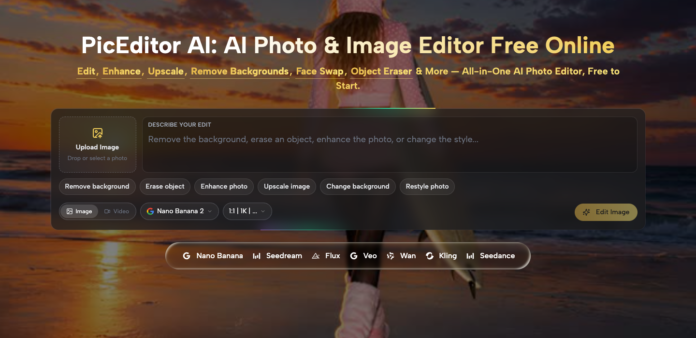
Generate Image comes last. Without a named year and a chosen K, the click produces another courtyard. The page does not need another courtyard. It needs the same plaque with one wire gone. PicEditor AI generates even if the phrase is a novel. The novel is the risk. The short line is the method. Upload. Name 1921. Name one cleanup. Pick 1K or 2K. Then generate. If that order breaks, the file still exists as another shrine, not as the plaque.
- Upload the whole plaque, year readable.
- Write 1921 and the deity name before any cleanup.
- Pick 1K or 2K, then Generate Image.
- Place the render beside the stone before a second phrase.
Common Misses Invent A Second Shrine
The expensive miss is asking for “more festival” without naming the year. The second is cropping 1921 to save weight. The third is jumping to 4K after a 1K still that already matched. All three open the door to 1931.
If the render fails the year, discard it. Do not file a backup. Backups of wrong plaques get reused on the next feast. Reuse is how the lie travels.
Matching Plaques Keep The Festival Page Honest
Festival close puts the render beside the hung plaque. Read 1921. Trace the name. If either moved, discard the still. A clean courtyard that lies about the year is worse than a slightly dirty courtyard that matches the stone.
PicEditor AI can lift a wire when the keep list is honest. It cannot vote against the plaque. The plaque is the judge. The cinematic courtyard is the exhibit that failed. Festival day needs the capture that matches the stone, not a poster that invents 1931. The desk still reads the year after the wire is gone.
This path fits a writer who already has the plaque and needs one glare gone. A travel-poster brief can keep the cinematic paragraph. Heritage pages cannot. PicEditor AI does not write the shrine. The year does.