

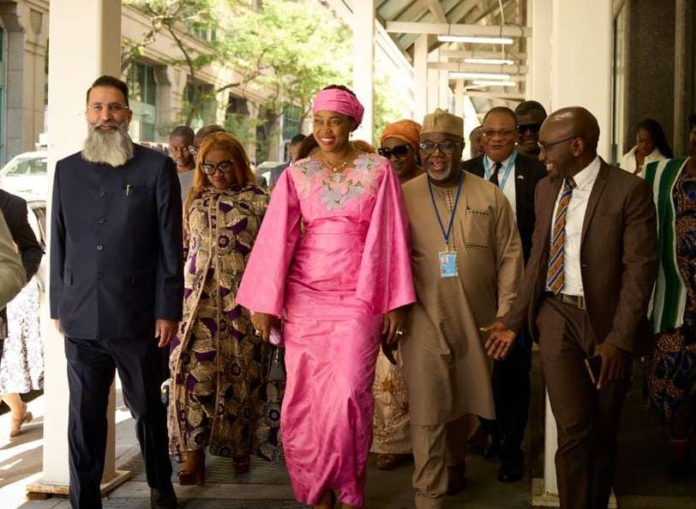
The United Nations General Assembly (UNGA) has declared November 27 as the International Day for the Elimination of Child, Early and Forced Marriage, marking a significant global step towards ending child marriage and protecting the rights of children.
The resolution was adopted by consensus on September 4, 2026, by the 193-member United Nations. The initiative was presented by Dr. Fatima Maada Bio, First Lady of Sierra Leone and President of the Organization of African First Ladies for Development.
The new international observance is intended to strengthen global awareness, advocacy and policy efforts aimed at preventing child marriage, early marriage and forced marriage.
UN Declares November 27 as Child Marriage Elimination Day
The United Nations General Assembly adopted the resolution designating November 27 every year as the International Day for the Elimination of Child, Early and Forced Marriage. International days declared by the UN are intended to draw attention to important global issues and encourage governments, civil society organisations and other stakeholders to coordinate efforts towards addressing them.
The designation places child, early and forced marriage more prominently on the international agenda and provides an annual platform for awareness campaigns, policy discussions and advocacy.
What Is Child Marriage?
Child marriage generally refers to a formal marriage or informal union in which at least one person is under 18 years of age.
The terms used in the new UN observance have related but distinct meanings:
- Child marriage: A formal marriage or informal union involving a person below 18.
- Early marriage: A broader term referring to marriage taking place at a young age.
- Forced marriage: A marriage or union entered into without the full and free consent of one or both individuals.
Child marriage is associated with concerns relating to education, health, personal autonomy, economic opportunities and the protection of children’s rights.
Global Child Marriage Statistics
The United Nations Population Fund (UNFPA) estimates that approximately 640 million girls and women alive today were married during childhood. UNFPA has also reported that approximately 12 million girls are married before reaching the age of 18 every year.
These figures highlight the continuing scale of child marriage and the need for sustained international and national action.
India’s Bal Vivah Mukt Bharat Campaign
India has been working to eliminate child marriage through legislation, government programmes and public awareness campaigns. The Bal Vivah Mukt Bharat campaign was launched on November 27, 2024, with the objective of accelerating efforts to make India free from child marriage.
The coincidence of the campaign’s anniversary with the newly designated International Day for the Elimination of Child, Early and Forced Marriage gives November 27 particular significance in India’s child-marriage prevention efforts.
India’s Progress in Reducing Child Marriage
India has recorded a decline in the proportion of young women who were married before the age of 18.
According to National Family Health Survey (NFHS) data cited in the context of child marriage, the share of women aged 20–24 years who were married before the age of 18 declined from 23.3% in NFHS-5 (2019–2021) to 20.1% in NFHS-6 (2023–2024). The decline indicates progress, although child marriage remains an important social and child-protection challenge requiring continued intervention.
Assam’s Action Against Child Marriage
Assam has undertaken a major state-level crackdown against child marriage as part of its efforts to address the practice. The state has reported more than 12,000 registered child marriage cases and around 11,000 arrests. It has also cited an 81% decline in child marriages across 20 districts.
The developments in Assam have drawn attention to the role of enforcement, community participation and awareness in efforts to prevent child marriage.