

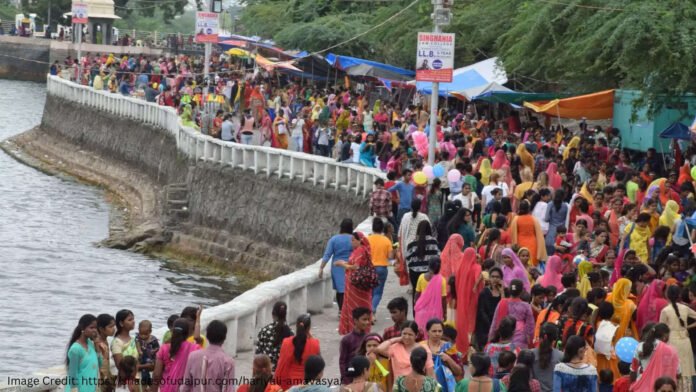
As the monsoon paints Udaipur in shades of green, the city is preparing to welcome one of its most cherished seasonal traditions, the Hariyali Amavasya Mela. Held every year during Shravan Amavasya, the historic two-day fair brings together faith, food, shopping, entertainment and the distinctive charm of Udaipur’s monsoon season.
This year, the fair will be held on August 12 and 13, 2026, along the stretch from Fateh Sagar Pal towards Saheliyon-ki-Bari via Saheli Marg. The celebration is expected to transform the area into a bustling festive zone, with hundreds of stalls, traditional rides and crowds gathering to experience one of Udaipur’s oldest monsoon traditions.
The Hariyali Amavasya Mela is believed to be more than 125 years old, making it an important part of the cultural memory of the city. Unlike many contemporary fairs, its identity is closely connected with the arrival of the monsoon. The festival celebrates the greenery that emerges across Rajasthan after the rains, when the otherwise arid landscape takes on a completely different character. Udaipur, with its lakes, hills and historic gardens, provides a particularly picturesque setting for the celebration. The Udaipur Municipal Corporation also recognises Hariyali Amavasya as one of the city’s important seasonal festivals.
The fair is traditionally associated with women and family celebrations. While people of all ages participate, August 13 has been designated as a special day for women and children this year. The tradition gives the second day of the fair its distinctive character, creating a space where women and children can enjoy the festivities, shopping and rides in a dedicated atmosphere.
One of the biggest attractions this year is expected to be the large marketplace created along the fair route. Around 800 stalls are being set up, offering everything from clothes, toys and household articles to handicrafts, accessories and local products. For many visitors, browsing these temporary markets is as much a part of the Hariyali Amavasya experience as visiting the fair’s amusement rides.
The traditional dolar-chakri, giant wheels and other carnival rides add another layer of excitement, particularly for children. The sound of music, the movement of colourful rides and the bustle of vendors create an atmosphere that is distinctly different from Udaipur’s usual tourist landscape.
Food is another important part of the fair. Temporary food stalls bring together popular snacks, sweets and seasonal favourites, allowing visitors to enjoy familiar local flavours while moving through the crowded fairgrounds. For many families, eating together, shopping and taking rides have become annual rituals associated with the festival.
The fair also carries a deeper cultural significance. Hariyali Amavasya, observed on the new moon day of Shravan, is traditionally associated with greenery, prosperity and the rejuvenation brought by the monsoon. In several parts of India, the day is marked by prayers, offerings, remembrance of ancestors and activities connected with nature. The timing of the Udaipur fair reflects this seasonal spirit, celebrating the landscape at the point when the rains have transformed the city and its surroundings.
Udaipur’s celebration has its own distinctive traditions. The city’s municipal information describes the fair as a festival particularly associated with women, who traditionally pray for the prosperity and wellbeing of their families. The fair has also included swings, sweet stalls and other community attractions over the years.
What makes the Hariyali Amavasya Mela special, therefore, is not simply its size. It is the continuity of the tradition. Generations of Udaipur residents have grown up seeing the city come alive around Fateh Sagar during Shravan. Parents who once visited the fair as children now bring their own children, passing on familiar experiences of rides, shopping, food and monsoon celebrations.
The fair also reflects an important aspect of Udaipur’s identity. The city is often celebrated for its palaces, lakes and heritage architecture, but its cultural character is equally visible in its community festivals. Hariyali Amavasya brings together neighbourhoods, families, shopkeepers, artisans, children and visitors in a shared celebration.
This year, as the two-day mela unfolds on August 12 and 13, the stretch from Fateh Sagar Pal to Saheliyon-ki-Bari will once again become a vibrant meeting point of tradition and contemporary celebration. The greenery of the monsoon will provide the backdrop, while stalls, swings, food and crowds will supply the colour and energy.
For Udaipur, Hariyali Amavasya is ultimately more than an annual fair. It is a celebration of the monsoon, a memory passed between generations and a reminder that some of a city’s most enduring traditions are found not inside monuments, but in the everyday celebrations of its people.
As the rains bring life back to the Aravallis and the lakes fill against the backdrop of green hills, Udaipur prepares to celebrate its old monsoon tradition once again, with the Hariyali Amavasya Mela, where heritage, community and the joy of the rainy season come together.