

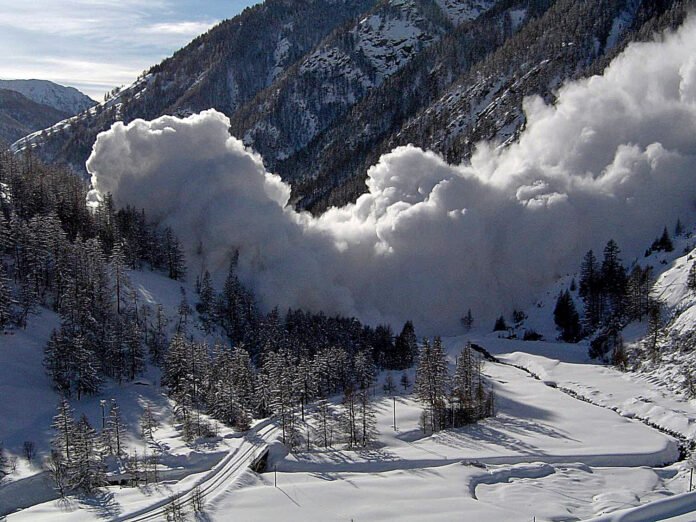
Majestic snow-covered mountains often symbolise adventure, serenity and natural beauty. Yet beneath their pristine white landscapes lies one of nature’s most destructive hazards, an avalanche. In a matter of seconds, a seemingly stable blanket of snow can break apart and race downhill with tremendous force, sweeping away everything in its path. Every year, avalanches claim lives, damage infrastructure and pose serious risks to mountaineers, skiers, soldiers and communities living in mountainous regions.
An avalanche is the rapid flow of a large mass of snow, ice and, in some cases, rocks down a mountain slope. These fast-moving snow slides can travel at speeds exceeding 130 km/h (80 mph), leaving little time for people in their path to escape. The immense force generated by an avalanche can uproot trees, destroy buildings, bury roads and trap victims under several metres of snow.
Why Do Avalanches Occur?
Avalanches occur when the layers of snow on a slope become unstable. Snowfall does not form a single uniform layer; instead, it accumulates in multiple layers over time. Differences in temperature, moisture and wind conditions can create weak layers beneath stronger ones. When the upper layer becomes too heavy or is disturbed, it can suddenly break away and slide downhill.
Several natural and human-induced factors can trigger an avalanche. Heavy snowfall adds weight to an already unstable snowpack, while strong winds can deposit snow unevenly, creating dangerous overhangs. Rapid warming due to sunlight or rising temperatures can weaken the bonds between snow layers.
Earthquakes, falling rocks and even vibrations caused by skiers, snowboarders or mountaineers may also trigger an avalanche if conditions are already unstable.
Experts note that most snow avalanches occur on slopes with angles between 30 and 45 degrees, where gravity is strong enough to pull the snow downhill but not so steep that snow falls continuously.
Types of Avalanches
Avalanches vary in size and behaviour depending on the condition of the snow and terrain.
●A loose snow avalanche begins from a single point and gathers more snow as it descends, forming a fan-shaped path. These are common after fresh snowfall and usually involve dry, powdery snow.
●A slab avalanche, the most dangerous and destructive type, occurs when a large, cohesive slab of snow breaks away from the weaker layer beneath it. These avalanches can travel long distances and account for the majority of avalanche-related fatalities.
●In high mountain regions, rock or debris avalanches may occur when masses of rock, soil, ice and snow collapse together, particularly after earthquakes, glacial melting or heavy rainfall.
Predicting and Reducing the Risk
Modern avalanche forecasting combines weather monitoring, snowpack analysis and terrain assessment to identify high-risk areas. Avalanche forecasting centres issue daily advisories that help mountaineers, skiers and rescue agencies assess the danger before entering snow-covered regions.
In many mountainous countries, controlled explosions are deliberately used to trigger small avalanches under supervised conditions, preventing the build-up of large and more destructive snow masses. Infrastructure such as snow barriers, protective walls and avalanche galleries over roads also help reduce the impact in vulnerable areas.
A Reminder of Nature’s Power
As climate patterns continue to change, shifting snowfall and rising temperatures are influencing avalanche behaviour in many mountain regions around the world. This makes scientific monitoring, public awareness and responsible outdoor practices more important than ever.
Whether in the Himalayas, the Alps or the Rockies, avalanches remain a powerful reminder that mountains demand respect. Understanding how they form, recognising warning signs and following safety advisories can make the difference between a memorable adventure and a tragic disaster.