

The curtains came down on the 2026 Commonwealth Games in Glasgow with India delivering a commendable performance, finishing fourth in the overall medal standings with 39 medals. The Indian contingent returned home with 13 gold, 17 silver and 9 bronze medals, capping off an impressive campaign that showcased the country’s growing strength across multiple sporting disciplines.
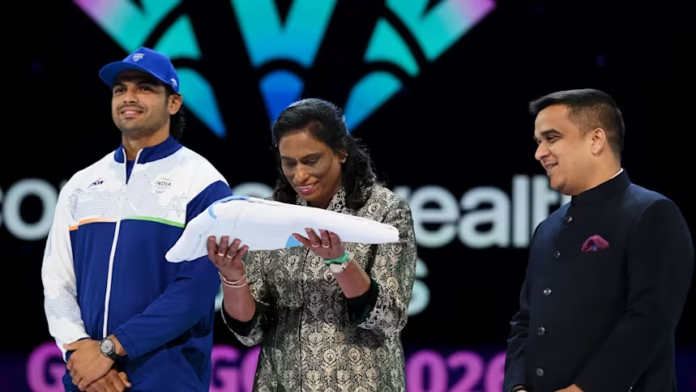
The closing ceremony, held at the OVO Hydro Arena on August 2, celebrated eleven days of sporting excellence, cultural performances and the spirit of the Commonwealth. A defining moment of the ceremony came when the Commonwealth Games flag and ceremonial baton were officially handed over to India, which will host the landmark centenary edition of the Games in Ahmedabad in 2030.
India’s medal tally was powered by a dominant showing in boxing, where the nation emerged as the undisputed force by winning a historic seven gold medals. The boxers displayed exceptional skill and consistency throughout the competition, contributing more than half of India’s gold medals and underlining the country’s rise as a global boxing powerhouse.
Indian athletes also impressed in several other disciplines, including wrestling, weightlifting, shooting, judo and para sports, reflecting the depth of talent across the contingent. The Games highlighted the emergence of several young athletes while experienced campaigners once again delivered under pressure.
One of the most anticipated events of the Games was the men’s javelin throw, where Olympic champion Neeraj Chopra secured the silver medal with a best effort of 85.83 metres. Although he narrowly missed the gold, Chopra’s performance reaffirmed his status as one of the world’s premier javelin throwers and added another prestigious medal to his decorated career.
The final day of competition did not bring any additions to India’s medal tally, but the contingent comfortably retained fourth place in the standings. Australia once again topped the medal table, followed by England and Canada, while India finished ahead of several traditional Commonwealth sporting nations.
Beyond the medals, Glasgow 2026 reflected India’s growing stature in international sport. The contingent demonstrated remarkable consistency across disciplines, with both established stars and emerging athletes contributing to the overall success. The performances also highlighted the impact of improved training infrastructure, scientific coaching and sustained investment in athlete development over recent years.
The conclusion of the Games also marked the beginning of a new chapter for Indian sport. As the Commonwealth Games flag was passed to Ahmedabad, attention shifted to India’s preparations for hosting the 2030 edition, the first Commonwealth Games to be held in the country since Delhi hosted the event in 2010.
Hosting the centenary edition presents India with an opportunity to showcase world-class sporting infrastructure, organisational capabilities and cultural heritage before a global audience. The successful handover ceremony symbolised not just the end of Glasgow’s Games, but the beginning of India’s journey towards welcoming athletes from across the Commonwealth in 2030.
With a fourth-place finish, a rich medal haul and several memorable performances, India’s campaign in Glasgow will be remembered as another significant milestone in the nation’s sporting journey. As the focus now turns to Ahmedabad 2030, the achievements of Glasgow 2026 provide both confidence and momentum for India’s aspirations on the international sporting stage.