

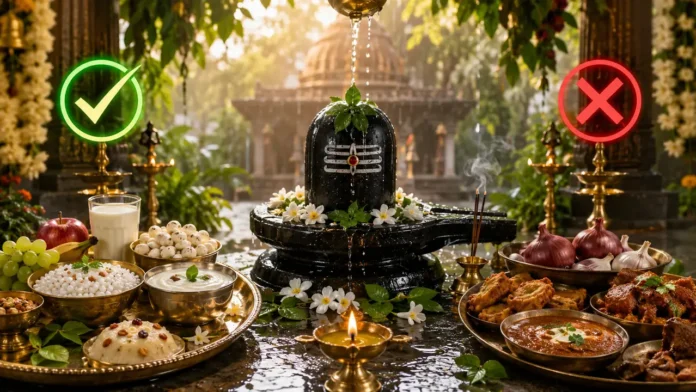
With the beginning of Sawan (Shravan), devotees across the country immerse themselves in prayers, fasting, and the worship of Lord Shiva. Considered the holiest month dedicated to Mahadev, Sawan is not only about rituals but also about cultivating discipline, purity, and spiritual growth. Hindu scriptures and traditional practices prescribe certain dos and don’ts that devotees observe throughout the month to seek Lord Shiva’s blessings.
What to do during Sawan?
Offer prayers to Lord Shiva: Begin the day with a bath and offer water, milk, bel patra (bael leaves), flowers, and sandalwood paste to the Shivling. Chanting “Om Namah Shivaya” or the Maha Mrityunjaya Mantra is considered highly auspicious.
Observe Sawan Somwar Vrat: Many devotees keep fasts on Mondays, the day associated with Lord Shiva. The fast is observed with devotion, prayers, and a simple satvik diet.
Follow a satvik lifestyle: The month encourages purity in both food and conduct. Eating fresh fruits, milk, curd, nuts, sabudana, singhara flour, kuttu flour, and seasonal vegetables is commonly recommended.
Practise charity and kindness: Donating food, clothes, or essentials to those in need, feeding animals, and helping others are considered acts of great merit during Sawan.
Maintain spiritual discipline: Reading the Shiva Purana, visiting Shiva temples, practising meditation, and controlling anger and negative thoughts are believed to enhance the spiritual significance of the month.
What to avoid during Sawan?
Avoid tamasic foods: Devotees traditionally refrain from consuming meat, fish, eggs, alcohol, and tobacco during Sawan. Onion and garlic are also avoided because they are considered tamasic, believed to stimulate worldly desires and distract from spiritual practices.
Why is kadhi often avoided? In many households, kadhi is not prepared during Sawan. Traditionally, the humid monsoon weather is believed to increase the chances of curd fermenting excessively, making digestion difficult. Since curd is the primary ingredient in kadhi, many families avoid it as a precaution during the rainy season, though practices may vary by region.
Do not pluck bel leaves after offering prayers: It is considered respectful to collect fresh bel patra before worship rather than plucking leaves unnecessarily later in the day.
Avoid negative behaviour: Speaking harshly, lying, indulging in arguments, or harming any living being goes against the spirit of Sawan, which emphasises compassion, self-control, and inner peace.
Avoid wasting food and water: As offerings to Lord Shiva often include water and milk, devotees are encouraged to perform rituals mindfully without unnecessary wastage.
The deeper meaning
While many of these practices are rooted in religious tradition, they also reflect practical wisdom. A light vegetarian diet is easier to digest during the humid monsoon months, while fasting encourages moderation and self-discipline. Avoiding intoxicants and maintaining a calm, positive mindset promotes both physical well-being and mental clarity.
Ultimately, Sawan is not merely about following rituals, it is about transforming one’s thoughts, habits, and actions. Whether through prayer, fasting, charity, or simple acts of kindness, the sacred month reminds devotees to live with humility, purity, and devotion to Lord Shiva.
As the chants of “Har Har Mahadev” resonate across temples and homes, Sawan offers an opportunity to pause, reflect, and strengthen one’s spiritual journey.