

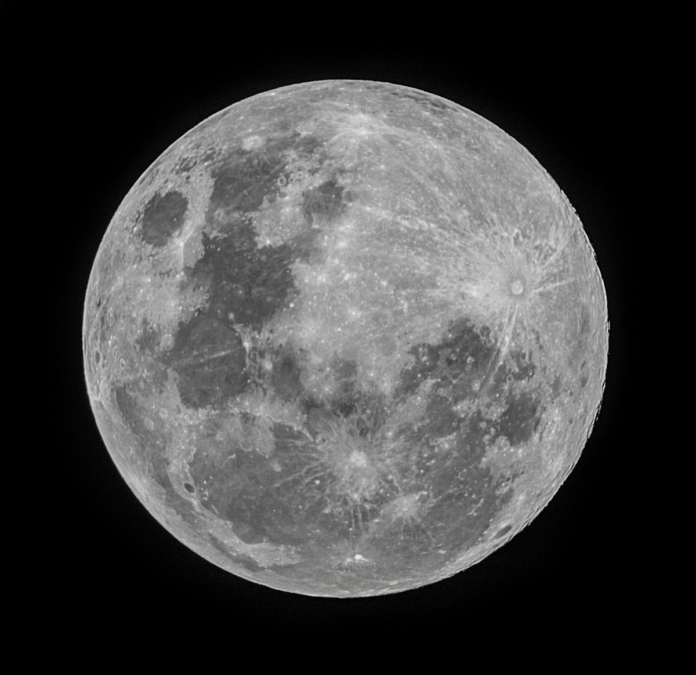
International Moon Day, observed every year on July 20, commemorates one of humanity’s greatest scientific achievements—the Apollo 11 Moon landing in 1969, when Neil Armstrong became the first person to set foot on the lunar surface, followed by Buzz Aldrin, while Michael Collins remained in orbit aboard the command module.
The day is more than a tribute to the historic Moon landing. It celebrates decades of international cooperation in space exploration and highlights humanity’s renewed ambition to return to the Moon and establish a long-term presence there.
Why Is International Moon Day Celebrated on July 20?
International Moon Day marks the anniversary of July 20, 1969, when NASA’s Apollo 11 mission successfully landed astronauts on the Moon. Neil Armstrong’s iconic first step and his famous words, “That’s one small step for man, one giant leap for mankind,” became a defining moment in human history. The mission demonstrated the possibilities of science, innovation, and international inspiration, changing the future of space exploration forever.
When Was International Moon Day Declared?
The United Nations General Assembly (UNGA) officially proclaimed International Moon Day on December 9, 2021, through Resolution 76/76 on international cooperation in the peaceful uses of outer space. The proposal was recommended by the United Nations Committee on the Peaceful Uses of Outer Space (COPUOS) following an initiative by the Moon Village Association (MVA), a Vienna-based non-governmental organization that promotes sustainable and cooperative lunar exploration.
The observance encourages countries, space agencies, researchers, and educational institutions to work together for the peaceful exploration and sustainable use of the Moon.
The Journey of Moon Exploration
Although Apollo 11 remains the most celebrated lunar mission, humanity’s exploration of the Moon began much earlier. The Soviet Union’s Luna 2 became the first spacecraft to reach the Moon on September 14, 1959, paving the way for future missions. Since then, several countries have made significant contributions to lunar exploration, including:
- United States
- Russia
- India
- China
- Japan
- Israel
India’s Chandrayaan missions, China’s Chang’e programme, and NASA’s Artemis programme have collectively expanded scientific understanding of the Moon and its potential for future human habitation.
International Moon Day 2026 Celebrations
International Moon Day is celebrated globally through exhibitions, public lectures, astronomy workshops, educational programmes, and community events.
One of the major attractions in 2026 is “To the Moon & Beyond: Kingston’s Solar System Walk” in the United Kingdom. Running from July 20 to September 30, the event transforms Fairfield Recreation Ground into a scaled model of the Solar System, allowing visitors to experience the vast distances of space through an interactive walking trail.
Another prominent celebration is being hosted in Dubai by the Dubai Astronomy Group and the SEE Institute, featuring astronomy sessions and public engagement programmes.
Several space agencies, universities, science museums, and astronomy clubs around the world are also organizing special events to mark the occasion.
Why International Moon Day Matters Today
International Moon Day is no longer just about remembering the past—it is about preparing for humanity’s future in space.
The world is entering a new era of lunar exploration. NASA’s Artemis programme aims to return astronauts to the Moon and eventually establish a sustainable human presence there during the 2030s. Future missions will focus on scientific research, resource utilization, and developing technologies for deeper space exploration, including missions to Mars.
Countries across the globe are collaborating on lunar science, making the Moon a symbol of peaceful international cooperation rather than competition.
A New Era of Lunar Exploration
More than five decades after Apollo 11, the Moon continues to inspire scientists, engineers, and dreamers worldwide.
International Moon Day reminds us that space exploration is a shared human journey. From the first lunar landing to future Moon bases, every milestone reflects humanity’s determination to push the boundaries of knowledge and innovation.
As governments and private space companies prepare for the next generation of lunar missions, International Moon Day 2026 serves as a celebration of past achievements and a glimpse into the exciting future that awaits beyond Earth.