

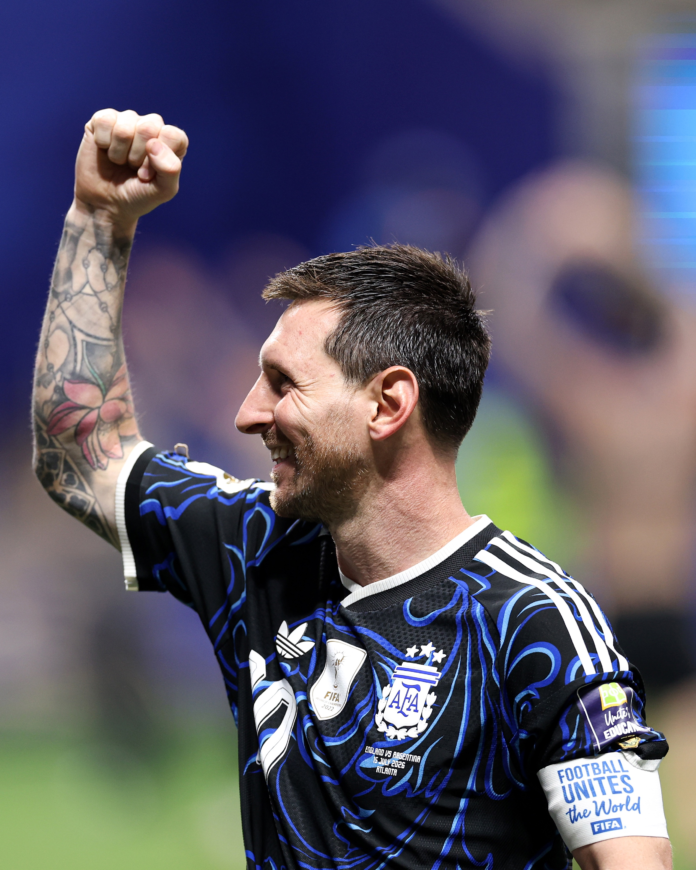
Lionel Messi could have been at the heart of Spain’s most successful football era, with the chance to win UEFA Euro 2008, the 2010 FIFA World Cup, and UEFA Euro 2012. Instead, despite spending most of his footballing life in Barcelona, Messi chose loyalty over guaranteed silverware, deciding to represent his birthplace, Argentina, a decision that ultimately transformed him into the nation’s greatest sporting icon.
As Messi prepares to lead Argentina into another FIFA World Cup final, ironically against Spain, one of football’s greatest “what if” stories has returned to the spotlight. Few fans know that Spain desperately wanted Messi to wear its famous red jersey. Instead, the boy who built his career in Barcelona chose to represent the blue and white of his homeland, Argentina.
That decision not only shaped Messi’s legendary career but also altered the course of international football history.
The VHS Tape That Started It All
The story dates back to 2002, when Argentina’s then-head coach Marcelo Bielsa and assistant coach Claudio Vivas visited Barcelona. During the trip, Messi’s representative Horacio Gaggioli handed Vivas a VHS tape featuring the teenage prodigy’s dazzling performances. At the time, Spain was actively trying to convince Messi to switch allegiance.
When Vivas played the footage for Bielsa, the coach was stunned by Messi’s speed and close control.
“Play it at normal speed,” Bielsa reportedly said.
Vivas smiled and replied:
“This is normal speed. The kid is simply extraordinary.”
That single VHS tape convinced Argentina’s football authorities they could not afford to lose one of the brightest talents the game had ever seen.
A Wake-Up Call from Spain
Despite Messi’s brilliance, he was initially overlooked for Argentina’s squad at the 2003 FIFA U-17 World Cup. The omission proved costly. Argentina lost to Spain in the semifinals. After the match, a member of the Spanish team’s staff reportedly told Argentina’s youth coach Hugo Tocalli:
“If you had brought that Barcelona boy, you would have been champions.”
The remark struck a nerve. Tocalli later admitted it haunted him and strengthened his resolve to secure Messi’s future with Argentina.
The Match That Secured Messi for Argentina
Realising Spain’s interest was growing stronger, the Argentine Football Association moved quickly. An urgent friendly match against Paraguay was organised at Argentinos Juniors Stadium to officially register Messi as an Argentina international under FIFA regulations. To ensure the match met FIFA requirements, officials expedited every formality, including appointing a FIFA-recognised referee at short notice.
Messi came on in the second half and immediately showcased the dribbling ability that would later mesmerise the football world.
That appearance effectively ended Spain’s hopes of convincing him to change national teams.
Patriotism Over Trophies
Had Messi chosen Spain, he could have become part of one of football’s greatest national teams, winning UEFA Euro 2008, the 2010 FIFA World Cup, and UEFA Euro 2012. Instead, Messi remained loyal to the country where he was born.
His decision eventually brought Argentina the 2021 Copa América, the 2022 FIFA World Cup, and now another chance at football’s biggest prize in the 2026 World Cup Final.
A Story Bigger Than Football
Today, as Messi prepares to face Spain in yet another historic World Cup final, the old VHS tape serves as a reminder that sometimes the greatest victories are decided long before the first whistle.
For Argentina, preserving Messi’s allegiance was more than securing a footballer—it was protecting a national dream. And for millions of Argentinians, the greatest goal their federation ever scored happened not on the pitch, but in a meeting room where a simple VHS tape convinced them they had found a once-in-a-generation legend.
make intro and headline on this: Patriotism Over Trophies Had Messi chosen Spain, he could have become part of one of football’s greatest national teams, winning UEFA Euro 2008, the 2010 FIFA World Cup, and UEFA Euro 2012. Instead, Messi remained loyal to the country where he was born.