

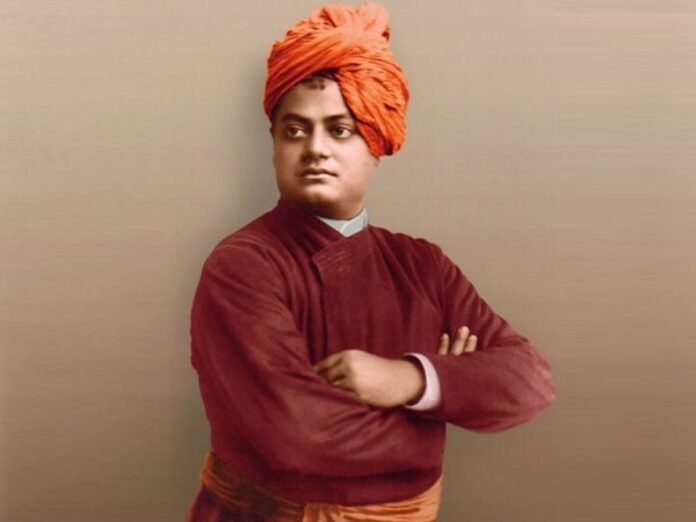
India is observing the 124th death anniversary of Swami Vivekananda today, remembering one of the nation’s greatest spiritual leaders, philosophers, and reformers whose teachings continue to inspire millions across the world. Though his life lasted only 39 years, Vivekananda’s ideas on spirituality, education, youth empowerment, and national awakening remain as relevant today as they were more than a century ago.
Swami Vivekananda passed away on July 4, 1902, at Belur Math near Kolkata, the headquarters of the Ramakrishna Math and Ramakrishna Mission, institutions he founded to promote spiritual growth and selfless service. According to his disciples, he attained Mahasamadhi after a day devoted to meditation, teaching, and routine monastic activities.
From Narendranath to Vivekananda
Born as Narendranath Datta on January 12, 1863, in Kolkata, Vivekananda displayed remarkable intellectual curiosity from an early age. His search for spiritual truth eventually led him to Sri Ramakrishna Paramahamsa, whose teachings transformed his outlook on life and inspired him to embrace monasticism.
Following his guru’s passing, Vivekananda travelled extensively across India, witnessing firsthand the poverty, social inequalities, and cultural richness of the country. These experiences shaped his vision of a spiritually awakened and socially empowered India.
The Chicago Address That Changed History
Swami Vivekananda achieved international recognition on September 11, 1893, when he addressed the World’s Parliament of Religions in Chicago with the now-famous words, “Sisters and Brothers of America.” His speech received a standing ovation and introduced the world to the philosophies of Vedanta, Yoga, and India’s tradition of religious tolerance and universal brotherhood.
The address established him as one of India’s foremost spiritual ambassadors and played a pivotal role in changing global perceptions of Indian philosophy and culture.
A Vision Beyond Religion
Vivekananda believed that spirituality should translate into service to humanity. His teachings emphasised character-building, education, self-confidence, discipline, and compassion. He inspired generations of Indians to combine personal growth with social responsibility, famously declaring, “Arise, awake, and stop not till the goal is reached.”
To carry forward these ideals, he established the Ramakrishna Mission in 1897, which continues to work in the fields of education, healthcare, disaster relief, rural development, and humanitarian service across India and abroad.
An Enduring Legacy
Although Swami Vivekananda passed away on July 4, 1902, his influence continues to shape India’s intellectual and spiritual landscape. His birth anniversary on January 12 is observed as National Youth Day, recognising his enduring message of courage, service, and nation-building.
His writings, speeches, and philosophy continue to be studied by scholars, educators, policymakers, and young people seeking guidance in an increasingly complex world.
Remembering a Timeless Visionary
More than a century after his passing, Swami Vivekananda remains a symbol of India’s spiritual heritage and cultural confidence. His life demonstrated that true strength lies not merely in knowledge but in character, compassion, and the courage to serve humanity.
As India observes his 124th death anniversary, the occasion is not only a tribute to an extraordinary monk but also an opportunity to revisit his timeless vision of an enlightened, inclusive, and self-reliant nation. His message continues to inspire people to rise above divisions, pursue excellence, and dedicate themselves to the service of others.