

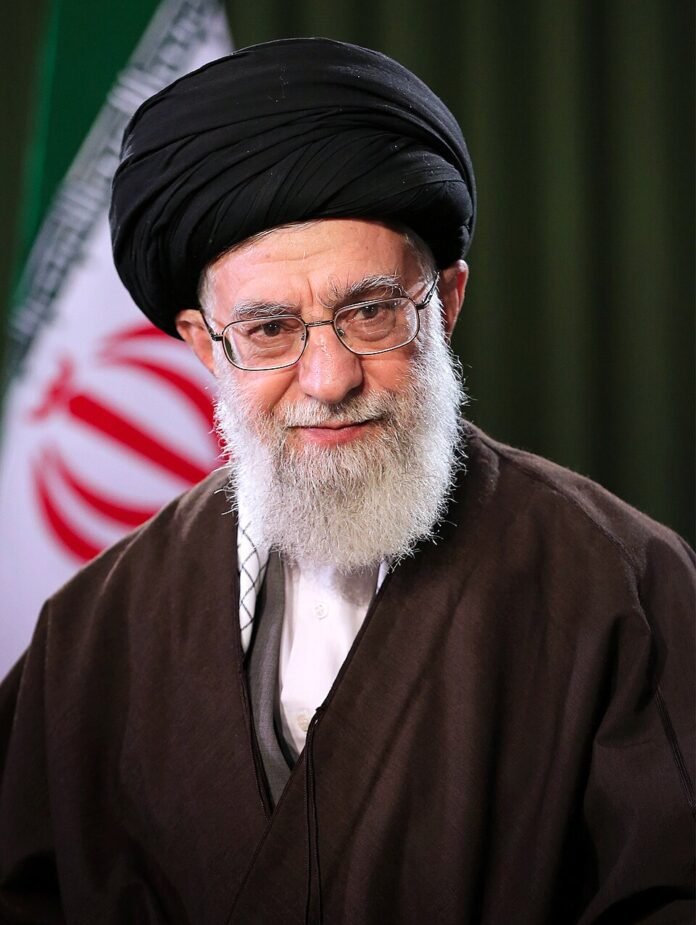
Iran is bidding farewell to one of the most influential and controversial political and religious figures of the modern Middle East. Millions of mourners are expected to participate in the state funeral of Ayatollah Ali Khamenei, who led the Islamic Republic of Iran as its Supreme Leader for nearly 37 years before being killed during the Iran war earlier this year. The funeral, delayed for months due to security concerns and the ongoing conflict, officially began on July 4 with elaborate state ceremonies in Tehran.
Who Was Ali Khamenei?
Born on April 19, 1939, in the holy city of Mashhad, Ali Khamenei studied Islamic theology from an early age and became a disciple of Ayatollah Ruhollah Khomeini, the leader of the 1979 Iranian Revolution.
Following the revolution that overthrew Shah Mohammad Reza Pahlavi, Khamenei rose rapidly through Iran’s political establishment. He served as President of Iran from 1981 to 1989 before succeeding Ayatollah Khomeini as the country’s second Supreme Leader after Khomeini’s death in June 1989.
As Supreme Leader, Khamenei held ultimate authority over Iran’s armed forces, judiciary, intelligence agencies and major state institutions, making him the country’s most powerful decision-maker.
His Leadership
During his nearly four decades in power, Khamenei oversaw Iran through periods of war, international sanctions, economic challenges and regional conflicts.
He strongly supported Iran’s missile programme, expanded the country’s strategic influence across the Middle East through allied groups, and defended Tehran’s nuclear programme as a peaceful scientific endeavour. His tenure also witnessed repeated confrontations with the United States and Israel, alongside domestic protests demanding political and economic reforms.
To supporters, he symbolised resistance against foreign pressure and the guardian of the Islamic Republic. Critics, however, accused his government of suppressing dissent, restricting civil liberties and consolidating power within the religious establishment.
How Did He Die?
According to Iranian state media and multiple international reports, Ayatollah Khamenei was killed on February 28, 2026, in a targeted U.S.-Israeli airstrike on his compound in Tehran during the opening phase of the 2026 Iran war. Several members of his family and senior Iranian officials were also reported to have been killed in the strike. His death was officially confirmed by Iranian authorities the following day.
His assassination marked one of the most consequential events in the history of the Islamic Republic and significantly altered the political landscape of Iran.
Why Is the Funeral Taking Place Now?
Although funeral ceremonies were initially planned for March, they were postponed because of the continuing conflict and security concerns. With a tentative ceasefire now in place, Iranian authorities have begun a week-long state funeral, expected to draw millions of mourners from across Iran and abroad.
The ceremonies began at Tehran’s Grand Mosalla, where Khamenei’s body has been placed in state for public viewing before processions continue through several cities.
His final burial is scheduled to take place at the Imam Reza Shrine in Mashhad, one of Shiite Islam’s holiest sites and Khamenei’s birthplace.
Who Is Attending?
The funeral is expected to witness the participation of senior Iranian political leaders, military commanders, religious scholars and representatives from countries maintaining close ties with Tehran.
Delegations from Russia, China, Pakistan, Iraq, Lebanon and several regional partners are among those expected to attend. India has also sent an official delegation to represent the Government of India. Representatives of Iran-backed organisations, including Hezbollah, are also participating in the ceremonies.
Authorities anticipate one of the largest public gatherings in Iran’s recent history, with extensive security arrangements in place throughout the funeral processions.
A Defining Figure in Modern Middle Eastern Politics
Whether viewed as a revolutionary leader, a religious authority or a deeply polarising political figure, Ali Khamenei shaped Iran’s domestic politics and foreign policy for nearly four decades. His decisions influenced regional conflicts, nuclear diplomacy and Iran’s relationship with the wider world.
As Iran observes days of national mourning, the funeral marks not only the end of an era but also the beginning of a new chapter for the Islamic Republic. The transition in leadership comes at a time of heightened geopolitical uncertainty, making the aftermath of Khamenei’s death one of the most closely watched developments in the Middle East.