

Every year on June 18, India remembers one of the most revered figures in its history, Rani Lakshmibai of Jhansi. More than a century and a half after her death in battle, the warrior queen continues to symbolize courage, sacrifice, and an unyielding spirit of resistance against colonial rule.
Born as Manikarnika Tambe in Varanasi around 1828, Lakshmibai grew up in an environment unlike that of most girls of her time. Trained in horse riding, swordsmanship, and martial arts, she developed the qualities that would later make her one of the most formidable leaders of the Revolt of 1857. After marrying Maharaja Gangadhar Rao of Jhansi, she became the Queen of Jhansi and came to be known as Rani Lakshmibai.
A turning point came after the death of her husband in 1853. Before his death, the Maharaja had adopted a son, Damodar Rao, as heir to the throne. However, the British East India Company, under Governor-General Lord Dalhousie’s Doctrine of Lapse, refused to recognize the adopted heir and annexed Jhansi. Lakshmibai rejected British claims over her kingdom and emerged as a powerful voice against colonial expansion.
When the Revolt of 1857 erupted across northern India, Lakshmibai became one of its most prominent leaders. Assuming command of Jhansi’s defence, she organized her forces and prepared the kingdom for resistance. In March 1858, British troops under General Hugh Rose laid siege to Jhansi. Despite being heavily outnumbered, the queen and her soldiers mounted a fierce defence that has since become legendary in Indian history.
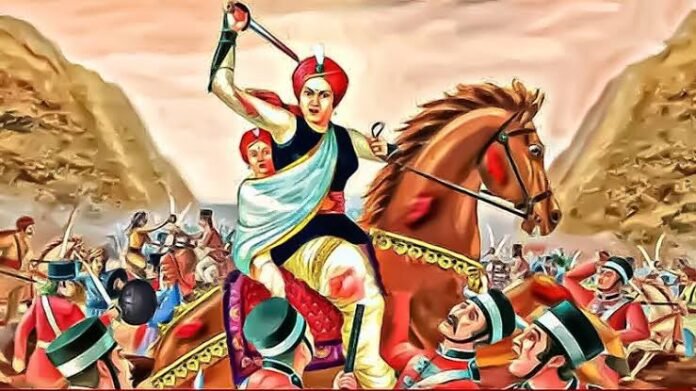
Historical accounts describe how Lakshmibai escaped from the fort after the fall of Jhansi and joined forces with other rebel leaders, including Tatya Tope. Together they captured Gwalior, one of the most strategically important strongholds in central India. Yet the British soon launched a counteroffensive. On June 17 or 18, 1858, at Kotah-ki-Serai near Gwalior, Lakshmibai fought her final battle. Dressed in warrior’s attire and leading from the front, she was killed in combat at just around 29 years of age. June 18 is widely observed as her death anniversary across India.
Her death transformed her into a legend. Even her adversaries acknowledged her bravery. British commander Hugh Rose is believed to have described her as the most courageous and capable leader among the rebels. Over time, Lakshmibai became much more than a historical figure; she evolved into a national icon whose story inspired generations of Indians during the freedom movement.
Her legacy found expression in literature, folklore, theatre, films, and popular memory. Perhaps no tribute is more famous than the poem Jhansi Ki Rani by Subhadra Kumari Chauhan, whose immortal lines, “Khoob ladi mardani, woh toh Jhansi wali Rani thi”, continue to resonate across generations. The queen’s story also inspired Netaji Subhas Chandra Bose to name the women’s regiment of the Indian National Army the “Rani of Jhansi Regiment,” honouring her as a symbol of female courage and leadership.
Today, Rani Lakshmibai remains one of India’s most enduring nationalist icons. Her life challenges conventional narratives about women in history and demonstrates how determination and leadership can alter the course of events. She fought not merely for a throne, but for dignity, sovereignty, and the right to self-determination.
On her death anniversary, the nation remembers not only the Queen of Jhansi but also the ideals she embodied. More than 168 years after her martyrdom, Rani Lakshmibai continues to inspire Indians with her fearless spirit, reminding every generation that courage in the face of adversity can leave an indelible mark on history.