

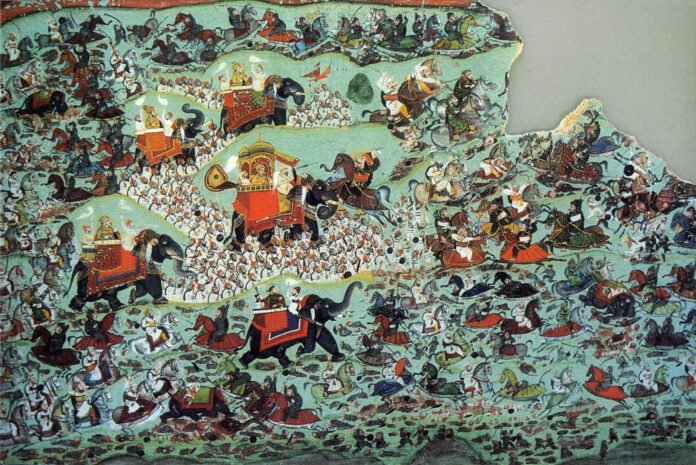
Four hundred and fifty years have passed since the Battle of Haldighati, yet the debate over its outcome continues to rage. For centuries, the battle was portrayed through the lens of Mughal court chronicles and colonial-era historians, reducing one of India’s greatest acts of resistance to a simple military encounter. But a closer look at the events of 18 June 1576 raises an important question: if the Mughals really won at Haldighati, why did they fail to achieve a single one of their objectives?
The Battle of Haldighati was not fought merely for territory. It was a battle between two visions, one represented by the expanding Mughal Empire under Akbar, and the other by Maharana Pratap’s unwavering commitment to the sovereignty of Mewar. Akbar’s objective was clear: capture Maharana Pratap, break the resistance of Mewar, and bring the kingdom permanently under Mughal control.
None of that happened.
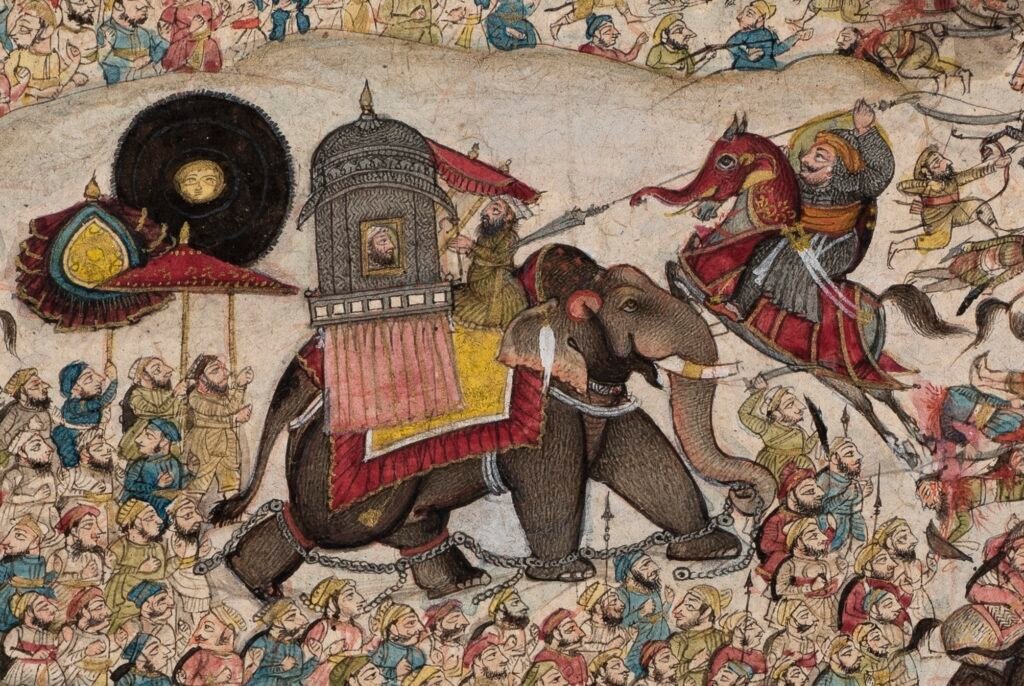
Despite commanding a vastly superior force led by Raja Man Singh of Amber and supported by some of the empire’s finest generals, the Mughal army failed to capture Maharana Pratap. They failed to force his surrender. They failed to annex Mewar. Most importantly, they failed to break the spirit of resistance that defined the kingdom.
Contemporary accounts themselves reveal that the battle was far from the one-sided Mughal triumph that later narratives often suggested. Chronicler Abdul Qadir Badauni, who was present during the campaign, recorded the ferocity of the Mewar assault. The charge led by Hakim Khan Sur and the warriors of Mewar threw the Mughal ranks into confusion, pushing them back and forcing them into a desperate struggle for survival.
The true measure of victory, however, lies not in what happened during a few hours on the battlefield but in what followed.
After Haldighati, Maharana Pratap remained the sovereign ruler of Mewar. He continued to govern, administer his territories, and issue land grants under the seal of Eklingji. In the political traditions of Rajputana, the right to grant land belonged only to an independent ruler. A defeated and subjugated king could not exercise such authority.
The Mughal Empire, meanwhile, was left with an expensive military campaign that had failed in its central mission. Historical traditions and several later accounts note Akbar’s displeasure with Raja Man Singh and Asaf Khan for their inability to deliver the decisive victory he had expected. The emperor had sought the submission of Mewar; instead, he faced years of continued resistance.
Far from ending the struggle, Haldighati marked the beginning of a new phase in Maharana Pratap’s campaign. From the forests, valleys, and mountains of the Aravallis, he rebuilt his strength, reorganised his administration, and rallied his people. Refusing every offer of submission, he continued the fight for Mewar’s independence.
The ultimate proof came six years later at Dewair in 1582. There, Maharana Pratap launched a devastating offensive against Mughal outposts across Mewar, recovering large parts of his kingdom and shattering imperial control in the region. It was a victory so significant that Colonel James Tod would later describe Dewair as the “Marathon of Mewar.”
Had Haldighati truly been a Mughal victory in the larger strategic sense, such a resurgence would have been impossible.
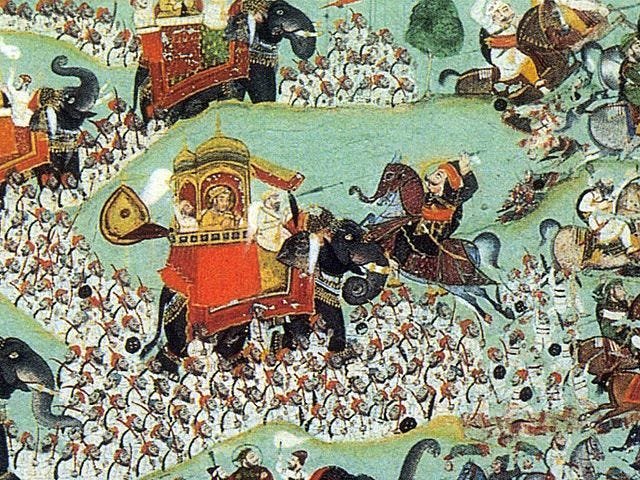
The battle’s legacy has also become a reminder that history is often shaped by those who write it. For centuries, narratives based largely on imperial records overshadowed local traditions, inscriptions, and the historical memory preserved by the people of Mewar.
As new research continues to examine these sources, many scholars have begun to reassess long-held assumptions about the battle and its consequences.
Today, 450 years after Haldighati, the battle stands not as a symbol of defeat but of defiance. It represents the moment when a small kingdom chose honour over submission and courage over compromise. It reminds us that victory is not always determined by who remains on a battlefield at sunset. Sometimes, victory belongs to the side that preserves its freedom, protects its sovereignty, and refuses to surrender.
Maharana Pratap did not bow before the mightiest empire of his age. Mewar did not lose its identity. The struggle continued, the kingdom survived, and the dream of freedom endured.
That is why, Haldighati was not the story of a Mughal victory. It was the story of Mewar’s triumph against overwhelming odds, a triumph whose echo can still be heard 450 years later.