

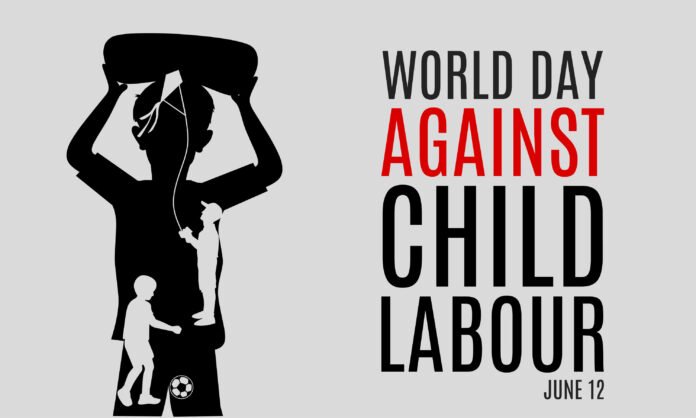
Every year on June 12, the world observes the World Day Against Child Labour, a global campaign dedicated to raising awareness about child labour and accelerating efforts to eliminate it. Established by the International Labour Organization (ILO) in 2002, the day highlights the urgent need to protect millions of children worldwide who are deprived of their education, health, safety, and childhood due to exploitative work.
Child labour refers to work that harms a child’s physical, mental, social, or educational development.While not all work performed by children is considered child labour, activities that interfere with schooling, expose children to hazardous conditions, or force them into exploitation are regarded as violations of children’s rights.
Despite significant progress over the past two decades, child labour remains a major global challenge. According to international estimates, millions of children continue to work in agriculture, manufacturing, mining, domestic service, construction, and other sectors. Many are exposed to dangerous environments, long working hours, and conditions that threaten their well-being and future opportunities.
Poverty remains one of the primary drivers of child labour. Families facing economic hardship often rely on children’s earnings to survive. Limited access to quality education, social inequality, conflict, migration, and natural disasters can further increase the risk of children entering the workforce prematurely. In many cases, child labour creates a cycle of poverty, preventing children from acquiring the education and skills needed for better livelihoods in adulthood.
The World Day Against Child Labour serves as a reminder that every child has the right to learn, play, grow, and dream. Education is widely recognized as one of the most effective tools for combating child labour. When children remain in school and families receive adequate social and economic support, the likelihood of child exploitation decreases significantly.
Governments, international organizations, businesses, civil society groups, and communities all have important roles to play. Stronger enforcement of labour laws, improved access to education, poverty alleviation programmes, social protection measures, and responsible business practices are essential for addressing the root causes of child labour.
India has made notable progress in reducing child labour through legislative reforms, educational initiatives, and welfare programmes. However, challenges remain, particularly in informal sectors where monitoring and enforcement can be difficult. Continued awareness and community participation are crucial to ensuring that every child enjoys a safe and nurturing environment.
The observance also encourages individuals to become part of the solution. Supporting education, reporting child exploitation, promoting ethical consumption, and raising awareness within communities can contribute to protecting vulnerable children.
World Day Against Child Labour is not merely an annual observance. It is a call to action. Every child deserves the opportunity to experience a childhood free from exploitation and filled with learning, dignity, and hope.
As the world marks this important day, the message is clear: ending child labour is not only a legal and moral responsibility but also an investment in a more just, equitable, and prosperous future for all.