

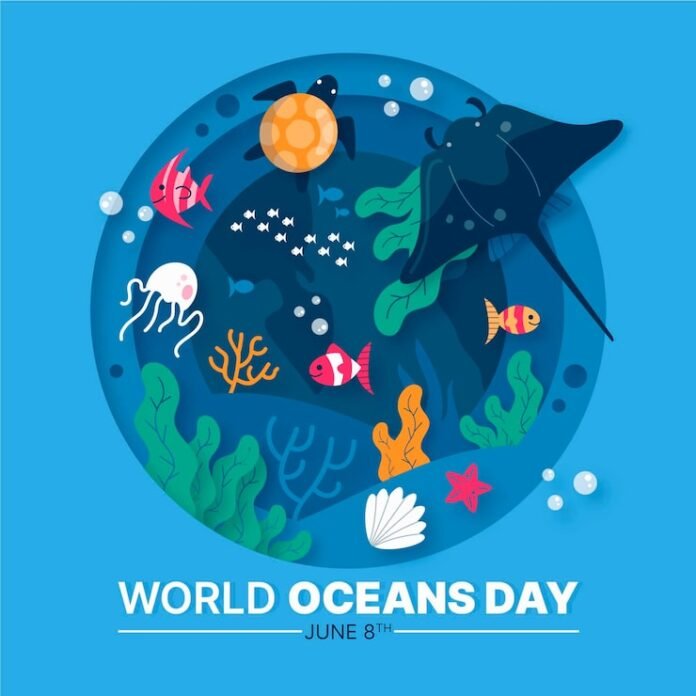
Every year on June 8, the world observes World Oceans Day, a global occasion dedicated to celebrating the oceans and raising awareness about the urgent need to protect them. Covering more than 70 percent of the Earth’s surface, oceans are often described as the planet’s life-support system. They regulate climate, produce much of the oxygen we breathe, support biodiversity, provide food and livelihoods for billions of people, and play a crucial role in maintaining ecological balance.
The idea of World Oceans Day was first proposed at the 1992 Earth Summit in Rio de Janeiro, Brazil. In 2008, the United Nations officially recognized June 8 as World Oceans Day, and since then it has become a worldwide movement involving governments, scientists, conservation groups, businesses, and citizens.
Despite their immense importance, oceans face unprecedented challenges. One of the most visible threats is plastic pollution. Every year, millions of tonnes of plastic waste enter marine ecosystems, harming fish, seabirds, turtles, and other marine life. Many animals mistake plastic for food, leading to injury, starvation, or death. Tiny microplastics have now been found throughout the oceans and even within the human food chain.
Another major concern is climate change. Oceans absorb a significant portion of the carbon dioxide produced by human activities and capture much of the excess heat generated by global warming. While this helps moderate climate change, it also causes ocean warming and acidification, threatening coral reefs, fisheries, and marine ecosystems. Rising sea levels, driven by melting glaciers and thermal expansion of seawater, pose additional risks to coastal communities around the world.
Overfishing is another challenge affecting ocean health. Unsustainable fishing practices have depleted many fish populations, disrupting marine food webs and threatening the livelihoods of communities that depend on fishing. Habitat destruction, oil spills, chemical pollution, and coastal development further add to the pressures facing marine environments.
Yet there is reason for hope. Around the world, governments and environmental organizations are expanding marine protected areas, restoring coastal ecosystems, promoting sustainable fisheries, and investing in scientific research. Innovations in waste management and growing public awareness are also helping reduce the flow of plastic into the oceans.
Individuals can contribute as well. Reducing single-use plastics, participating in beach clean-ups, supporting sustainable seafood choices, conserving water, and spreading awareness about marine conservation are simple but meaningful actions that can make a difference.
World Oceans Day is a reminder that the future of humanity is closely tied to the health of the oceans. They are not limitless resources but fragile ecosystems that require careful stewardship. Protecting the oceans is not only an environmental responsibility but also an investment in the future of life on Earth.
As the world marks World Oceans Day 2026, the message is clear: healthy oceans are essential for a healthy planet. The actions taken today will determine whether future generations inherit thriving marine ecosystems or oceans struggling under the weight of human neglect.