

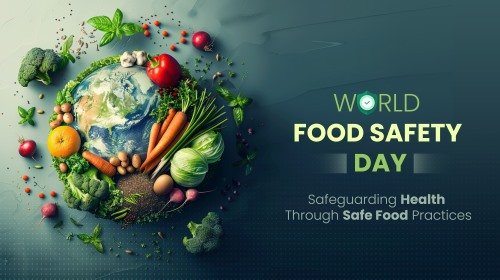
Every year on June 7, the world observes World Food Safety Day to raise awareness about the importance of safe food and the role it plays in protecting human health. Established by the United Nations General Assembly in 2018, the day is jointly facilitated by the World Health Organization (WHO) and the Food and Agriculture Organization (FAO), bringing together governments, food producers, businesses, scientists and consumers in a shared effort to make food safer for everyone.
The theme for World Food Safety Day 2026 is “Food Safety: Science in Action.” The theme highlights the critical role of science in ensuring that the food reaching our plates is safe, nutritious and free from harmful contaminants. From laboratory testing and risk assessments to food regulations and quality standards, science forms the backbone of modern food safety systems.
Food safety refers to the practices and conditions that prevent food from becoming contaminated and causing illness. Safe food is essential for good health, food security and sustainable development. However, unsafe food remains a significant global challenge. According to the World Health Organization, contaminated food can contain harmful bacteria, viruses, parasites or chemical substances that cause more than 200 diseases, ranging from diarrhoea to serious long-term health conditions.
Foodborne illnesses affect millions of people every year and place a substantial burden on healthcare systems and economies. Young children, pregnant women, older adults and people with weakened immune systems are particularly vulnerable to food-related diseases. Ensuring food safety is therefore not only a public health priority but also an economic and social necessity.
The journey of food from farm to table involves multiple stages, including production, processing, transportation, storage, retail and consumption. At every step, food can be exposed to potential risks if proper safety measures are not followed. This is where science plays a vital role. Researchers, food inspectors, laboratories and regulatory agencies work continuously to identify hazards, establish safety standards and develop technologies that help reduce risks.
In an increasingly interconnected world, food safety has become a global concern. A contamination incident in one country can quickly affect consumers across borders through international trade. As a result, international cooperation, scientific research and harmonised food standards have become more important than ever.
World Food Safety Day also reminds consumers that they have an important role to play. Simple practices such as washing hands before handling food, cooking food thoroughly, storing it at appropriate temperatures, checking expiry dates and avoiding cross-contamination can significantly reduce the risk of foodborne illnesses.
The observance of World Food Safety Day 2026 serves as a reminder that safe food is everyone’s responsibility. Farmers, manufacturers, transporters, retailers, regulators and consumers all contribute to maintaining the integrity of the food supply chain.
As the world celebrates this important day, the message is clear: food safety is not something to be taken for granted. Guided by science and supported by collective action, safer food systems can help protect lives, improve public health and contribute to a healthier and more sustainable future for all.