

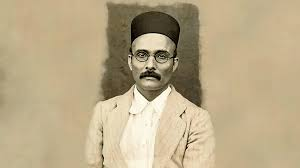
Veer Savarkar Jayanti is observed every year on May 28 to commemorate the birth anniversary of Vinayak Damodar Savarkar, one of the most influential and debated figures of India’s freedom movement. A revolutionary nationalist, writer, poet, political thinker and social reformer, Savarkar dedicated his life to the cause of India’s independence and national awakening. His courage, intellectual strength and relentless patriotism continue to inspire generations across the country.
Born on May 28, 1883, in Bhagur village near Nashik in present-day Maharashtra, Savarkar grew up in a deeply patriotic environment. From a young age, he displayed extraordinary leadership qualities and a strong spirit of resistance against British rule. He founded the Mitra Mela, which later evolved into the revolutionary organization Abhinav Bharat Society, aimed at inspiring youth to fight for India’s freedom.
Savarkar later moved to London to study law at Gray’s Inn, where he became actively involved in revolutionary activities. During his stay there, he established the Free India Society and inspired Indian students toward nationalism and armed resistance against colonial rule. One of his most significant literary contributions was his book The Indian War of Independence – 1857, in which he described the Revolt of 1857 as India’s first organized war against British rule. At a time when the British dismissed it merely as a “sepoy mutiny,” Savarkar’s interpretation gave the uprising a powerful nationalist perspective.
His revolutionary activities eventually led to his arrest in 1910. In one of the most dramatic episodes of his life, Savarkar attempted a daring escape while being transported by ship from Britain to India. He jumped into the sea at the French port of Marseilles and swam ashore in an attempt to escape British custody. Though he was recaptured, the incident became a symbol of his fearless determination.
Savarkar was sentenced to two life imprisonments amounting to fifty years and was sent to the infamous Cellular Jail in the Andaman and Nicobar Islands, also known as “Kala Pani.” The harsh conditions there were brutal, yet he remained mentally unbroken. Despite severe hardships, solitary confinement and physical punishment, he continued writing poetry and revolutionary thoughts, often composing verses on prison walls and memorizing them for preservation.
Apart from being a freedom fighter, Savarkar was also a social reformer. He strongly opposed untouchability and caste discrimination and advocated social unity among Hindus. He supported inter-caste dining and temple entry for all sections of society. His political philosophy of Hindutva, explained in his 1923 work Hindutva: Who Is a Hindu?, later became highly influential in Indian political discourse.
Savarkar was known for his sharp intellect, remarkable memory and powerful oratory. He wrote extensively in Marathi and English, producing poems, plays, historical works and political essays. Many admirers remember him not only for his revolutionary zeal but also for his discipline, scholarship and unwavering devotion to the nation.
In his final years, Savarkar chose to embrace “Atmaarpan,” a voluntary fast unto death, believing that his life’s mission had been fulfilled. He passed away on February 26, 1966, in Mumbai at the age of 82.
Veer Savarkar remains a towering figure in India’s history — admired for his patriotism, revolutionary courage and intellectual contributions. On his Jayanti, the nation remembers a man who devoted every moment of his life to the dream of a strong, independent and self-reliant India.