

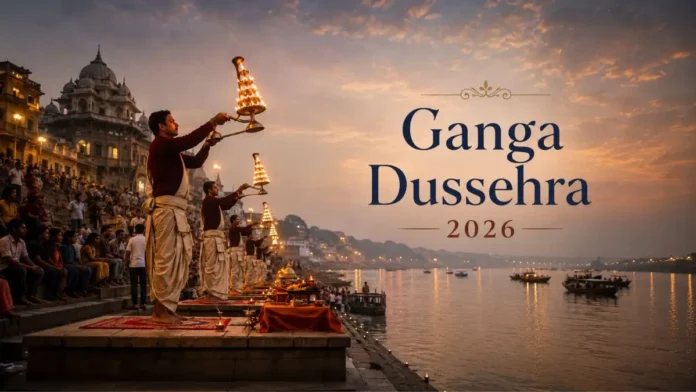
Ganga Dussehra is one of the most spiritually significant festivals in Hindu tradition, celebrated to mark the divine descent of the holy river Ganga from heaven to Earth. Observed on the Dashami Tithi of Shukla Paksha in the Hindu month of Jyeshtha, the festival holds deep religious importance for millions of devotees across India. In 2026, Ganga Dussehra will be celebrated on May 26. It is believed that bathing in the sacred waters of the Ganga on this day helps cleanse a person of sins and brings spiritual purification.
The Story Behind Ganga Dussehra
According to Hindu mythology, King Bhagirath performed intense penance to bring the river Ganga down from heaven to Earth in order to liberate the souls of his ancestors. Pleased by his devotion, Goddess Ganga agreed to descend. However, her immense force threatened to destroy the Earth. Lord Shiva then captured the powerful river in his matted locks and gently released her streams onto Earth, allowing humanity to benefit from her sacred waters.
Because of King Bhagirath’s efforts, the river is also sometimes referred to as Bhagirathi. The festival symbolises devotion, purification and the victory of faith and perseverance.
Spiritual Significance
The word “Dussehra” in Ganga Dussehra is associated with the belief that ten kinds of sins or negative energies are washed away through prayers, charity and holy bathing on this day. Devotees believe that worshipping the river Ganga brings peace, prosperity and liberation from past karmas.
The Ganga is not merely considered a river in Indian culture but a living goddess and a symbol of life, purity and spiritual continuity. Cities located on the banks of the river — including Haridwar, Varanasi, Prayagraj and Rishikesh — witness massive gatherings of devotees during the festival.
Muhurat and Rituals in 2026
According to traditional Hindu calendars, the Dashami Tithi for Ganga Dussehra in 2026 begins on the evening of May 25 and continues through May 26. Devotees usually perform rituals during the early morning hours and auspicious bathing periods.
People wake up before sunrise and take a holy dip in the Ganga or nearby rivers. Offerings of flowers, diyas, milk and prayers are made to the river goddess. Many devotees also perform Ganga Aarti, chant sacred hymns and donate food, clothes and water to the needy.
How the Festival is Celebrated
The most vibrant celebrations take place along the ghats of Varanasi, Haridwar and Rishikesh, where temples and riverbanks are illuminated with lamps and devotional songs fill the atmosphere. Thousands gather for evening aartis, creating a spiritually powerful sight.
Even those unable to visit the Ganga often observe the festival by worshipping water at home and remembering the river’s sacred significance.
Ganga Dussehra is ultimately a celebration of faith, purification and gratitude toward nature. In a rapidly modernising world, the festival also reminds people of the cultural and ecological importance of rivers — not only as sacred entities, but as lifelines that sustain civilisation itself.