

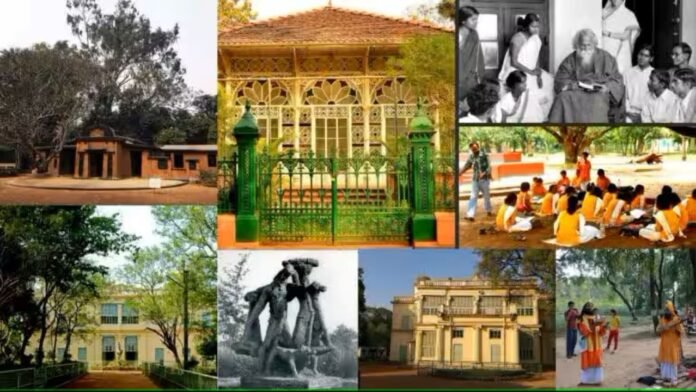
A Cultural Jewel in the Heart of Bengal
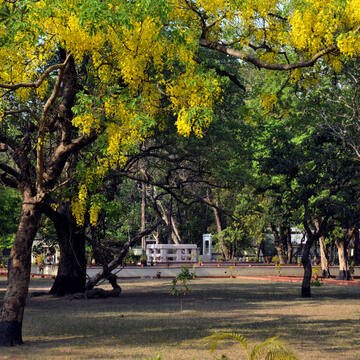
Nestled amidst the red soil, open skies, and lush greenery of Birbhum district in West Bengal, Santiniketan stands as one of India’s greatest cultural and educational landmarks. Founded by Nobel laureate Rabindranath Tagore, Santiniketan is far more than a university town — it is a philosophy, a way of life, and a vision of education rooted in harmony with nature, creativity, and humanity. Appropriately, the word “Santiniketan” means “Abode of Peace.”
From Spiritual Retreat to Educational Revolution
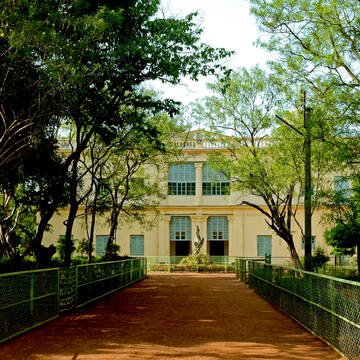
The origins of Santiniketan date back to 1863, when Tagore’s father, Maharshi Debendranath Tagore, purchased a stretch of land near Bolpur to establish a peaceful retreat for meditation and spiritual contemplation. A prayer hall and an ashram were built there, surrounded by nature and silence. Years later, Rabindranath Tagore transformed this spiritual retreat into an educational experiment that would challenge the rigid colonial system of learning prevalent in British India.
Tagore’s Vision of Learning Under the Open Sky
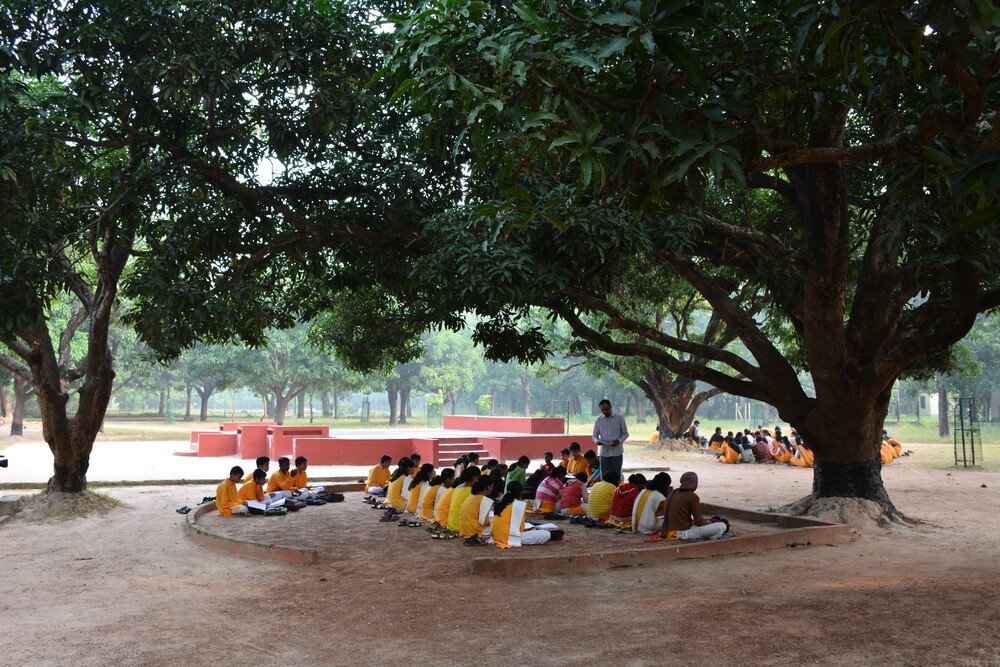
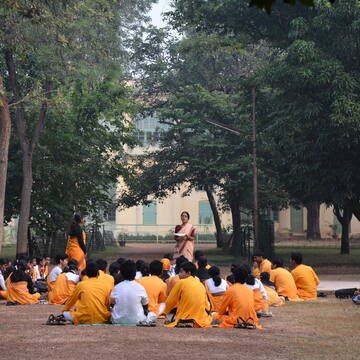
In 1901, Tagore founded a small school called Patha Bhavana at Santiniketan with only a handful of students. Dissatisfied with conventional classroom education, he envisioned a system where children could learn freely under the open sky, close to nature, without fear or excessive discipline. Classes were often conducted beneath trees, encouraging curiosity, creativity, music, literature, and independent thinking rather than rote memorization.
Education Beyond Books and Examinations
Tagore believed education should nurture the complete human being — intellectually, emotionally, artistically, and spiritually. His philosophy emphasized freedom of thought, respect for nature, global understanding, and the unity of humanity. He once wrote that the “highest education is that which does not merely give us information but makes our life in harmony with all existence.” This philosophy became the soul of Santiniketan.
The Birth of Visva-Bharati University
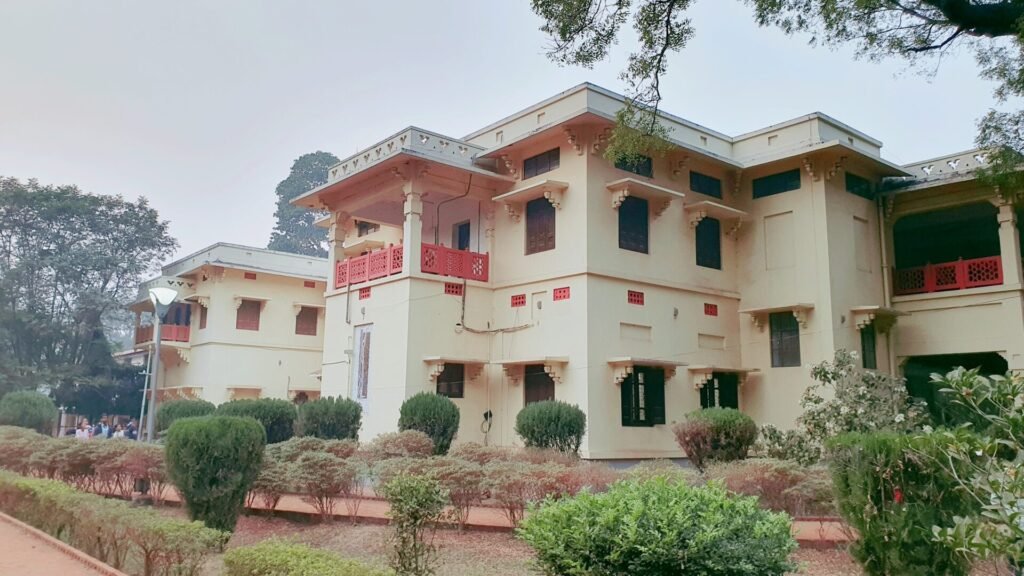
In 1921, Tagore expanded his vision by establishing Visva-Bharati University. The institution was conceived as a “world university” where the cultures of the East and West could meet in mutual respect and learning. Scholars, artists, and thinkers from across the world visited Santiniketan, turning it into a vibrant international center of culture and intellectual exchange.
A Flourishing Centre of Art, Music and Culture
Santiniketan soon became a major hub for art, music, dance, and literature. Institutions like Kala Bhavana nurtured legendary artists such as Nandalal Bose, Benode Behari Mukherjee, and Ramkinkar Baij, whose works revolutionized modern Indian art. Rabindra Sangeet, the songs composed by Tagore, continue to echo through the campus during festivals and cultural gatherings.
Festivals that Celebrate Nature and Community
One of the most unique aspects of Santiniketan is its celebration of seasons and traditions. Festivals such as Vasantotsav (spring festival), Poush Mela, and Briksharopan blend culture, music, dance, and nature into joyful community experiences. Unlike conventional institutions, Santiniketan promotes learning through participation, art, and emotional connection with the environment.
Architecture Rooted in Simplicity and Harmony
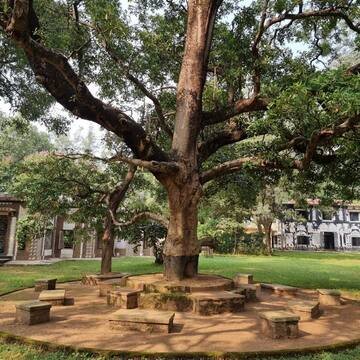
The campus itself reflects Tagore’s ideals. Places such as Chatimtala, where Debendranath meditated, the Uttarayan Complex where Tagore lived, and the mud-built Kalo Bari showcase simplicity, creativity, and harmony with the landscape. The architecture avoids grandeur and instead embraces openness and natural beauty.
UNESCO Recognition and Global Significance
Recognizing its immense cultural and historical significance, UNESCO included Santiniketan in the UNESCO World Heritage List in September 2023. UNESCO described it as an outstanding example of a living cultural tradition that combines education, art, human values, and environmental consciousness. The recognition brought global attention to Tagore’s revolutionary educational ideas and India’s rich cultural heritage.
Santiniketan’s Timeless Legacy
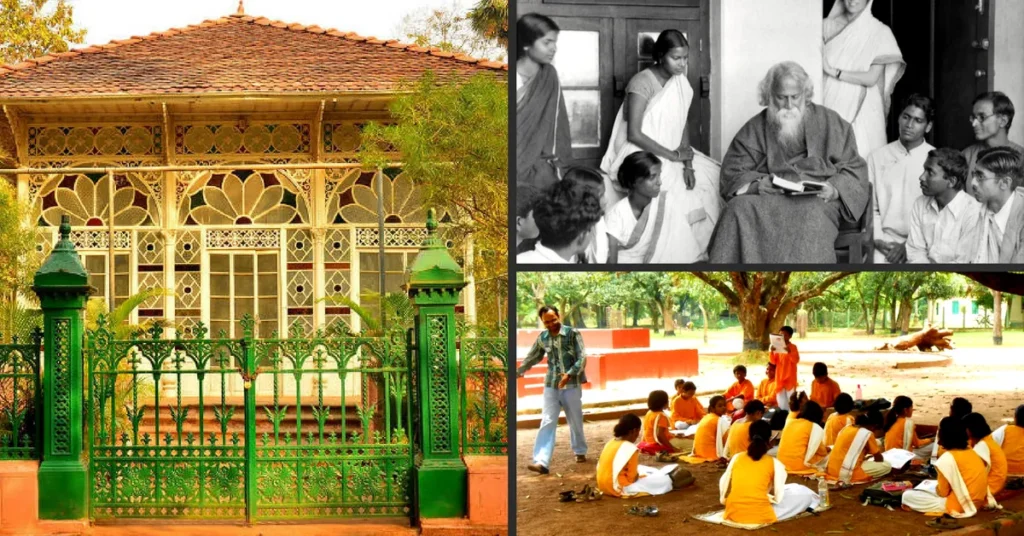
Today, Santiniketan remains a symbol of intellectual freedom and artistic excellence. Even more than a century after its founding, Tagore’s dream continues to inspire educators, artists, and students around the world. In an age dominated by competition and technology, Santiniketan reminds humanity of the importance of peace, creativity, cultural harmony, and learning in the lap of nature — ideals that are perhaps more relevant today than ever before.