

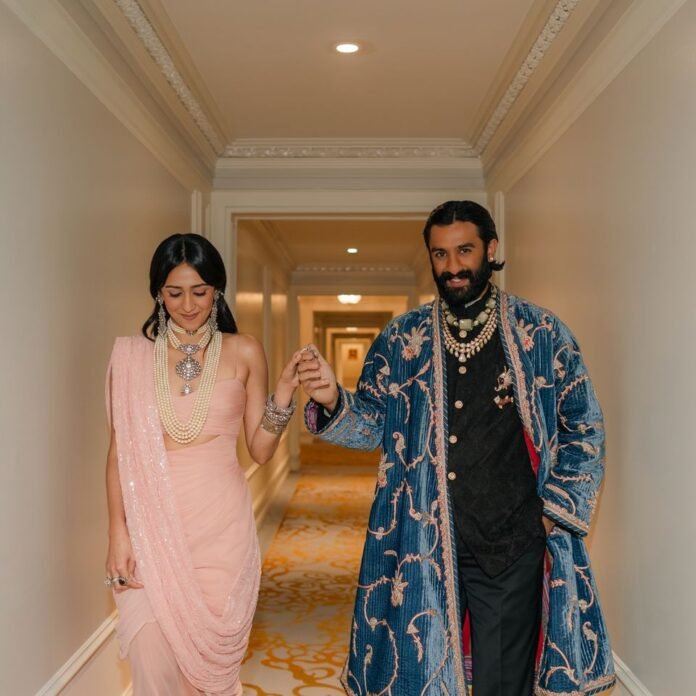
The 2026 edition of the Met Gala 2026 witnessed a remarkable cultural moment as Jaipur’s royal siblings, Princess Gauravi Kumari and Sawai Padmanabh Singh, made their much-anticipated debut. On a global platform known for avant-garde fashion, the duo chose not just to impress, but to tell a deeply rooted Indian story—one of heritage, craftsmanship, and timeless elegance.
Who Are They?
Princess Gauravi Kumari, a member of the erstwhile Jaipur royal family and great-granddaughter of the legendary Maharani Gayatri Devi, represents a new generation of Indian royalty blending tradition with modern identity. Her brother, Sawai Padmanabh Singh—popularly known as “Pacho”—is the titular Maharaja of Jaipur, a polo player and cultural ambassador of Rajasthan’s royal legacy.
Their presence at the Met Gala was not merely symbolic; it marked a rare moment where Indian royalty stepped onto one of the world’s most influential fashion stages, carrying centuries of heritage with them.
A Tribute Woven in Fabric
For her debut, Princess Gauravi Kumari chose an outfit that was as personal as it was powerful. Designed by Prabal Gurung, her gown was crafted from a vintage pink chiffon saree that once belonged to her grandmother, Maharani Gayatri Devi.
The saree, delicately reimagined into a flowing gown, featured subtle sequins and a soft Jaipur-pink hue—symbolically connecting her to both her lineage and her homeland. She paired it with pearls, rubies, and uncut diamonds sourced from Jaipur, echoing the understated elegance that Gayatri Devi was known for.
Her look was not just fashion—it was memory, legacy, and identity stitched into couture.
The Phulghar Coat: Craft Meets Couture
In contrast yet in harmony, Sawai Padmanabh Singh brought the spotlight onto Rajasthan’s artisanal brilliance. Also designed by Prabal Gurung, his standout piece was the “Phulghar coat”—a masterpiece rooted in regional textile traditions.
Crafted in deep midnight-blue velvet and developed in Jaipur, the coat took over 600 hours of intricate handwork, incorporating aari and zardozi embroidery along with resham and dabka detailing.
The ensemble was more than regal attire—it was a tribute to the skilled artisans of Rajasthan, bringing centuries-old craftsmanship into contemporary global fashion.
Representing Rajasthan and India
At an event themed around “Fashion as Art,” the Jaipur royals offered something rare—authentic storytelling. While many interpreted the theme through experimental silhouettes, Gauravi Kumari and Padmanabh Singh rooted their looks in cultural continuity.
They didn’t just wear outfits—they carried Rajasthan to New York. From the legacy of Jaipur’s royal wardrobe to the painstaking artistry of its craftsmen, their presence transformed the red carpet into a canvas of Indian heritage.
In a night dominated by global glamour, the Jaipur royals stood out for their quiet confidence and meaningful fashion. Their debut was not just a personal milestone, but a proud moment for Rajasthan and India—proving that tradition, when worn with conviction, can be the most powerful form of modern expression.