

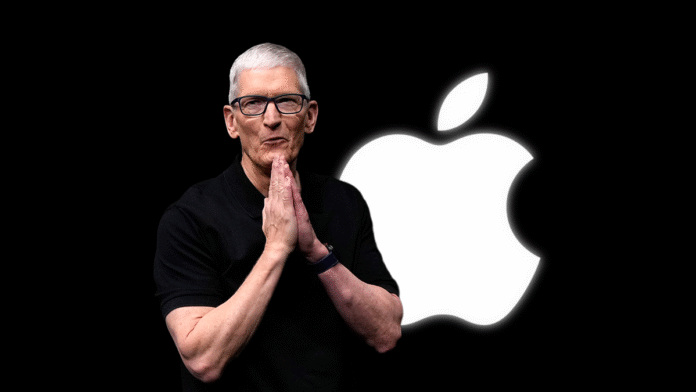
In a significant leadership transition, Tim Cook will step down as CEO of Apple on September 1, 2026, bringing to a close a remarkable 15-year tenure. He will move into the role of Executive Chairman, while Apple’s current hardware engineering head, John Ternus, is expected to take over as the new CEO. This shift marks the end of an era defined by stability, growth, and strategic evolution, and signals Apple’s renewed focus on future innovation, particularly in areas like artificial intelligence.
Tim Cook’s journey to the top is a story of discipline and operational excellence rather than flamboyant showmanship. Born in Alabama, he studied industrial engineering and later pursued an MBA from Duke University. Before joining Apple in 1998, Cook worked at IBM and Compaq , where he developed deep expertise in supply chain management. When he arrived at Apple, the company was still regaining its footing, and Cook played a crucial role in streamlining operations, cutting inefficiencies, and building one of the most effective supply chains in the world.
When Cook succeeded Steve Jobs in 2011, skepticism was widespread. Jobs was a visionary icon, and many questioned whether Cook could carry forward that legacy. Instead of imitating Jobs, Cook redefined leadership at Apple. He focused on consistency, long-term strategy, and expanding Apple’s ecosystem. Under his guidance, Apple strengthened its core products while significantly growing its services segment, including platforms like Apple Music and iCloud.
Cook’s tenure saw Apple reach historic financial milestones, becoming the first company to cross a trillion-dollar market valuation and continuing to grow beyond that. He also oversaw the success and expansion of products like the Apple Watch and the Mac lineup, with hardware innovation continuing alongside software and services growth. Notably, John Ternus—his successor—has played a key role in leading Apple’s hardware engineering efforts and revitalizing products like the Mac, contributing to renewed market momentum.
Beyond business metrics, Cook reshaped Apple’s identity through his emphasis on ethics and responsibility. He positioned user privacy as a core value, pushed for environmental sustainability with ambitious carbon neutrality goals, and advocated for diversity and inclusion. As one of the most prominent openly gay CEOs globally, Cook used his platform to promote equality and representation.
Tim Cook’s legacy lies not just in numbers, but in the stability and direction he provided during a critical phase in Apple’s history. As the company transitions to new leadership under John Ternus, it does so on the strong foundation Cook helped build—one that blends innovation with responsibility, and ambition with discipline.