


PC(Daily Ausaf, Mini Museum)
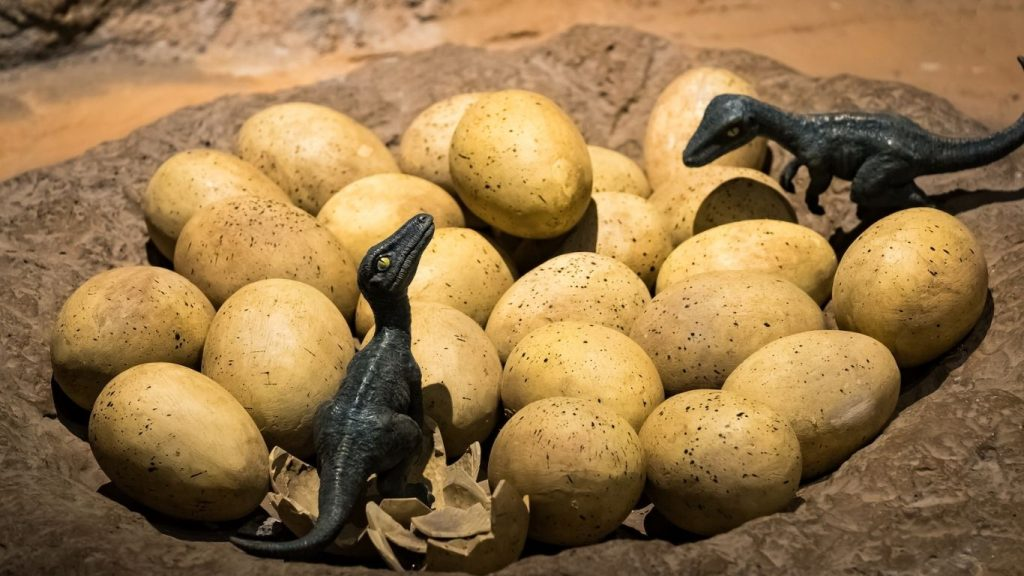
In a groundbreaking paleontological discovery, archaeologists in southern France have unearthed hundreds of exceptionally well-preserved dinosaur eggs, some still intact after 72 million years. The find has turned the Mèze fossil site into what is now considered Europe’s largest dinosaur egg deposit and one of the most significant nesting grounds in the world. The exciting discovery was announced on Facebook by the Musée-Parc des Dinosaures de Mèze in the Hérault region. Museum director-curator Alain Cabot described the find as an “exceptional concentration of eggs” following months of careful excavation work.
A Rare Glimpse into Dinosaur Life teams at the site uncovered several hundred remarkably preserved fossilized eggs embedded in sediment. Some eggs even retain intact internal structures, offering scientists a rare window into the reproductive behavior, environment, and species that roamed the region during the late Cretaceous period.
The Mèze site now ranks alongside famous nesting sites in Argentina, China, and Mongolia. Cabot, who has been working at the location for nearly three decades, explained that the team first spots eggshell fragments on the surface before digging deeper – a patient method that led to the initial discoveries 28 years ago. “Today we found a hundred more,” Cabot said, emphasizing how rare such dense concentrations are. Most dinosaur egg sites typically yield only a handful of specimens.
A Vast “Fossilized Reproductive Ecosystem”. what The unusually high number of nests in one area suggests a massive, shared nesting ground researchers are calling a genuine fossilized reproductive ecosystem. Early analysis indicates the eggs were laid by different herbivorous dinosaurs, including titanosaurs (known for their round eggs) and Rhabdodon priscus, between 72 and 70 million years ago. The ancient environment played a key role in their preservation. The region was once a river-laced floodplain where dinosaurs likely nested in shallow pits covered with vegetation. Periodic flooding rapidly buried the nests under sediment, perfectly sealing the delicate eggshells for tens of millions of years.
Museum officials believe this is just the beginning. Reports suggest that more than 100 eggs became visible within weeks once the team reached a fossil-rich horizontal layer – and the egg-bearing layer extends well beyond the current excavation trench. Researchers anticipate several more years of work at the site. The announcement has already sparked huge excitement online, with the museum’s Facebook post receiving over 1,500 reactions and hundreds of shares. Many commenters expressed awe at the incredible scale and age of the discovery, while others called for wider media attention. This remarkable find not only adds a thrilling new chapter to our understanding of dinosaurs but also brings us closer to imagining the living, breathing world of these ancient giants.