

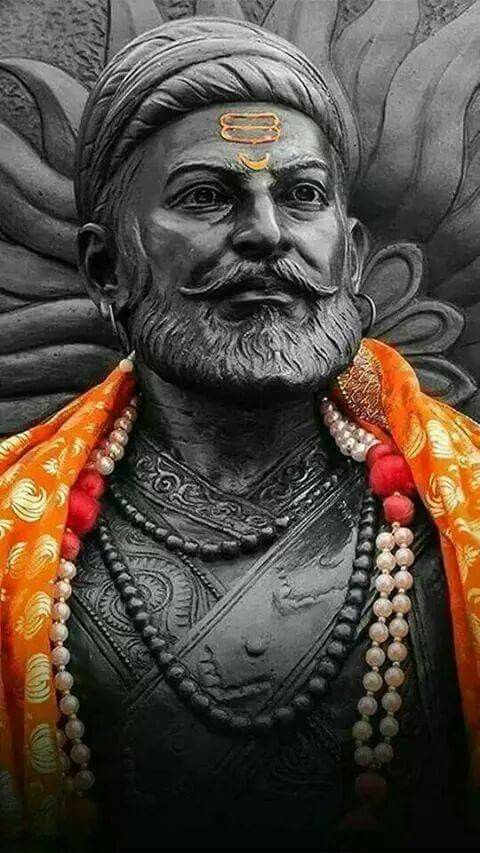
A legacy of Swarajya, courage, and honour that continues to inspire India even today. On 3 April 1680, at Raigad Fort, Chhatrapati Shivaji Maharaj breathed his last, but his indomitable spirit and vision of self-rule never left the land. Today, as the nation observes his 346th death anniversary, Indians across the country remember the legendary warrior king with pride, gratitude, and heavy hearts.
Born on 19 February 1630 at Shivneri Fort to Shahaji Bhosale and Jijabai, Shivaji was named after the local deity Goddess Shivai. From a young age, he was deeply influenced by his mother’s teachings and the prevailing religious persecution under the Deccan sultanates and the mighty Mughal Empire. By the age of 16-17, he resolved to establish Hindavi Swarajya -a sovereign Hindu self-rule state based on justice, honour, and freedom from foreign oppression.
A Visionary Warrior and Statesman Shivaji Maharaj began his campaign by capturing forts like Torna and Kondana. He pioneered innovative guerrilla warfare tactics known as Ganimi Kava, which allowed smaller forces to outmanoeuvre larger armies. He also built a strong navy, earning him the title “Father of the Indian Navy”, and secured the Konkan coast.
His military brilliance was matched by exceptional administrative skills. He promoted Marathi and Sanskrit in his court, emphasised the protection of women and farmers, and practised religious tolerance while fiercely defending Hindu dharma. One of the most defining moments came on 6 June 1674, when he was crowned Chhatrapati (Paramount Sovereign) at Raigad Fort. This grand coronation formally established the Maratha Empire and symbolised the birth of a new era of Swarajya.
Shivaji’s courage became legendary through several daring feats. In 1659, he outsmarted and defeated Afzal Khan of Bijapur in a historic encounter. He carried out a bold midnight raid on the Mughal viceroy’s camp and even sacked the prosperous port of Surat, challenging Mughal authority directly. When summoned to Aurangzeb’s court in Agra, he and his son were placed under house arrest, but Shivaji’s clever escape further enhanced his reputation as a master strategist. Despite facing vast Mughal armies led by generals like Mirza Raja Jai Singh, Shivaji never wavered from his mission of building a just and independent kingdom.
Chhatrapati Shivaji Maharaj passed away at the age of 50 on 3 April 1680 at Raigad Fort due to health complications. Though his physical presence ended, his ideals of self-rule, courage, justice, and national pride lived on. His successors expanded the Maratha Empire, which later played a crucial role in shaping modern Indian history. Even centuries later, Shivaji Maharaj remains a blueprint for leadership, resilience, and patriotism. His life teaches the importance of standing fearlessly for one’s values, protecting the weak, and building a society rooted in honour and unity. On this solemn day, the nation pays heartfelt tributes to the great Chhatrapati. His message of Swarajya continues to echo in every corner of India, inspiring generations to uphold courage, unity, and pride in their heritage.