

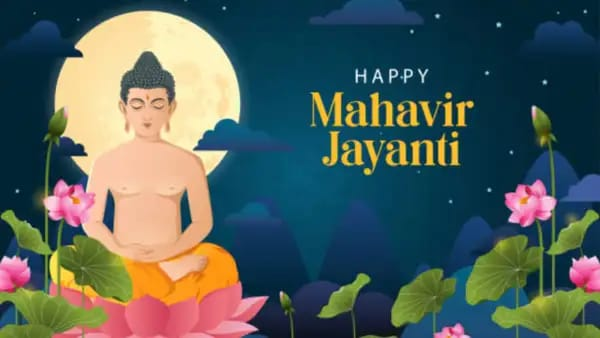
Mahavir Jayanti is the most significant festival in Jainism, commemorating the birth of Lord Mahavir (Vardhamana Mahavira), the 24th and final Tirthankara of the current time cycle. Born in 599 BC in Kundagrama, Bihar, this auspicious day serves as a powerful reminder of spiritual renewal, emphasizing the eternal principles of Ahimsa (non-violence), compassion, truth, self-discipline, and the path to liberation from the cycle of karma. Observed with great reverence by the Jain community worldwide, Mahavir Jayanti is not merely a celebration but a day dedicated to introspection, prayer, and living the timeless teachings of Lord Mahavir in our daily lives.
The Profound Significance of Mahavir Jayanti at its core, Mahavir Jayanti honors the birth of a great soul who attained Keval Gnan (absolute knowledge) and showed humanity the path to spiritual upliftment. The festival reinforces the supreme value of non-violence, urging devotees to extend compassion to all living beings through thoughts, words, and actions. Lord Mahavir propagated the Pancha Mahavratas the five great vows that form the foundation of Jain ethics .Ahimsa (Non-violence) The principle that no living being should be harmed in any way.Satya (Truth) Always speaking and living in honesty.Asteya (Non-stealing): Refraining from taking anything that does not belong to oneself. Brahmacharya (Celibacy/Chastity) Exercising complete control over desires and senses. Aparigraha (Non-attachment/Non-possession): Detachment from material possessions and greed.
On this day, Jains engage in meditation, fasting, reading of holy scriptures, and acts of charity. The festival also highlights Anekantavada – the doctrine of non-absolutism or the “many-sidedness” of truth which promotes tolerance, understanding, and respect for diverse perspectives.
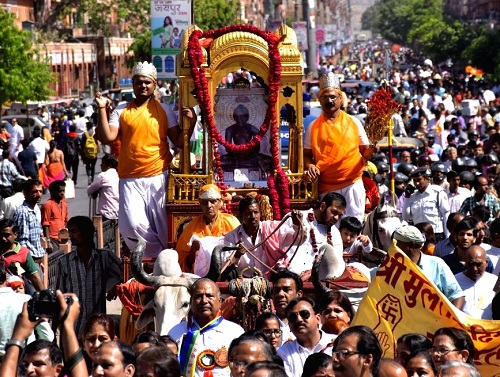
Traditional Celebrations and Rituals. Mahavir Jayanti is marked by vibrant and devout observances Rath Yatra Grand processions where the idol of Lord Mahavir is carried through the streets in a chariot, accompanied by devotional songs and chants. Abhisheka: Ceremonial bathing of the Lord’s idol with sacred substances like milk, water, and sandalwood paste.Charity and Service: Devotees perform acts of kindness, such as donating food, clothes, and other essentials, often supporting animal welfare and community causes. Temples are cleaned and decorated as symbols of inner and outer purity. These traditions foster a sense of community, compassion, and dedication to the path of righteousness.
The Life and Extraordinary Personality of Lord Mahavir. Lord Mahavir, also known as Shri Mahavir Swami or Veer Prabhu, stands as an extraordinary figure among the 24 Tirthankaras. Born approximately 2,500 years ago, He is the last Tirthankara of this descending time cycle. Unlike earlier Tirthankaras, detailed accounts of His life, including many previous births, are well-preserved, allowing devotees to draw deeper inspiration from His journey.
All Tirthankaras are born as Kshatriyas, but due to a specific karmic event in one of His earlier lives (as Marichi), Lord Mahavir’s embryo was miraculously transferred by celestial beings from a Brahmin woman’s womb to that of Queen Trishala – one of the ten great astonishments in Jain tradition. At the age of 30, after the passing of His parents and ensuring His brother’s well-being, Lord Mahavir took Diksha (initiation into monkhood). In that very moment, He attained Manahparyav Gnan the knowledge to read the minds of others. His ascetic life was marked by intense upsargas (trials and afflictions), far more severe than those faced by other Tirthankaras, including freezing cold, prolonged torments by celestial beings, and physical pain.
After twelve and a half years of rigorous penance, Lord Mahavir attained Keval Gnan under a Saal tree on the banks of the Rujuvalika river. For the next 30 years, He delivered liberating sermons (Deshna). At the age of 72, after a continuous 72-hour sermon, He attained Nirvana (final liberation), marking the beginning of the fifth era where the path to Moksha became more challenging.
Teachings of Lord Mahavir. Lord Mahavir’s teachings remain profoundly relevant even today. Some of His most important messages include. Non-violence is the ultimate religion (Ahimsa Parmo Dharma). True enemies lie within us anger, greed, pride, and deceit (Kashayas). Happiness comes from within the Self, not from external sensual pleasures. Control over oneself is far greater than controlling others. Every soul is inherently pure, knowledgeable, and blissful. “Live and let live” should guide all our actions. Unhappiness is often the result of our own past actions and choices. He emphasized Pratikraman – the practice of confession, apology, and resolution not to repeat mistakes as a daily tool for self-purification. Penance should be performed sincerely to exhaust karmas, not for show or ego.
Why Mahavir Jayanti Matters in the Modern World. In today’s fast-paced, materialistic world, the teachings of Lord Mahavir offer a much-needed pause for reflection. His message encourages simplicity, kindness, self-restraint, and compassion amid chaos and conflict.
By practicing even small acts choosing kindness over anger, truth over convenience, or detachment over greed we can bring peace to ourselves and harmony to society. Mahavir Jayanti is ultimately a call for contemplation rather than mere celebration: a reminder that this precious human life is meant for attaining liberation (Moksha).
A Call to Action on This Auspicious Day as we celebrate Mahavir Jayanti today, let us resolve to dedicate our time and energy toward spiritual growth. Avoid wasting moments in meaningless pursuits. Instead, turn inward, perform Pratikraman, reduce inner passions, and walk the path shown by the Tirthankaras. Lord Mahavir transformed ordinary souls into embodiments of courage and wisdom. May His blessings inspire us to face our own karmas with patience and equanimity, ultimately leading us toward the supreme state of liberation.