

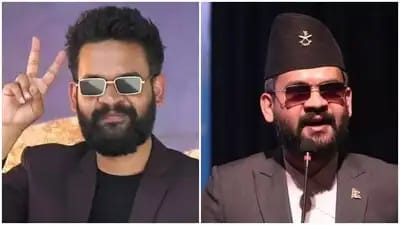
PC(The Times of India)
Kathmandu, March 28, 2026 In a landmark moment for Nepal’s politics, rapper-turned-politician Balendra Shah, popularly known as Balen, was sworn in as the country’s new Prime Minister on Friday, March 27, 2026. At just 35, he becomes the youngest prime minister in Nepal’s recent history and the first from the Madhes region to hold the top executive post. President Ram Chandra Poudel administered the oath of office at a ceremony in Shital Niwas (President’s Office) in Kathmandu, blending Hindu Vedic recitations with Buddhist chants. The event marks the end of a turbulent transition that began with last September’s deadly Gen Z protests, which forced the resignation of veteran leader K.P. Sharma Oli’s government and led to an interim administration under former Chief Justice Sushila Karki.
Landslide Victory for Change
Shah’s Rastriya Swatantra Party (RSP) achieved a stunning outright majority in the March 5, 2026 general elections – the first since the 2025 youth-led uprising. The RSP secured 182 seats out of 275 in the House of Representatives. Shah himself delivered a crushing defeat to four-time former Prime Minister K.P. Sharma Oli in the Jhapa-5 constituency, winning by nearly 50,000 votes (68,348 to 18,734).His campaign tapped into deep public frustration with decades of corruption, nepotism, elite dominance, and economic stagnation. Supporters, especially among Gen Z voters, see him as a fresh symbol of reform and national renewal.
The Rapper Who Never Forgot His Roots
Hours before his swearing-in, Shah reaffirmed his identity by releasing (or re-releasing with a new campaign video) his track “Jay Mahakali”. The song, filled with nationalist energy and lyrics like “Undivided Nepali… history is being made,” quickly went viral, racking up millions of views in less than 24 hours. This wasn’t his first musical statement. Shah first rose to fame in 2013 by winning a popular rap battle, using sharp verses to voice the frustrations of a generation feeling abandoned by the system. Hits like “Balidan” (which has over 14 million YouTube views) and “Nepal Haseko” the 2025 protests adopted as an anthem during criticised corruption, inequality, and the struggles of Nepali workers abroad.
Even as Mayor of Kathmandu (elected independently in 2022), he kept his distinctive style: square black sunglasses, black blazer, and a no-nonsense approach to governance. His tenure focused on anti-corruption drives, urban cleanup, waste management, traffic improvements, heritage preservation, and cracking down on illegal encroachments – moves that won praise but also sparked controversy over demolitions affecting street vendors and informal settlements.
Ambitious Reform Agenda Ahead
Born in 1990 in Naradevi, Kathmandu, to an Ayurvedic practitioner father and a homemaker mother, Shah trained as a structural engineer in Kathmandu and Karnataka, India. He is married and lives with his wife and daughter. As Prime Minister, he is expected to form a lean cabinet of 15-18 members and personally oversee key portfolios including Defence, Commerce, and Industries. His government has set bold goals:
Creating 1.2 million new jobs doubling per capita income and expanding national GDP to $100 billion within five years
A sweeping anti-corruption drive, including asset investigations of all public officials since 1990 analysts say Nepal stands at the cusp of major transformation, but warn that entrenched patronage networks and systemic challenges could test the new administration.
A New Chapter for Nepal
Shah’s rise – from underground rapper calling out social ills to mayor, and now Prime Minister -represents a generational revolt against traditional politics. His supporters hope this “history-making” moment delivers the change long promised but rarely achieved. As one of his songs puts it, many Nepalis now want to see a “Smiling Nepal” where hearts dance and people live happily. The coming months will reveal whether the beats of reform can translate into real progress for the Himalayan nation.