

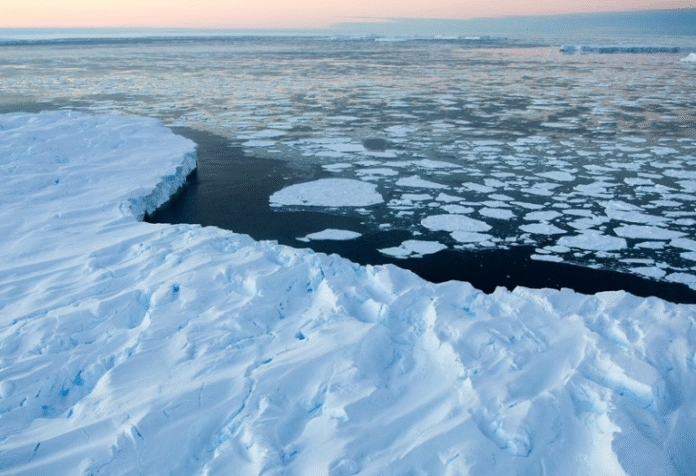
PC( The Daily Galaxy, Nature)
In a groundbreaking scientific discovery, researchers have revealed a विशाल (vast) ancient landscape buried beneath nearly two kilometres of ice in East Antarctica’s Wilkes Land—unchanged for at least 34 million years. Comparable in size to the U.S. state of Maryland (around 32,000 square kilometres), this hidden terrain offers an extraordinary glimpse into a long-lost world.
The study, led by Professor Stewart Jamieson of Durham University and published in Nature Communications, used advanced satellite imaging and ice-penetrating radar to uncover what scientists are calling a “time capsule” of Earth’s past.
A Frozen Time Capsule Beneath the Ice
The radar data revealed a dramatic topography of towering ridges and deep valleys, some plunging as far as 3,900 feet. These features were carved by ancient rivers that once flowed freely across the region—long before Antarctica transformed into a frozen continent.
Researchers identified three massive elevated land blocks, each stretching between 75 and 105 miles, separated by valleys nearly 25 miles wide. The scale and structure suggest a once-dynamic landscape shaped by erosion, water flow, and possibly rich ecosystems.
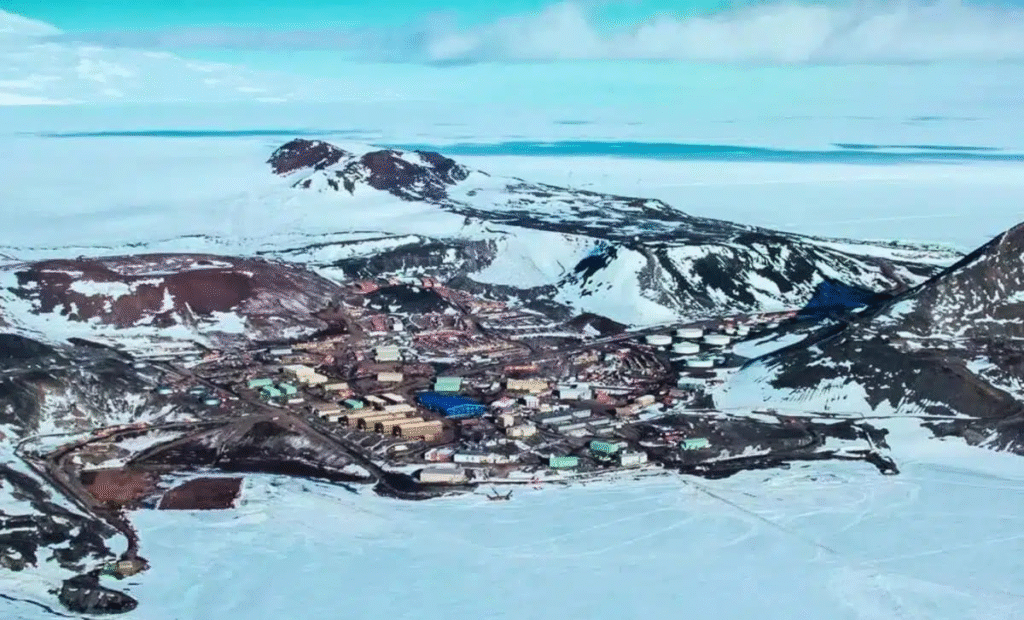
When Antarctica Was Green
Millions of years ago, during the Eocene-Oligocene transition, Antarctica was part of the supercontinent Gondwana and experienced a much warmer climate. Scientists believe this region may have supported lush forests, palm trees, and diverse plant and animal life. This discovery reinforces the idea that Antarctica was once a thriving, green environment—dramatically different from the icy wilderness we see today.
How the Landscape Survived Intact
What makes this discovery truly remarkable is its exceptional preservation. Unlike typical glaciers that erode and reshape the land beneath them, the ice covering this region is known as “cold-based ice.” This type of ice remains frozen to the ground and moves extremely slowly—less than 16 feet per year—acting like a protective seal rather than a destructive force. As a result, the landscape beneath has remained almost perfectly intact for tens of millions of years.