

PC( X, Pinterest)
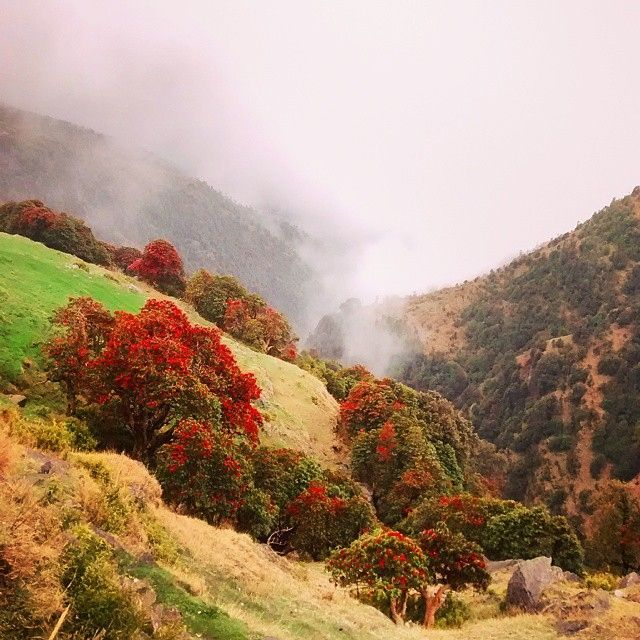
Every spring, the forests around Dharamshala transform into a breathtaking sea of crimson as vibrant rhododendron flowers (locally called Buransh) paint the hillsides in vivid shades of red. This fleeting natural spectacle is not just a photographer’s dream – it’s a living tradition where locals harvest the blooms to create refreshing juices, jams, and time-honored remedies.
Dharamshala Turns Crimson: The Magical Buransh Bloom
Nestled in the lap of the majestic Dhauladhar range, Dharamshala is famous for its serene Tibetan culture, colonial charm, and spiritual vibes. But come spring (typically late February to April), the town and its surrounding hills reveal a hidden, fiery side that few travelers witness in full glory.
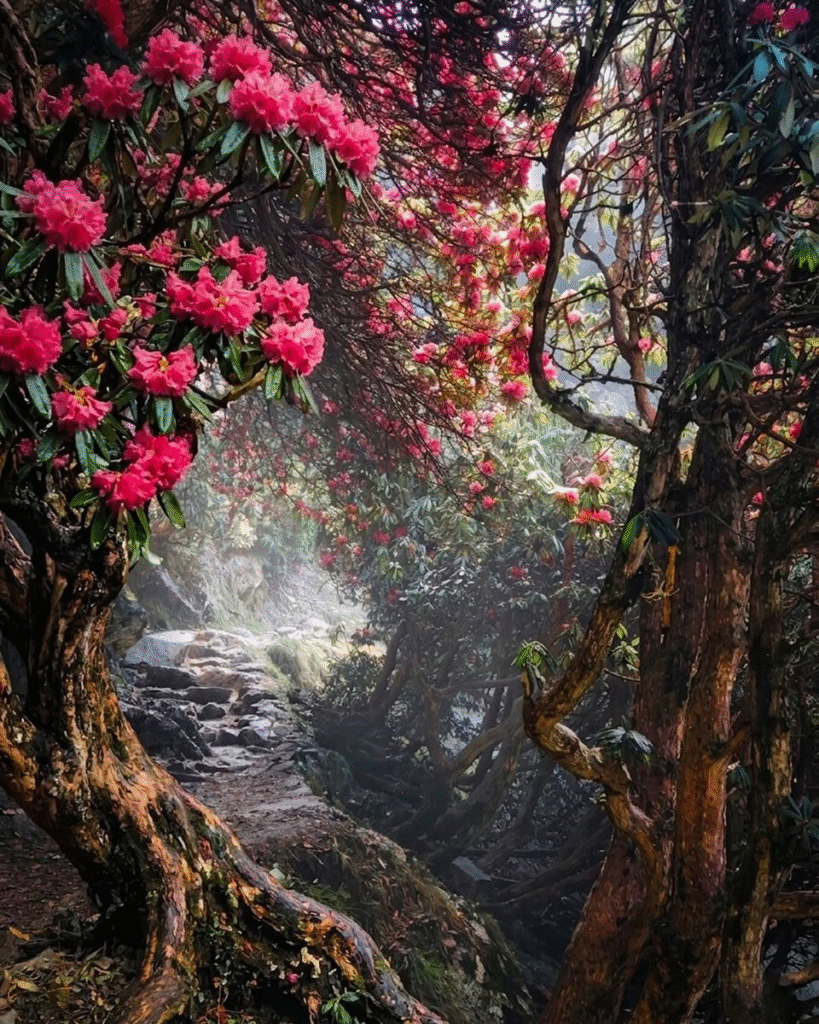
The star of the season is Rhododendron arboreum, known locally as Buransh – Himachal Pradesh’s state flower. These striking red blossoms blanket the oak and pine forests, turning the green Himalayan landscape into a “hidden red paradise.” The bloom usually peaks in March and April, creating a short, magical window when the hills look dramatically different from their usual snow-capped or lush-green avatar.
The sight is truly legendary. Bright red clusters stand out against the deep green foliage, making even routine trails and viewpoints feel like walking through a living painting. This brief spectacle offers a refreshing contrast to the region’s more familiar snowy or verdant scenery.
Beyond Beauty: A Flower with Tradition and Health Benefits
For locals, Buransh is far more than a visual delight. Generations have harvested these flowers to create antioxidant-rich treats and remedies refreshing Buransh Juice/Squash A tangy, cooling drink that appears in local shops and homestays during the season. Jams, Chutneys & More – Sweet preserves and spicy accompaniments that capture the flower’s unique flavor. Traditional Remedies – Used for digestive health, reducing inflammation, supporting heart health, and even as a remedy for headaches or high-altitude discomfort. The flowers are rich in flavonoids like quercetin and rutin. The process is simple yet cherished: petals are carefully collected, cleaned, and turned into squash using traditional recipes passed down through families. Many small entrepreneurs and self-help groups now process and sell these products, adding an economic boost to the community.
Perfect Time to Visit & What to Do
Best Months: March to April (peak bloom often hits mid-March to early April, though it can start as early as late February depending on altitude and weather). Where to See the Blooms: Hillsides around Dharamshala, McLeodganj, and trails leading into the Dhauladhar mountains. Offbeat paths offer quieter, more immersive experiences. Combine with Exploration: While chasing the red blooms, don’t miss Dharamshala’s other treasures: McLeodganj Little Tibet – The Tsuglagkhang Complex, Namgyal Monastery, and the chance to witness monks debating.
Norbulingka Institute – Beautiful gardens and traditional Tibetan arts. Tibetan Museum – A moving insight into the Tibetan exile story. Nearby Trails short hikes from Dharamkot or towards Triund for stunning valley views framed by rhododendrons.Practical Tips for Your Red Paradise Getaway how to reach fly into Kangra Airport (DHM) or Chandigarh (IXC), then drive or take a taxi. Nearest railhead is Pathankot.