

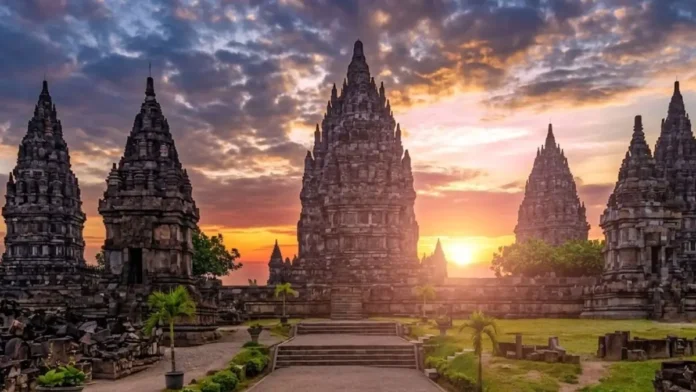
In a significant step towards cultural diplomacy, India and Indonesia have come together to restore one of Southeast Asia’s most iconic heritage sites—the Prambanan Temple, a 9th-century temple complex that stands as a testament to shared civilizational roots.
Located in the Special Region of Yogyakarta in Java, Prambanan is not just a single monument but part of a vast cultural landscape that includes other historic temples like Sewu and Plaosan. This interconnected heritage underscores centuries-old cultural and religious exchanges between India and Indonesia, particularly through the spread of Hinduism and Buddhism across Southeast Asia.
A Shared Heritage Beyond Borders
Built in the 9th century, Prambanan is the largest Hindu temple complex in Indonesia and reflects strong architectural and cultural influences from the Indian subcontinent. Over time, natural disasters such as earthquakes and volcanic activity, along with historical decline, led to the partial collapse and fragmentation of the site.
Its restoration, therefore, is not just about rebuilding structures—it is about reviving a shared historical narrative that connects two nations across geography and time.
How the Restoration Will Be Done
The project brings in expertise from the Archaeological Survey of India, which is collaborating closely with Indonesian authorities. One of the key techniques being used is anastylosis—a meticulous process where original stones from the site are carefully identified, catalogued, and reassembled in their original positions.
This method ensures that the authenticity of the monument is preserved while maintaining structural stability. However, the process is far from simple. The temple complex contains thousands of scattered stone blocks, making the task of matching and reconstructing them both time-consuming and highly precise.
In a modern twist, Indonesia has also expressed openness to using digital tools and artificial intelligence to assist in identifying and reconstructing temple components—blending ancient techniques with contemporary technology.
More Than Restoration: A Diplomatic Statement
This collaboration goes beyond archaeology. It reflects a broader effort to strengthen India–Indonesia cultural and diplomatic ties. By jointly preserving heritage, both nations are reinforcing a shared identity rooted in history, religion, and art.
Importantly, the focus is not limited to restoring individual structures. As Indonesian officials have emphasized, conservation efforts aim to protect the entire cultural ecosystem surrounding Prambanan, ensuring that its historical context remains intact.
Conclusion
The restoration of Prambanan is more than a conservation project—it is a symbol of how history can unite nations in the present. As India and Indonesia work together to preserve this 9th-century marvel, they are not just rebuilding a temple, but reaffirming a shared civilizational legacy that continues to inspire across centuries.