

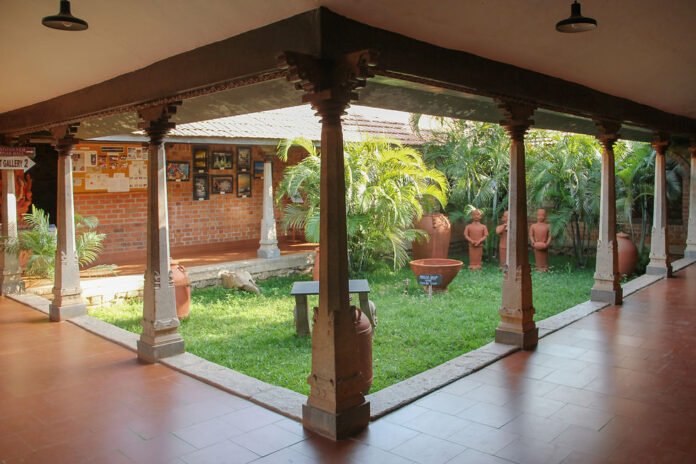
Long before the arrival of air conditioners and modern cooling systems, homes and buildings across India were designed to remain naturally comfortable even during intense summers.
Traditional Indian architecture developed over centuries with a deep understanding of climate, geography, and materials. From the deserts of Rajasthan to the humid coastal regions of southern India, houses were built using ingenious techniques that allowed them to stay cool without electricity.
Courtyards: The Heart of Natural Ventilation
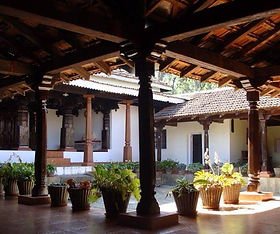
A defining feature of many traditional homes was the central courtyard, often called aangan. Seen in historic residences such as the Havelis of Rajasthan and the homes of Tamil Nadu, courtyards allowed hot air to rise and escape upward while drawing cooler air into surrounding rooms. This created continuous natural airflow and reduced indoor temperatures. The courtyard also acted as a shaded communal space for daily household activities.
Thick Walls and Natural Building Materials
Traditional houses were constructed with thick stone, mud, clay bricks, and lime plaster, all of which have strong thermal insulation properties. These materials absorb heat slowly during the day and release it gradually at night, keeping interiors significantly cooler. Lime plaster, commonly used across India, also reflects sunlight and allows walls to “breathe,” helping regulate humidity and temperature.
Jaalis and Intelligent Airflow Design
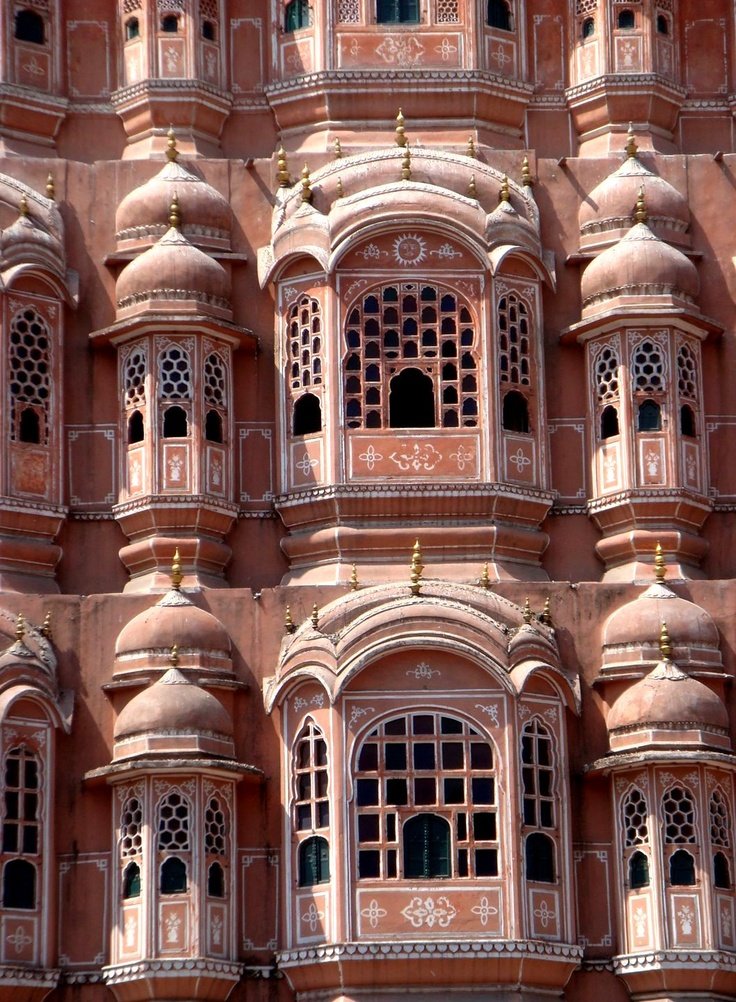
Architectural elements such as jaalis—decorative stone or wooden lattice screens—played a key role in cooling buildings. Structures like the famous Hawa Mahal demonstrate this principle beautifully. The tiny openings allowed wind to pass through while filtering harsh sunlight, creating a cooling effect inside the structure.
High Ceilings, Verandahs, and Sloping Roofs
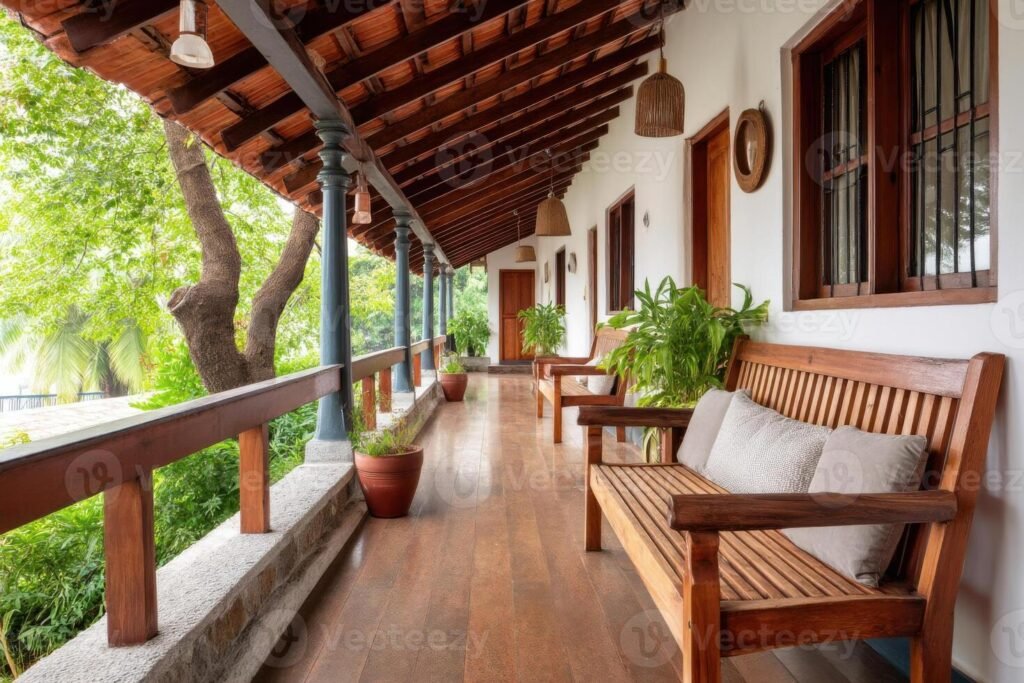
Traditional homes often featured high ceilings, allowing hot air to rise above living spaces. Wide verandahs and shaded corridors prevented direct sunlight from hitting the walls, reducing heat absorption. In many regions, sloping tiled roofs with air gaps beneath them helped release trapped heat and allowed better ventilation.
Cooling Through Water and Greenery
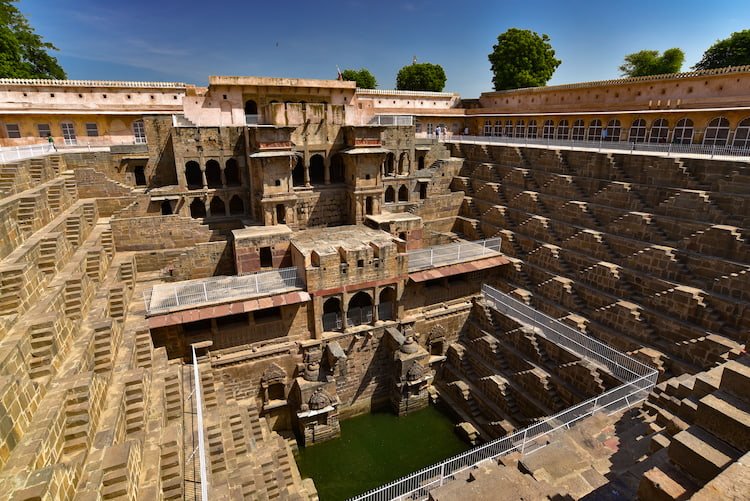
Water and greenery were also important elements of traditional cooling systems. Stepwells, ponds, and fountains helped cool the surrounding air through evaporation. Historic structures like Baoris illustrate how water bodies were integrated into architecture to regulate temperature. Large trees planted around houses provided shade and helped maintain a cooler microclimate.
Daily Practices That Enhanced Cooling
Apart from architecture, everyday practices also helped maintain cooler homes. Floors were often coated with clay or lime mixtures, and khus (vetiver) screens were hung on windows and sprinkled with water to create a natural air-cooling effect. Thick cotton curtains and bamboo blinds were also used to block harsh sunlight.
A Sustainable Lesson for Modern Times
Today, as cities rely heavily on air conditioners and face rising energy consumption, architects are rediscovering the wisdom of traditional Indian design. The climate-responsive techniques used in heritage homes offer sustainable solutions for modern architecture, proving that centuries-old knowledge can still guide the way toward cooler and more environmentally friendly living spaces.