

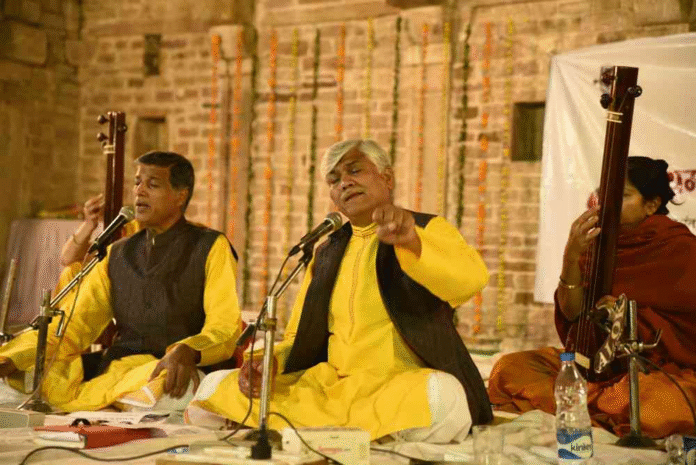
PC(Scroll.in)
Baiju Bawra the Enigmatic Genius of Indian Classical Music in the annals of Indian classical music, Baiju Bawra (Baijnath Mishra) stands as a mythical figure whose name evokes wonder and reverence. A master of Dhrupad – one of the oldest and most profound styles of Hindustani classical music – Baiju is believed to have been born and to have passed away in Chanderi, Madhya Pradesh, where his samadhi (memorial) still exists today.
Legends attribute miraculous powers to his singing: he could light lamps with Raga Deepak, summon rain through Raga Megh Malhar, and even melt stones with Raga Malkauns. A contemporary and “guru-bhai” (fellow disciple) of the legendary Tansen under Swami Haridas, Baiju is famously said to have defeated Tansen in a musical duel yet spared his life in an act of generosity.
The iconic 1952 Bollywood film Baiju Bawra, starring Bharat Bhushan and Meena Kumari, immortalized his story of love, rivalry, and musical devotion, with its timeless classical-based songs still echoing through generations. Chanderi from Saree Heritage to a Hub of Classical Music Famous worldwide for its exquisite handwoven Chanderi sarees, historic fort, and Raja-Rani Mahal, Chanderi has evolved into a cultural beacon thanks to the Baiju Bawra Festival. This event revives and promotes the ancient Dhrupad tradition, which has faced near-extinction, while spotlighting Chanderi as a destination for art, history, and spiritual tourism.
The Festival’s Journey: Reviving a Forgotten Legacy initiated by enthusiasts and the Achal Eshwar Mahadev Mandir Foundation (SAMMF), informal tributes to Baiju date back to the 1980s, with stalwarts like Ustad Zia Fariduddin Dagar performing. In recent years, the Madhya Pradesh Government’s Department of Culture and Ustad Allauddin Khan Music and Arts Academy have elevated it to a grand annual celebration, held around Baiju’s punya tithi (death anniversary), traditionally near Basant Panchami.
This year’s Baiju Bawra Samroh runs from March 15 to 17, 2026, with performances starting daily at 7:00 PM at the Mela Ground, Chanderi (Ashoknagar district, Madhya Pradesh). Organized by the Madhya Pradesh Culture Department and the academy, it features renowned Dhrupad exponents, instrumentalists, and classical dancers from across India, including the Gundecha Brothers and other gharana masters.
Day 1 (March 15) opening with group Dhrupad recitals, local ensembles, and a special Sufi-Bhajan presentation by Padmashri Anup Jalota. Union Minister Jyotiraditya Scindia is expected as chief guest for the inauguration. Artists like Deepika Purohit will offer traditional Bundeli bhajans. Day 2 (March 16): Solo performances by celebrated classical vocalists and instrumentalists (santoor, pakhawaj, tabla, etc.). Day 3 (March 17) grand finale with Kathak dance, majestic Dhrupad sessions, and closing tributes. The event draws national participation and celebrates Baiju’s enduring legacy in his hometown. Why This Festival Matters: Multiple Layers of Impact. Preserving Heritage Keeps Dhrupad alive and introduces younger audiences to Baiju Bawra’s contributions. Boosting Tourism attracts visitors to Chanderi’s fort, Raja-Rani Mahal, Baiju’s samadhi, and other landmarks. Economic Uplift increases demand for Chanderi sarees and local handicrafts, benefiting weavers and artisans.
Platform for Artists emerging talents perform alongside legends, fostering the next generation. Spiritual Draw baiju’s samadhi is revered as a site for love, devotion, and musical sadhana, drawing pilgrims and seekers. The Baiju Bawra Festival is more than a music event-it’s a living bridge to India’s classical roots, where melodies still carry the power to move hearts and, as legends say, even stones. If you’re passionate about classical music, history, or Chanderi’s timeless charm, plan a visit to Chanderi this March 2026-where the echoes of Baiju Bawra continue to enchant