

PC(Mondabay-India, Nepal Minute)
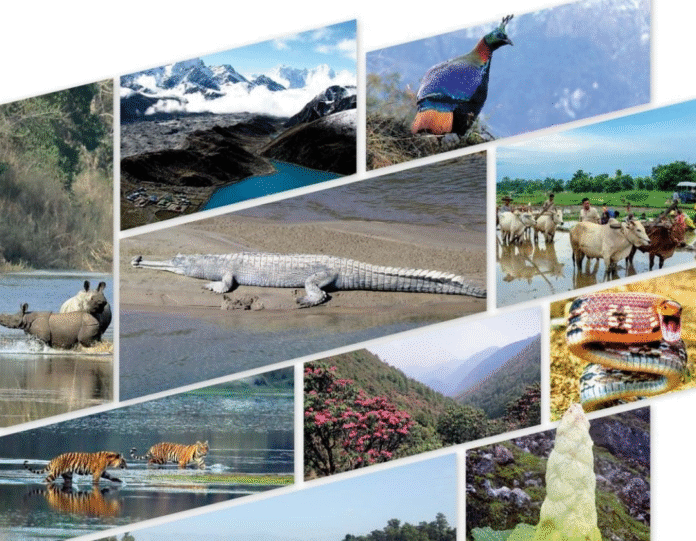
For the first time, India and Nepal are treating their shared forests not as separate territories but as one connected lifeline for endangered species. The agreement emphasizes the Terai Arc Landscape (TAL)—a vast, biodiversity-rich region spanning over 51,000 square kilometers across the Indo-Nepal border. This landscape is home to nearly 50% of the world’s remaining wild tigers, around 7,500 Asian elephants, and significant populations of one-horned rhinos, Gangetic dolphins, snow leopards, and vultures.
Key protected areas now linked under joint management include:
India’s Valmiki Tiger Reserve, Dudhwa Tiger Reserve, and Katerniaghat Wildlife Sanctuary
Nepal’s Chitwan National Park, Bardia National Park, and Parsa Wildlife Reserve corridors like the Khata Corridor (connecting Nepal’s Bardia to India’s Katerniaghat) and the Valmiki-Chitwan linkage will be restored to allow seamless animal movement, genetic exchange, and better climate resilience.
Key Highlights of the India-Nepal Environmental Partnership
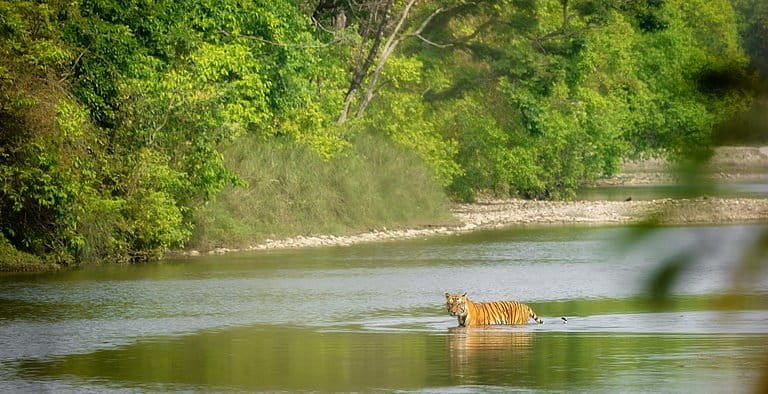
Landscape-Level Biodiversity Strategies: Both countries will collaborate on conservation plans for transboundary ecosystems, including the Terai Arc, Kangchenjunga, and high Himalayan landscapes, prioritizing six flagship species: Royal Bengal Tiger, Asian Elephant, Greater One-Horned Rhinoceros, Snow Leopard, Gangetic Dolphin, and vultures.
Wildlife Corridor Restoration: Efforts to
reconnect fragmented habitats will reduce genetic isolation and support viable populations, especially for migratory species crossing the 1,850+ km shared border.
Combating Wildlife Crime: Joint intelligence sharing, capacity building for frontline staff, and coordination through networks like the South Asia Wildlife Enforcement Network (SAWEN) will tackle poaching, illegal trade in rhino horns, tiger parts, and elephant ivory. Climate Action and Green Infrastructure: The MoU promotes climate-resilient strategies, smart green infrastructure, structured data sharing on threats and trends, and adaptation to Himalayan challenges like glacial lake outburst floods (GLOFS).
Capacity Building and Knowledge Exchange:
Training programs, technical expertise sharing, and best practices will strengthen enforcement and monitoring. The MoU was signed between India’s Ministry of Environment, Forest and Climate Change and Nepal’s Ministry of Forests and Environment, in the presence of Union Minister Bhupender Yadav and Nepal’s Minister Madhav Prasad Chaulagain.
Why This Matters: A Win for Wildlife, People, and the Planet. This shift from isolated protected areas to integrated transboundary management addresses real challenges: Reducing Human-Wildlife Conflict: In border districts of Uttar Pradesh, Bihar, and Nepal’s Province 2, crop damage and casualties from elephants and tigers affect thousands annually-connected corridors can minimize these. Boosting Species Recovery: Building on past successes (like Nepal’s zero-poaching achievements and tiger population growth), joint efforts support global targets such as “30 by 30” under the Convention on Biological Diversity.
Climate Resilience: The Himalayan region warms
faster than average; shared strategies protect water sources from Nepal’s glaciers that feed Indian rivers.This partnership not only strengthens India-Nepal ties but positions both nations as regional leaders in biodiversity conservation. As one minister noted, it’s a “historic” step that builds on deep cultural and environmental bonds-proving that when borders fade for wildlife, everyone benefits.