

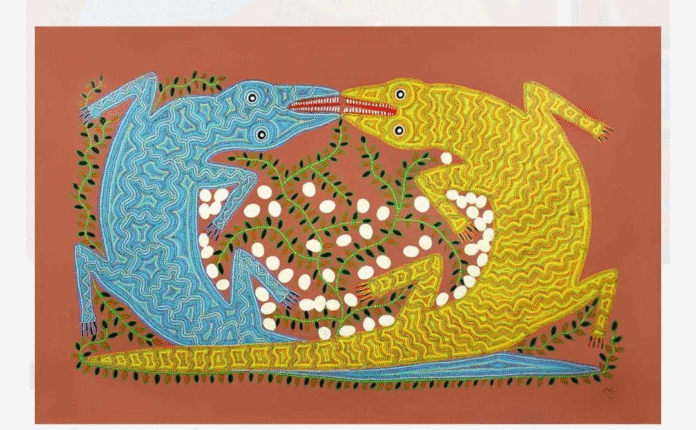
PC: (Memeraki.com, Magicdecor.com)
In the heart of Bhopal, amidst the serene Shyamala Hills, the Madhya Pradesh Tribal Museum is currently hosting a captivating exhibition-cum-sale of paintings by Lalita Tahed, a prominent artist from the Bhil community. instagram.com This event, part of the museum’s “Shalaka” series-the 70th and 71st installments-runs from March 3 to March 30, 2026, at the Likhandra Exhibition Gallery.
The “Shalaka” initiative is a monthly program designed to empower tribal artists by providing them a dedicated platform to showcase and sell their works directly to art enthusiasts and collectors. It underscores the museum’s commitment to preserving and promoting India’s indigenous art forms.
About the Artist: Lalita Tahed
Lalita Tahed, a young and talented Bhil tribal artist hailing from the Jhabua district of Madhya Pradesh, was born in Antarvelia village. Growing up enveloped by nature without formal education, she developed an early affinity for traditional wall art. Her artistic journey took a significant turn after relocating to Bhopal, where she honed her skills in the traditional Bhil style under the mentorship of her mother-in-law, the esteemed Padma Shri awardee Lado Bai.
As a resident artist at the museum and associated with spaces like Pratibha Veethi, Lalita’s paintings vividly capture the stories, traditions, and lived experiences of the Bhil community. Her style is marked by vibrant colors, intricate lines, and the signature use of multi-hued dots to depict themes of nature, wildlife, spirituality, and tribal customs.
This exhibition marks her first solo
show, a milestone in her career. Her works have previously been displayed in major Indian cities such as New Delhi and Hyderabad, with pieces adorning international collections in France, the USA, and Australia. Among her accolades is a Gold Medal from an art competition at the Manikarnika Art Gallery in Delhi.
The Essence of Bhil Art
Bhil painting stands as one of India’s oldest tribal art forms, practiced by the Bhil community across Madhya Pradesh, Rajasthan, Gujarat, and Maharashtra. Its defining characteristic is the intricate dot patterns that fill large, bold shapes-these dots symbolize ancestors, deities, grains like maize, or raindrops, embodying life and prosperity.
Traditionally, Bhil art utilized a vibrant palette derived from natural materials: turmeric for yellow, clay for red, and leaves for green. Today, contemporary artists like Lalita incorporate bright acrylics on canvas, blending ancient techniques with modern narratives. The paintings serve as visual records of tribal life, folklore, and spiritual beliefs, often eschewing Western perspectives for a more narrative, flat style.
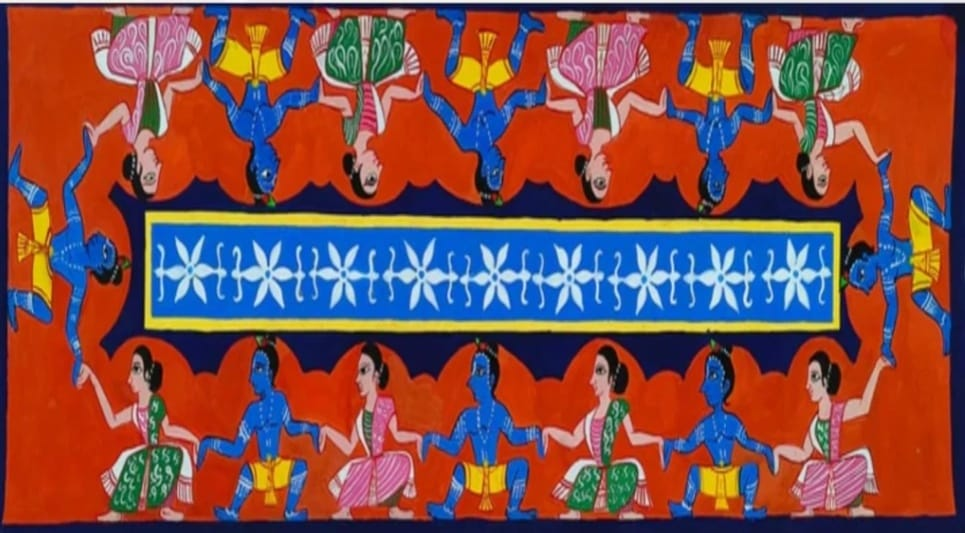
Common themes include: Nature and Wildlife: Depictions of trees,
peacocks, horses, and tigers, highlighting the community’s profound environmental bond.
Daily Tribal Life: Scenes of farming, hunting,
dancing (such as the Ghoomar), and community rituals.
Rituals: Particularly the Pithora ritual-sacred wall murals painted by men known as Likhandras to invoke blessings for homes.
The term “Likhandra” honors the traditional Bhil painters who created ritualistic murals on tribal home walls. The museum’s gallery name pays homage to this storytelling heritage.
Historical Evolution of Bhil Art
The roots of Bhil art trace back to ancient times, with scholars linking it to prehistoric rock paintings in the Bhimbetka caves. Tribal lore attributes its origins to a divine gift from Goddess Parvati, inspired by the Bhils’ harmony with nature. Historically ritualistic, Pithora paintings adorned mud walls plastered with cow dung and clay, using neem twigs as brushes and natural pigments. These ephemeral artworks were created for occasions like births, weddings, or festivals, with ritualistic murals traditionally handled by men (Lakharas) and everyday art passed matrilineally from mothers to daughters.
The modern evolution began in the 1980s at Bharat Bhavan in Bhopal, where artist J. Swaminathan encouraged tribal talents like Bhuri Bai and Lado Bai to transition to paper and canvas using acrylics. Bhuri Bai pioneered painting on paper, paving the way for artists like Lalita Tahed to professionalize their heritage. Contemporary Bhil art now integrates modern elements like airplanes, buses, and cell phones alongside traditional motifs, reflecting the community’s evolving lifestyle.
Exhibition Details and Visitor Information
Venue: Likhandra Exhibition Gallery, Madhya Pradesh Tribal Museum, Shyamala Hills, Bhopal.
Dates: March 3 – March 30, 2026.