

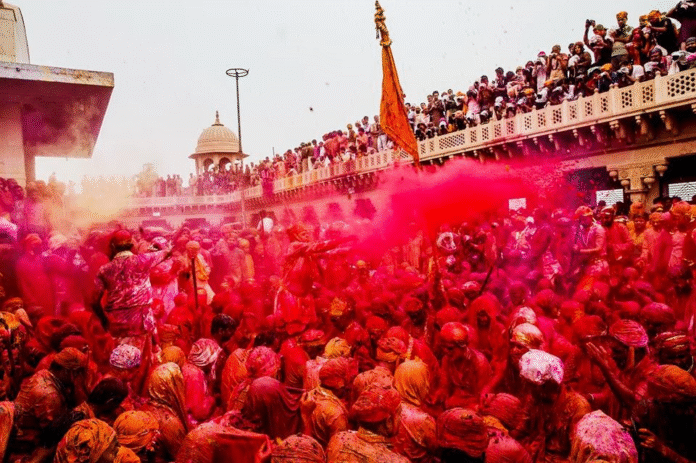
Braj Holi PC: (pexels, Revv, Times Now)
Braj Holi, encompassing Mathura and Vrindavan, transforms into an extraordinary, multi-day spiritual extravaganza far beyond the typical one-day color play. Rooted in the divine love story of Radha and Krishna, this celebration spans about 10 days in late February to early March, drawing millions of devotees and tourists for its unique rituals, chaotic energy, and profound devotion.
Braj Ki Holi: Know Its Origin
The festival traces its roots to ancient Hindu mythology, particularly the playful “leela” of Lord Krishna. Legend has it that Krishna, with his dark blue skin, playfully applied colors to fair-skinned Radha to bridge their differences, symbolizing the union of souls, the erasure of ego, and the triumph of love over superficial barriers. This act, encouraged by his mother Yashoda, evolved into the vibrant traditions seen today, commemorating Krishna’s childhood mischief in the Braj Bhoomi.
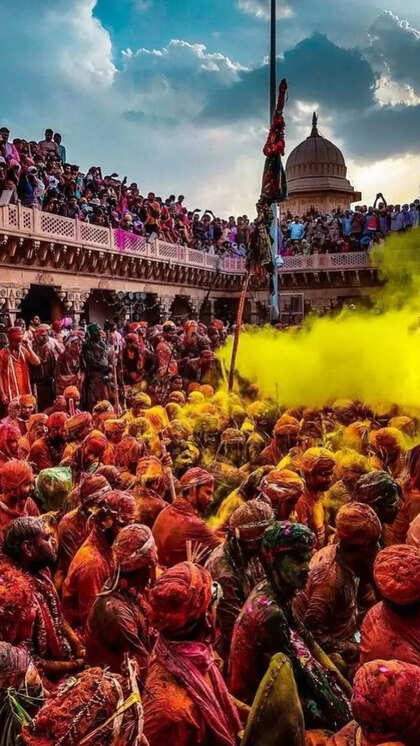
Braj Holi: Unique Rituals
Braj Holi features distinctive events that reenact Radha-Krishna’s divine play. Lathmar Holi in Barsana (women playfully “beat” men from Nandgaon with sticks, symbolizing the Gopis’ response to Krishna’s teasing) and its counterpart in Nandgaon highlight playful power dynamics in love. Phoolon Wali Holi at Banke Bihari Temple in Vrindavan involves showering gentle flower petals instead of powders, emphasizing pure devotion. Other highlights include Laddu Holi in Barsana, where laddoos are thrown, and Huranga at Dauji Temple, known for its energetic, affectionate play.
Holi Celebrates Radha Krishna Bond
At its core, Holi here is a sacred reenactment of Radha-Krishna’s eternal bond, promoting inner purification, the shedding of negativity, and the arrival of spring. Traditions like Widows’ Holi in Vrindavan break social taboos, allowing widows to embrace joy and colors after years of isolation, marking a shift toward inclusion and spiritual renewal. The festival fosters transcendence of ego, renewal, and immersion in divine love.
Braj Holi: Celebrations Galore
As of early March 2026, celebrations are in full swing with overwhelming crowds, creating vibrant yet chaotic scenes. However, viral videos and reports highlight serious concerns, including harassment and inappropriate touching in packed areas, often misused under the guise of “Bura na mano, Holi hai.”
Authorities have increased security, but visitors-especially women-are strongly advised to travel in groups, stay vigilant, avoid isolated spots, and report misconduct. While the spiritual essence remains profound, personal safety should be prioritized amid the fervor. Experience Braj Holi for its unmatched blend of tradition, devotion, and joy-but approach with awareness for a safe, memorable pilgrimage.
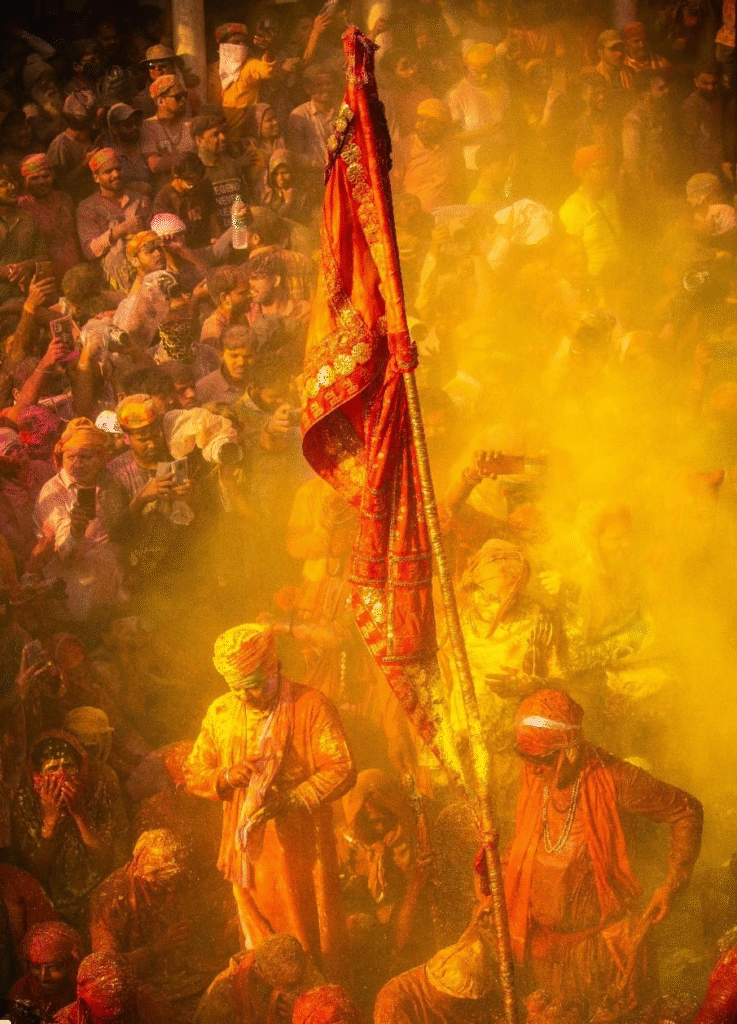
2026 Key Dates and Schedule in Braj Region
This year’s festivities unfold over several days, building to the main event:
February 24: Laddu Holi (Sriji Temple, Barsana)
February 25: Lathmar Holi (Barsana)
February 26: Lathmar Holi (Nandgaon)
February 27: Phoolon Wali Holi / Rangbhari Ekadashi (Banke Bihari Temple, Vrindavan) and Mathura Temple Holi
March 1: Gokul lathi mar Holi (Raman Reti, Gokul)
March 2: Widows’ Holi (Gopinath Temple, Vrindavan)
March 3: Holika Dahan (bonfire ritual at Vishram Ghat, Dwarkadhish Temple, and other sites, symbolizing good over evil)
March 4: Main Rangwali Holi / Dhulandi (color play across Mathura, Vrindavan, and Braj)
March 5: Dauji Ka Huranga (Dauji Temple, Baldev)
These dates draw massive crowds to iconic spots like Banke Bihari Temple (intense gulal throwing), Radha Rani Temple in Barsana, and Dwarkadhish Temple in Mathura.