

PC(Beeplip, Projekt Atol )

Potatoes Grown in Mid-Air – A Farming Miracle in Gwalior researchers at Rajmata Vijayaraje Scindia
Agriculture University in Gwalior, Madhya Pradesh, have pioneered an innovative technique to cultivate potatoes suspended in the air using an advanced aeroponics unit. This breakthrough soilless method promises to deliver virus-free, high-quality seed potatoes, tackling persistent challenges in traditional potato farming and boosting food security in India.
What is Aeroponics? The Science of Growing Without Soil
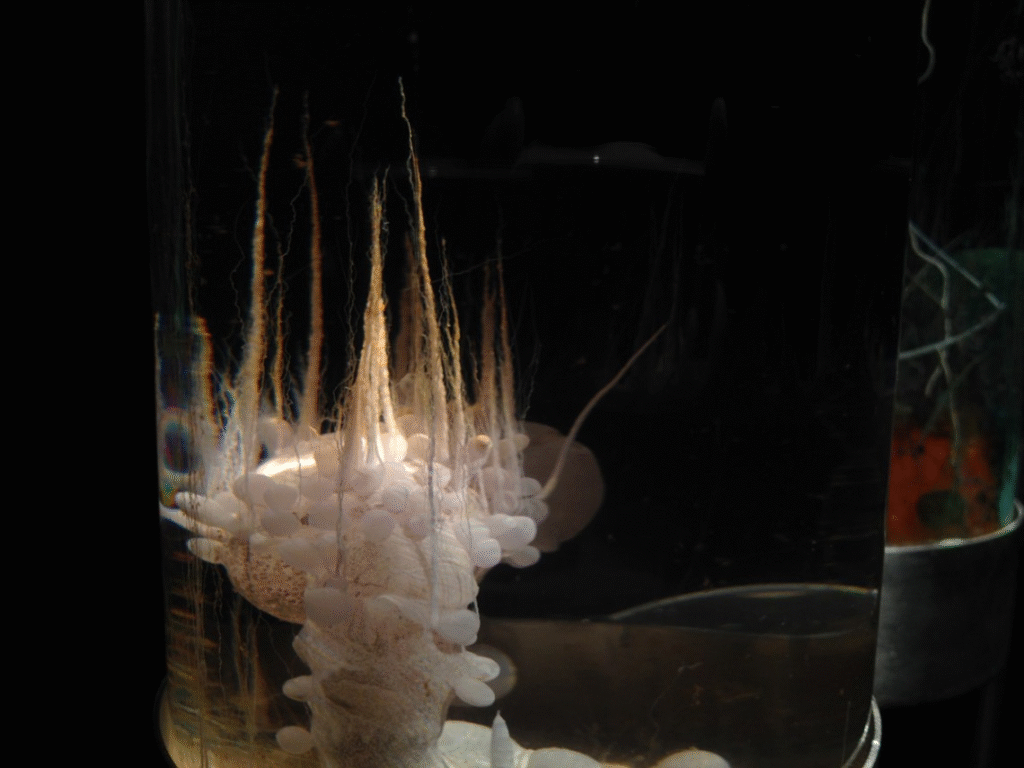
Aeroponics involves growing plants without any soil the roots hang freely in the air and are regularly misted with a nutrient-rich water solution. Unlike conventional farming that relies on soil for nutrients, this system delivers minerals directly to the roots in a precisely controlled environment, maximizing efficiency and plant health.
The Magic Behind Air-Grown Potatoes: More Oxygen, Faster Growth
The core principle of aeroponics lies in exposing plant roots to maximum oxygen while providing exact amounts of water and nutrients. This results in superior oxygen availability compared to soil-based methods, leading to accelerated growth, better nutrient uptake, and healthier plants. The entire process occurs in enclosed setups like greenhouses or net houses, where factors such as temperature, humidity, and misting cycles are meticulously managed.
Not as Futuristic as It Sounds – A Brief History of Aeroponics
While the idea may seem cutting-edge, aeroponics has roots dating back to the 1920s, when early experiments explored root development in air-based systems. The term “aeroponics” was officially coined in 1957, and commercial applications emerged in the 1980s. Today, the technology is widely adopted globally, particularly for producing premium planting materials in controlled settings.
Why Potatoes Specifically? Combating Diseases in Traditional Seed Production
Potatoes are typically propagated using seed tubers, which often carry viruses and diseases across generations, reducing crop quality and yields. Aeroponics enables the production of clean “minitubers” – small, disease-free potato seeds – in a sterile, controlled environment. These high-quality minitubers can then be multiplied in open fields, resulting in stronger, more productive crops for farmers.
Madhya Pradesh Takes the Lead: Optimizing Local Seed Production
The university’s aeroponics unit focuses on enhancing potato seed production tailored to local needs, rather than inventing the method anew. Compared to traditional nursery techniques, aeroponic systems yield far more seed potatoes while consuming significantly less water and space – a game-changer for resource-constrained regions.
Ongoing Research and Real-World Impact in the State
Research into aeroponic potato cultivation is actively progressing in Madhya Pradesh. In 2024, the Central Potato Research Institute’s Regional Station in Gwalior experimented with various planting and irrigation strategies to scale up minituber multiplication under net-house conditions. Such efforts are strengthening seed supply chains and elevating overall crop quality for local farmers.
The Future of Sustainable Farming in India
As climate change, shrinking arable land, and water scarcity intensify, soil-free innovations like aeroponics could become vital for sustainable agriculture. By enabling efficient, disease-resistant production, this Madhya Pradesh breakthrough paves the way for a more resilient and productive food system across the country.