

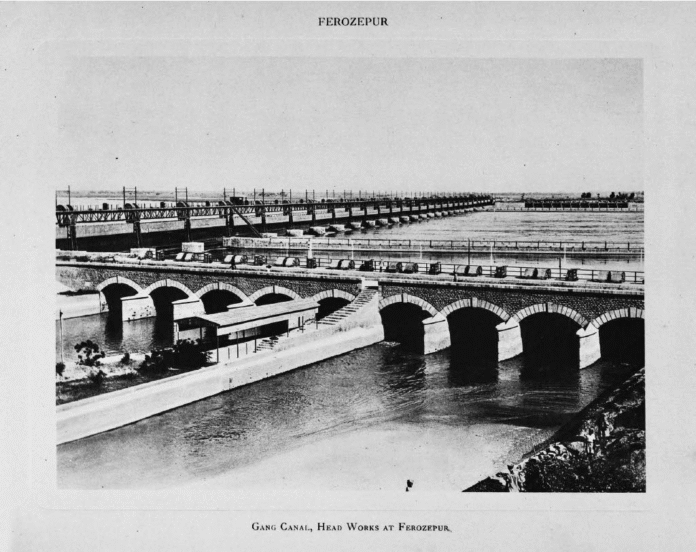
Stretching across the golden sands of Rajasthan, the Gang Canal stands today not just as an engineering marvel but as a testimony to one ruler’s courage, foresight, and unwavering belief in possibility. Where once only dust storms and drought existed, lush fields now stretch to the horizon. At the heart of this transformation is one name — Maharaja Ganga Singh of Bikaner.
A Dream Born From Hardship
Maharaja Ganga Singh was born in 1880, and by the age of just seven, in 1888, he became the ruler of Bikaner. His early years on the throne were marked by devastating famines. Between 1899 and 1905, severe droughts pushed the region to the brink of collapse — crops failed, livestock perished, and survival became a daily struggle.
These traumatic years sowed the idea of an ambitious dream in the Maharaja’s mind:
What if water could be brought from the Satluj River to the desert?
The Plan Takes Shape
Between 1910 and 1915, Maharaja Ganga Singh made a bold decision — to build a canal system that would bring Satluj water to the barren sands of Bikaner. With British engineer Colonel Dyas, planning began, but the project soon hit political resistance from Punjab and Bahawalpur states.
Despite setbacks, the Maharaja refused to abandon the vision. In 1903, he pledged that the project would be completed — no matter how long it took.
War, Diplomacy, and a Turning Point
In 1913, world events unexpectedly shifted in his favor. As World War I began, Maharaja Ganga Singh joined the British war cabinet and later signed the Treaty of Versailles — the only Indian ruler to do so. His growing international stature strengthened his negotiating power.
Finally, in 1919, the Punjab government formally approved the Satluj Canal proposal, and a tripartite agreement was signed between Punjab, Bahawalpur, and Bikaner states.
Construction Begins
By 1920, the estimated cost of the project reached ₹5.5 crore — a monumental sum at the time. Along with the canal, plans were made for a railway line to support construction.
On 5 December 1925, the foundation stone of the canal was laid in Firozpur, marking the beginning of a new era. In just two years, construction progressed rapidly and the 144 km long canal was completed in 1927.
It was officially inaugurated on 26 October 1927 by Viceroy Lord Irwin in a historic ceremony.
A Legacy Written in Water
The Gang Canal transformed Rajasthan’s identity. Dry dunes turned into fertile fields; wheat, cotton, mustard, and sugarcane began to flourish. Villages previously bound to famine now prospered. Generations of farmers owe their livelihood to a king who refused to accept the limits imposed by geography.
Today, nearly a century later, the Gang Canal remains a lifeline — a living monument to visionary leadership, engineering genius, and the belief that even a desert can bloom.
Maharaja Ganga Singh didn’t just build a canal.
He built hope — and turned the impossible into reality.