

PC:ANI News
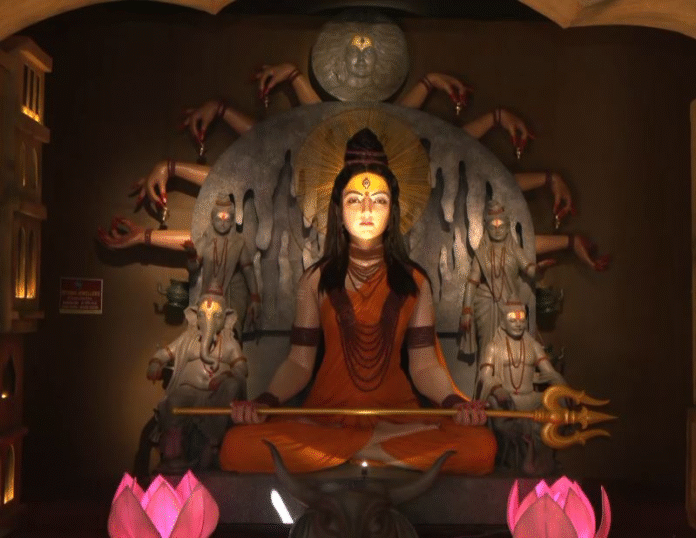
In its 86th year, the Agarpara Tarapukur Adi Sarvajanin Committee in North 24 Parganas, West Bengal, has redefined Durga Puja with a breathtaking ‘Maha Kumbh’ theme for 2025. This UNESCO-recognized festival, celebrated with unparalleled fervor across West Bengal, finds a unique expression in the committee’s pandal, which transforms into a vibrant homage to the Kumbh Mela. At its heart stands a groundbreaking silicon idol of Goddess Durga, crafted in a meditative Yogini form, blending spiritual depth with artistic innovation. This pandal not only honors India’s rich cultural heritage but also captures the divine essence of one of Hinduism’s grandest pilgrimages.
A Pandal Immersed in the Maha Kumbh’s Mystique
Recreating the Kumbh Mela
The Agarpara Tarapukur pandal transports visitors to the sacred banks of the Ganges, Yamuna, and Saraswati rivers, where the Maha Kumbh Mela unfolds every 12 years. The committee chose this theme to celebrate India’s spiritual and cultural traditions, especially poignant following the Maha Kumbh 2025 held earlier in Prayagraj. Inside the pandal, a symphony of colors, sounds, and scents recreates the Kumbh’s sanctity—rhythmic chants of priests, the fragrance of incense, and the distant call of conch shells evoke the pilgrimage’s divine atmosphere.
The Silicon Durga: A Modern Marvel
The centerpiece of the pandal is a stunning idol of Goddess Durga, crafted entirely from silicon—an unprecedented artistic choice for Durga Puja. Depicting the goddess in a meditative Yogini form, the idol emphasizes the spiritual essence of the Kumbh Mela, symbolizing inner peace and divine connection. According to committee secretary Arpan Ghosh, “The depiction of Maa Durga as a Yogini in a meditative state reflects the spiritual depth of the Kumbh festival, uniting two sacred traditions in a single narrative.”
Mythological and Artistic Grandeur
The pandal’s design is a testament to meticulous craftsmanship and cultural authenticity. Life-sized statues of gods and demons line the pathway, vividly portraying the mythological Samudra Manthan (churning of the ocean) from which the Kumbh, or pot of nectar, emerged. Above, a swirling ocean of blue and white fabric cradles a replica of the Kumbh, symbolizing the divine nectar of immortality. The pandal’s ceiling, painted as a celestial canvas adorned with constellations and divine symbols, underscores the cosmic significance of the Maha Kumbh.
Collaborative Craftsmanship
To ensure authenticity, the committee collaborated with artisans and scholars to accurately depict the Kumbh Mela’s cultural and mythological significance. Each element, from the statues to the intricate decorations, was crafted with precision to convey the intensity and drama of the ancient tale, making the pandal a living narrative of Hindu mythology.
Cultural and Spiritual Significance
The ‘Maha Kumbh’ theme creates a profound connection between Durga Puja and the Kumbh Mela, two pillars of Hindu tradition. Both celebrations emphasize spiritual renewal, community, and devotion, and the pandal’s design reflects this shared essence. By portraying Goddess Durga as a Yogini, the committee highlights the introspective and transformative power of faith, resonating with the Kumbh’s focus on purification and enlightenment.
A Timely Celebration
The choice of the Maha Kumbh theme is particularly relevant in 2025, following the grand Maha Kumbh Mela in Prayagraj earlier in the year. This pandal stands as a tribute to that historic event, bringing its spiritual vibrancy to the heart of West Bengal’s Durga Puja festivities. As one of many artistic installations across the state, it exemplifies the creativity and cultural pride that earned Durga Puja its UNESCO Intangible Cultural Heritage status in 2021.
A Testament to Faith and Creativity
The Agarpara Tarapukur Adi Sarvajanin Committee’s 2025 Durga Puja pandal is a masterful blend of tradition, innovation, and spirituality. Through its ‘Maha Kumbh’ theme and the pioneering silicon idol of Goddess Durga, the committee has created an immersive experience that honors India’s sacred heritage while pushing artistic boundaries. This pandal not only celebrates the divine feminine power of Durga but also invites devotees and visitors to reflect on the eternal quest for spiritual immortality, as symbolized by the Kumbh Mela. As West Bengal’s Durga Puja continues to captivate the world, this installation stands as a shining example of the festival’s ability to unite faith, art, and culture in a timeless celebration.